
StoryCorps, NPR pair strangers to build time capsule for America’s 250th
StoryCorps
A new project from StoryCorps and NPR’s Morning Edition is finding out what happens when thousands of Americans are paired up for intimate conversations with someone they’ve never met.
With America’s 250th anniversary on the horizon, StoryCorps Founder and President Dave Isay and CEO Sandy Clark were underwhelmed by the offerings of America250, the nonpartisan congressional initiative created to celebrate the semiquincentennial.
“We wanted to do something that was a little quieter than the punch-you-in-your-face celebrations of America250,” says Isay. “That’s when we came up with the idea of a time capsule that said, ‘Hey America, meet America.’ It’s meant to be nonpartisan and meaningful.”
In the press release for the project, titled Connect250, StoryCorps and NPR described it as a “large-scale experiment in human connection.”
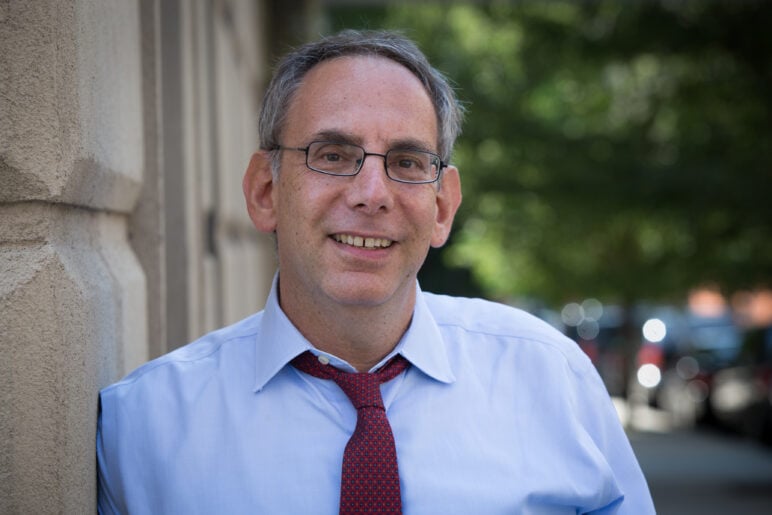
“I don’t think anything like this has really been tried before,” Isay said. “Putting strangers together to have a deep conversation about their lives is not something that happens all the time.”
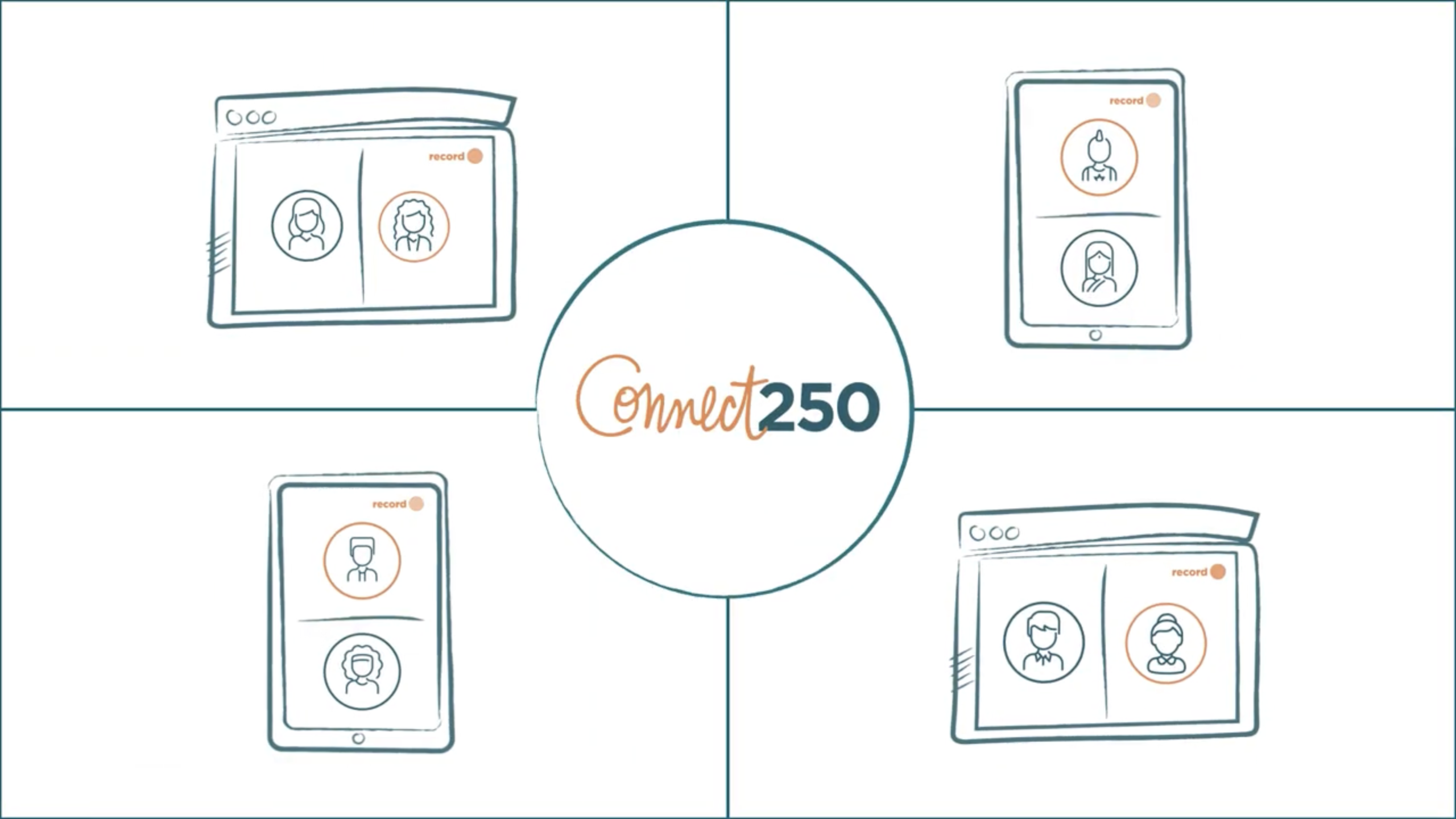
Participants in Connect250 are asked to complete a questionnaire, provide a short bio and give their ZIP code, which StoryCorps uses to ensure matches don’t live too close to each other. Participants are given access to a dashboard where they can view matches and select their conversation partner.
The 40-minute video calls are conducted on the Connect250 platform. StoryCorps provides prompts for the conversations, such as “Why did you want to have this conversation?”, “What’s something people sometimes misunderstand about where you live?,” and “Imagine your great-grandkids listening to this interview. What would you want to say to them?”
Isay said the idea came from the “strangers on a train” psychological theory, which suggests that strangers are more likely to have extremely deep conversations because there is no risk or consequences. “This is ‘strangers on a train’ with Morning Edition listeners,” says Isay. “We have absolutely no idea what’s going to happen or what is going to be said.”
When the conversation ends, participants can decide whether they want to make the chat publicly available or keep it private. Shared interviews are posted online and made available to hear at the Library of Congress’ American Folklife Center in commemoration of the country’s 250th anniversary.
A ‘measure of connection’
Isay and Clark only had the idea for Connect250 in May. “This has been a sprint of a project,” says Isay.
Isay and Clark presented the idea to NPR CEO Katherine Maher and Editor in Chief Thomas Evans, both of whom quickly gave it the green light. The decades-long relationship between StoryCorps and Morning Edition enabled them to launch the project in just a few weeks.
The partners opened applications for Connect250 June 17 at connect250.org. By July 6, they’d received 10,000 applications. “The amount of responses has been great and is such a delight,” says Kelley Dickens, deputy EP of Morning Edition.
The passionate response underlines listeners’ close relationship with Morning Edition and StoryCorps, says Isay. Morning Edition has aired two- to three-minute excerpts of StoryCorps interviews on its Friday episodes since May 2005, with the full conversations also available online.
“Usually people have to hear about something seven times in order to participate,” says Isay. “This has only been promoted on Morning Edition and on local public radio shows across the country, so I don’t think the people that have signed up have heard about it seven times.”
StoryCorps has posted more than 300 of the resulting conversations on its website so far. Greg Burrill and Christine Brady discussed their experiences as teachers in New York City and Levittown, Pa. Grandmother Karen Lovett listened intently to Sam Seliger describe his involvement in student protests. Susan Lukwago in Kansas and Hallie Cook in Texas bonded over living in small farming towns.
Howard Gorin and Hamzah Ahmed opened up about their experiences with antisemitism and Islamophobia before discussing their hopes for Connect250. “I think we live in troubling times, and I think that it doesn’t matter which side of the aisle you sit [on], we’ve grown suspicious of one another,” Gorin said. He added he took part in Connect250 because he was hoping to have a “measure of connection to people who I wouldn’t meet otherwise.”
Ahmed said he always looks to gain insights and perspectives from older people. “One of the luxuries of being American is that I get to meet so many people” who are different, he said.
Finding commonalities
Due to the number of interviews to go through, the StoryCorps team is summarizing them with AI and reviewing the summaries to pick interviews that might be suitable for broadcast. The team hopes excerpts of some conversations will air on Morning Edition but will make that decision after going through them.
Isay said he’s eager for more people to take part. Participants can register at connect250.org through July 31.
“We don’t know how many conversations we’re going to get, but we want as many people to know about this as possible before we close it,” he says. “This is an effort for Americans to meet Americans, and we want as many Americans to meet as many other Americans as possible.”
Ultimately, Isay says, he hopes that these conversations can remind the participants — and the people who listen — that no matter what part of the country they’re from, Americans have more commonalities than differences. Citing the social psychology concept known as contact theory, Isay explains that while people might have been told that they won’t get along due to different political, cultural or societal views, they’re more likely to connect when brought together under the right circumstances.
“At the moment, there are all these statistics about people being less likely to talk to their neighbors and how we’re in an epidemic of loneliness,” says Isay. “Connect250 is just one very small, but I think poignant, push in the other direction to create proximity between people, because that is the key to a healthy society.”