
‘Phoebe & Jay’ teach literacy skills for everyday life
Mainframe Studios and Phoebe & Jay Productions
In a new PBS Kids series, Jay and Phoebe use literacy skills to solve problems and explore their world.
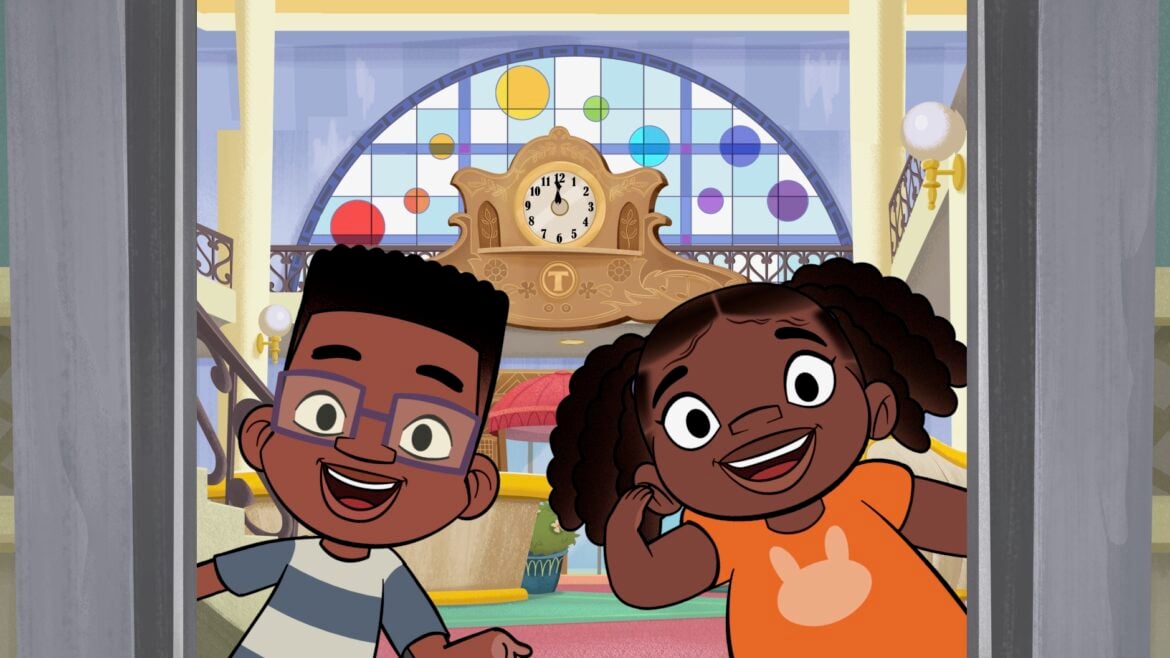
Phoebe & Jay, an animated PBS Kids series premiering this month, aims to foster and improve early literacy skills in children ages three to five.
Co-created and co–executive-produced by Genie Deez and Thy Than, the series and its accompanying digital games were developed and produced with funding from Ready To Learn, the Department of Education program supporting early childhood education.
Envisioned under the department’s 2020–25 contract with CPB and funded for development and production, Phoebe & Jay aims to address a literacy gap that develops before children enter kindergarten, according to Adriano Schmid, VP of PBS Kids content.
Every year, 40% of kindergarteners start school one to three years below grade level, “creating a gap difficult for them to overcome,” Schmid said in an email.
The literacy gap appears in reading scores of older students, he noted. For example, the National Assessment of Educational Progress reported a five-point drop in the average reading scores of nine-year-old students between 2020 and 2022. The decline was the largest in reading scores since 1990, according to NAEP.
“That’s why PBS Kids are dedicated to helping children aged two to eight learn lessons that last a lifetime,” Schmid said. “That includes these critical early-learning skills that will help set children up for success in school and life.”
When the Department of Education terminated the Ready To Learn program last year, producers slowed work on Phoebe & Jay and PBS Kids postponed its premiere, which had been slated for last fall. The debut of the first 10 episodes began Feb. 2. Another 30 episodes are in the works to premiere later this year and beyond.

With the loss of federal funding, PBS Kids has to be more strategic about scheduling, which “includes rolling out series content over longer periods of time,” Schmid said. “We see benefits to a cadence of annual ‘mini-seasons’ being rolled out to satisfy viewers’ desire for new content. But it’s not a set formula.”
If Phoebe & Jay is to continue production beyond the first 40 episodes, PBS must secure new funding. Schmid is hopeful about fundraising for the show but added, “These are the tangible effects of federal funding loss on PBS Kids content.”
Follow-up research on the show’s educational efficacy, which was standard for RTL-backed programs, won’t be conducted, Schmidt noted.
Focus on functional literacy
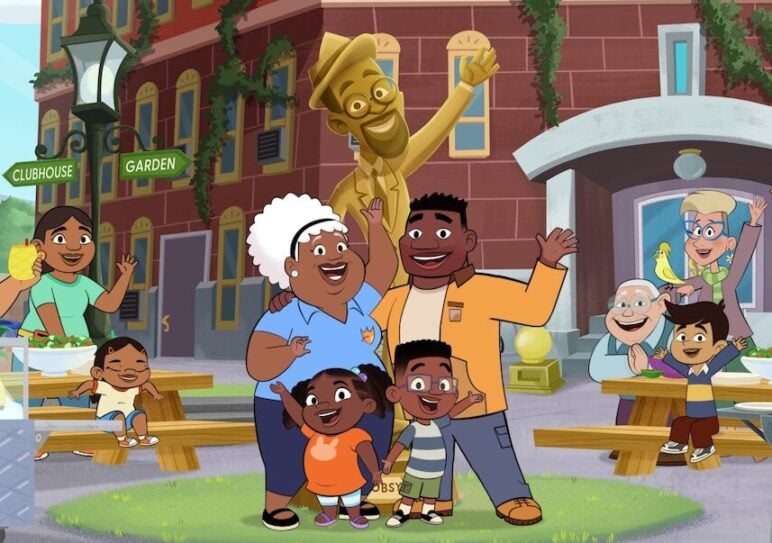
Phoebe & Jay follows the adventures of two six-year-old fraternal twins, their eternally optimistic dad Pete, and their warm yet no-nonsense Grandma Annie. Its stories depict functional literacy skills that are part of everyday life, such as checking clothing labels for laundry instructions or reading a moisture meter to determine whether plants need water.
When Than and Deez began working on Phoebe & Jay, they had to define what functional literacy actually was. “It’s a text that a preschooler and adult will encounter every day,” Than said. “Things like signs, symbols, posters and labels.”

In the first episode, after accidentally spilling paint on two mailed packages, the twins learn to read a postal address. Then they go through their apartment building to deliver the packages, looking at the numbers on doors and meeting their neighbors.
Each episode combines two stories and a live-action sequence in which children and their parents or caretakers put early literacy lessons into practice. The goal of each installment is for “children to see the world as full of possibilities,” Schmid said. “By helping them decode everyday literacy, we’re opening up those possibilities — they’ll recognize so much of the world around them and be able to see themselves as active members of their community.”
‘Brimming with ideas’
Deez and Than secured a grant in 2020 to develop Phoebe & Jay for PBS Kids. The co-creators were “brimming with ideas for the characters,” Schmid said. Their adventures were “heartfelt, funny and unlike anything” his team had seen.
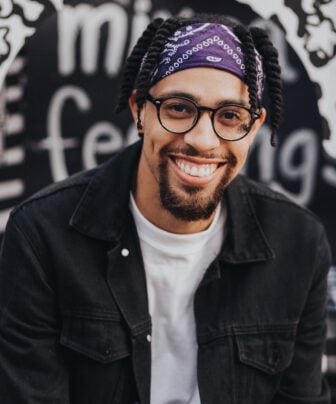
For the pilot episode, the co-creators drew from Deez’s childhood. “The seed of the show, about this family, is based on my own family,” said Deez, a writer, TV producer and interdisciplinary scholar. Grandma Annie is named after and inspired by Deez’s own grandmother, who helped raise Deez and his brother.
Rather than being constrained by the requirement to integrate literacy skills into the show, the team felt additional responsibility to deliver literacy-focused stories that were educational, engaging and fun.
The potential audience for the show is much broader than the target audience of three- to five-year-olds. “In the preschool space, everybody learns differently,” said Than, an animator, producer and director who has worked on studio and independent projects. “Some kids are slower. Some kids are faster.” As a result, the team worked with educational advisors to design and structure the show to appeal to different ages.
For example, pacing of the stories slowed to allow preschoolers to genuinely process the lessons being taught. After one test screening, a mother expressed surprise that her child actually sat through the entire episode, Deez recalled. Other television shows and movies are usually “too bright and overwhelming” for her child, she wrote on a comment card.
“We wanted children to be able to be calm and enjoy and understand the story,” Deez said. Deez and Than, who both hold master’s degrees in filmmaking, met through the Fred Rogers Memorial Scholarship program sponsored by the Television Academy Foundation. The four-year program supports individuals who are focused on creating media for children that enlightens, educates and influences social consciousness and understanding.
Than and Deez worked with a team of advisors throughout development and production. Kelly Cartwright, professor of early childhood literacy at the University of North Carolina, was lead curriculum advisor. Content and digital strategist Cathy Tran worked as a screenwriter and curriculum advisor; she holds a doctorate in learning, cognition and development. Cultural advisors also worked with the team on authentic portrayals of the characters.
Learning activities
WFYI is one of at least 17 PBS stations hosting events and early screenings to promote Phoebe & Jay. The Indianapolis station has partnered with seven libraries on outreach events for children and their caregivers, according to Gail Strong, VP of community engagement. “We’ve learned that our public libraries are always great partners,” she said. “People trust libraries. They trust PBS Kids, and they know they’re going to get a high-quality experience.”
In one of the clips screened during WFYI events, the producers explain the show’s early literacy curriculum. Learning activities that follow the screenings encourage children to put the literacy lessons they’ve just seen into action. In a scavenger hunt, for example, children look for “different kinds of functional text — such as braille, clothing labels and a directional arrow,” Strong explained. Families have really responded to a letter-writing activity in which children receive paper, envelopes and stamps, write letters and put them in a real mailbox.
WFYI also provides instructions to parents and caregivers on how to continue talking with their children about literacy. For example, parents can encourage kids to look for traffic signs and symbols that will help them understand text.
“We really want caregivers and adults to watch with younger kids, enjoy it and then point out things in real life and call back to the show,” Deez said.
For children to learn and play at home, PBS Kids has launched Phoebe & Jay’s Dance Party Game, which was inspired by a plot line in the series. The game invites children to complete literacy tasks related to planning and preparing for a party. “They make a poster which has the functional text of where the party is and what time,” Than said. “Then they get to pick out an outfit and learn a dance. It’s really active and fun.”
The game, available on the PBS Kids website and PBS Kids Games app, is the first of five supporting the show’s literacy curriculum. PBS Kids will release a new game every six weeks.