
PBS SoCal steers hip-hop series towards crossroads of music and local communities
PBS SoCal
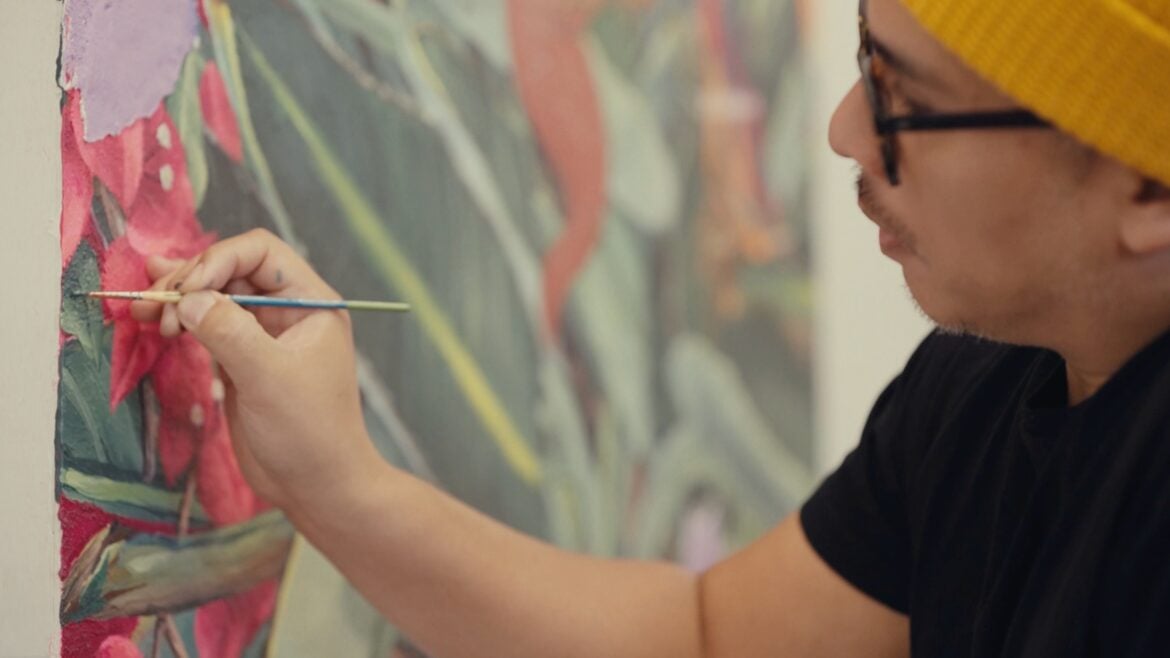
Visual artist Patrick Martinez works in his studio.
To Los Angeles–based visual artist Patrick Martinez, the city’s graffiti subculture is constantly in conversation with hip-hop. The intersection between the two creative forms molded Martinez and continues to influence his work.
Martinez discusses how the hip-hop scene of the 1990s shaped his artistic development in the new season of Outside the Lyrics, a PBS SoCal digital series that began releasing new episodes in March. Under a new editorial framework, the videos explore how musical genres and movements, primarily hip-hop and jazz, have influenced creative expression and subcultures across Los Angeles.
In the debut episode, Martinez displays photographs and sketchbooks from the 1990s, when he was a teenage graffiti writer growing up in East L.A. Sitting in his studio with series co-host Robeson Taj Frazier, Martinez describes how opportunities opened up for him to contribute artistically to the hip-hop scene in L.A. and beyond. He opens an issue of XXL magazine, turning to a two-page spread he created over 20 years ago. “I never get to show people stuff like this,” he remarks.
The treatment builds storylines about how L.A.’s music scene shapes its artists and builds communities, creating throughlines from the past into the present. The approach marks an evolution for Outside the Lyrics and partners in the production — and not for the first time.
Starting over
PBS SoCal first teamed up with Frazier, a communications professor at the University of Southern California Annenberg School for Communication and Journalism, to create Hip-Hop and the Metaverse, a 2023 PBS Digital Studios series that was funded through a CPB-backed initiative supporting stations’ digital video productions.
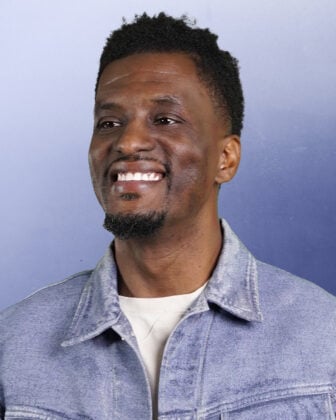
Frazier, director of the USC Annenberg Institute for Difference and Empowerment in the Arts (IDEA), was host and producer of the series. His earlier media projects include working as a producer on the documentary It’s Yours: A Story of Hip Hop and the Internet.
When the focus on emerging technologies didn’t land well with YouTube viewers — many posted negative comments about episodes on virtual reality, artificial intelligence and non-fungible tokens — PBSDS contacted Frazier about pivoting to produce episodes on the 50th anniversary of hip-hop.
“At that time, people were … interested in hip-hop, but the metaverse was not landing with audiences the way that we were hoping,” said Tamara Gould, PBS SoCal chief content officer.
In reframing the show, the creative team decided to “highlight the ways that music shapes other forms of expression within the culture,” Frazier recalled.
The final three episodes of the PBSDS project launched the first season of Outside the Lyrics in 2024. The videos focused on hip-hop’s influence on streetwear, photography and dance styles.
‘A different feel’
After the grant funding ended, IDEA and PBS SoCal agreed to formalize and extend their partnership to produce more episodes of Outside the Lyrics. That included financing the second season, which is a PBS SoCal production in association with IDEA.
IDEA had supported research and production of the earlier PBSDS project. In addition to Frazier’s role as host and producer in the grant-funded series, USC Annenberg graduate students participated in research and prepared supplemental materials.
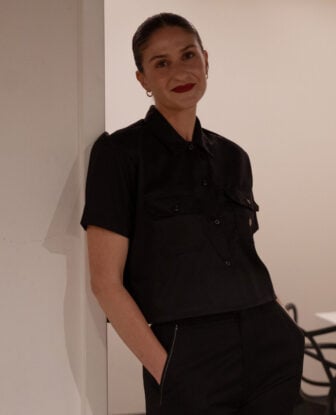
Frazier is now EP and co-host of Outside the Lyrics with Perry B. Johnson, a music scholar and lecturer at USC Annenberg who is also the show’s associate producer.
Frazier wanted to create “a different feel, different texture,” he said. Johnson was key to helping them “think in really different ways.”
After some brainstorming about the new season, the creative team decided to focus on stories about music as “a bridge through which people connect with others,” Frazier said. They also put Los Angeles at the center of their storytelling and agreed to look beyond hip-hop.
‘Streetball’ as jazz improvisation
Exploring how music builds community connections in a symbiotic way is difficult to present in digital shorts, Perry noted. In some cases, synergies between music and other creative forms are so pervasive that people aren’t even aware of them, she explained. One solution to that creative challenge was to show “how these things that are familiar to us have these larger histories.”
Episode two, for example, looks at the Venice Basketball League, a pro-am tournament hosted on courts along L.A.’s Venice Beach. Actor and athlete Sheldon Bailey, who has long been part of this hoopers community, describes how “streetball” is like jazz.
“For me, you have a set play, and then you have improvisation,” he says over footage of VBL players in action. “That’s one of the great things about jazz. Whenever you can, improv, go off, do your own thing. Be that solo all-star, whatever, then you bring it back to the group and … find your synchronicity.”
The episode also features Nick Ansom, a player who founded VBL and created Hoopbus, a program that takes basketball to communities that lack access to courts. Perry also describes historical connections, such as how early basketball leagues played in jazz halls.
Attracting audiences
The new episodes are resonating with audiences, said Gould.

Judging from comments posted to the YouTube videos, “people are over the moon with these kinds of stories being told,” she added. “Getting that kind of response … is really affirming. It shows that you can have professors who bring so much deep knowledge, like Taj and Perry, … but convey it in a way that really entertains people.”
On PBS SoCal’s YouTube page, the new videos have attracted more than 37,000 views since March, outperforming episodes from the first season. Those three episodes, released in 2024, have collectively drawn about 33,000 views.
“There are folks who are part of these communities who are really happy to see this work being shared,” and to see their stories and voices receiving attention, Frazier said. “They like the range of what we focus on.”
The team continues to look for ways to keep growing the show’s audience, Gould said.
Johnson said the team hopes to produce another season of Outside the Lyrics. “Even in two seasons, you can’t tell the whole story of Los Angeles,” she said. “There are more stories that deserve to be told, and we would love to keep using this platform to do that if we can.”