
Kevin Klose, former NPR president, dies at 85
Jan Rambousek / Radio Free Europe/Radio Liberty
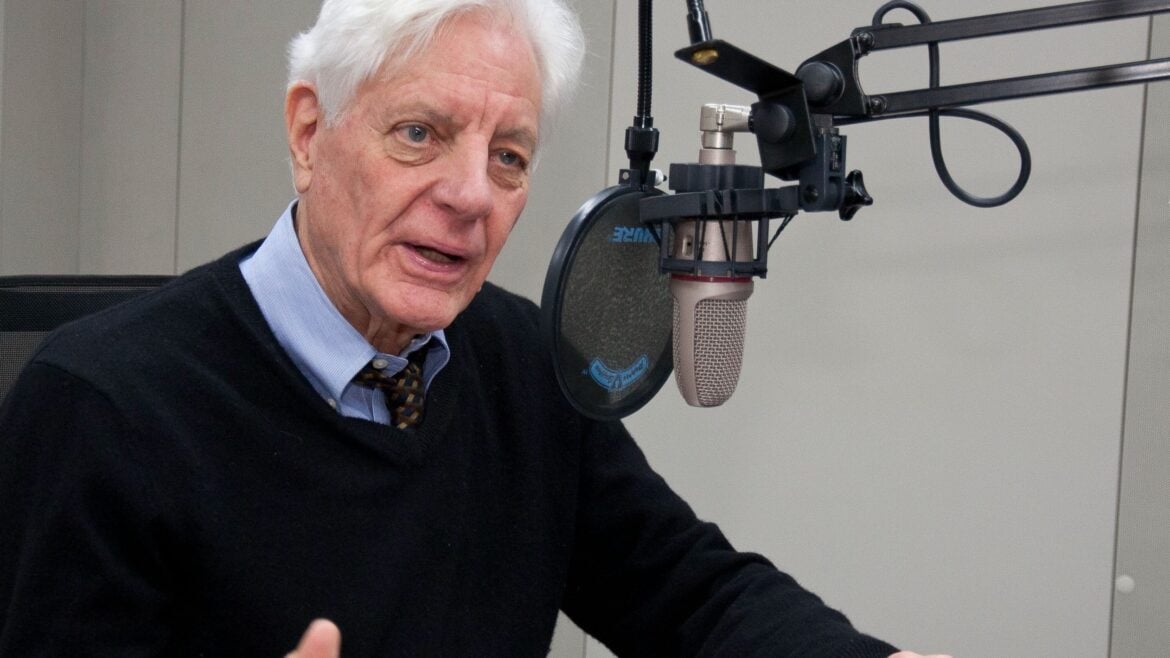
Former NPR President Kevin Klose in 2014.
Kevin Klose, the NPR president who helped secure the largest gift in public media’s history, died Wednesday from complications of Alzheimer’s disease, NPR’s David Folkenflik reported. He was 85.
Klose, a former foreign correspondent and Moscow bureau chief for the Washington Post, had a knack for storytelling, and he brought that talent to his role leading NPR from 1998 to 2008.
When “he starts talking about NPR’s role in the democracy, you just want to stand up and salute,” said Jay Kernis, who served as SVP of programming during Klose’s presidency, in a 2003 Current profile.
Klose was “unrepentantly idealistic about the role of public media in a democracy, and his service to public media worldwide reflected those beliefs,” NPR CEO Katherine Maher said in a statement. “His legacy at NPR is enduring.”
Klose met philanthropist Joan Kroc, widow of McDonald’s executive Ray Kroc, at the urging of Stephanie Bergsma, then the associate GM for development at San Diego’s KPBS. The introduction happened about a year before Kroc died.
Kroc contributed $500,000 to NPR in a holiday note to Klose and bequeathed a record $200 million to the network. The majority of the funds went to strengthen NPR’s endowment, and the network invested the proceeds in its journalism.
During Klose’s tenure, NPR bolstered its newsgathering capacity and production portfolio. The network built NPR West in Culver City, Calif., and launched The Tavis Smiley Show and the midday news program Day to Day, which was produced at NPR West. Klose also increased pay for hosts, according to Folkenflik.
Audiences responded to the changes. During Klose’s decade in leadership, NPR doubled its listenership from about 13 million to nearly 27 million, he said in a speech delivered shortly before he left the network.
Klose faced criticism from stations in 2004 for NPR’s handling of the short-lived reassignment of Bob Edwards from host of Morning Edition to senior correspondent. Stations were pummeled by listeners expressing outrage, and Edwards left within months to start a public radio-style morning show on Sirius-XM.
Prior to joining NPR, Klose was the president of Radio Free Europe/Radio Liberty, the U.S.-sponsored broadcasting service, and spent 25 years at the Washington Post. Later in his career, he served as dean of the University of Maryland’s Phillip Merrill College of Journalism.