

How four public media workers are navigating life after layoffs
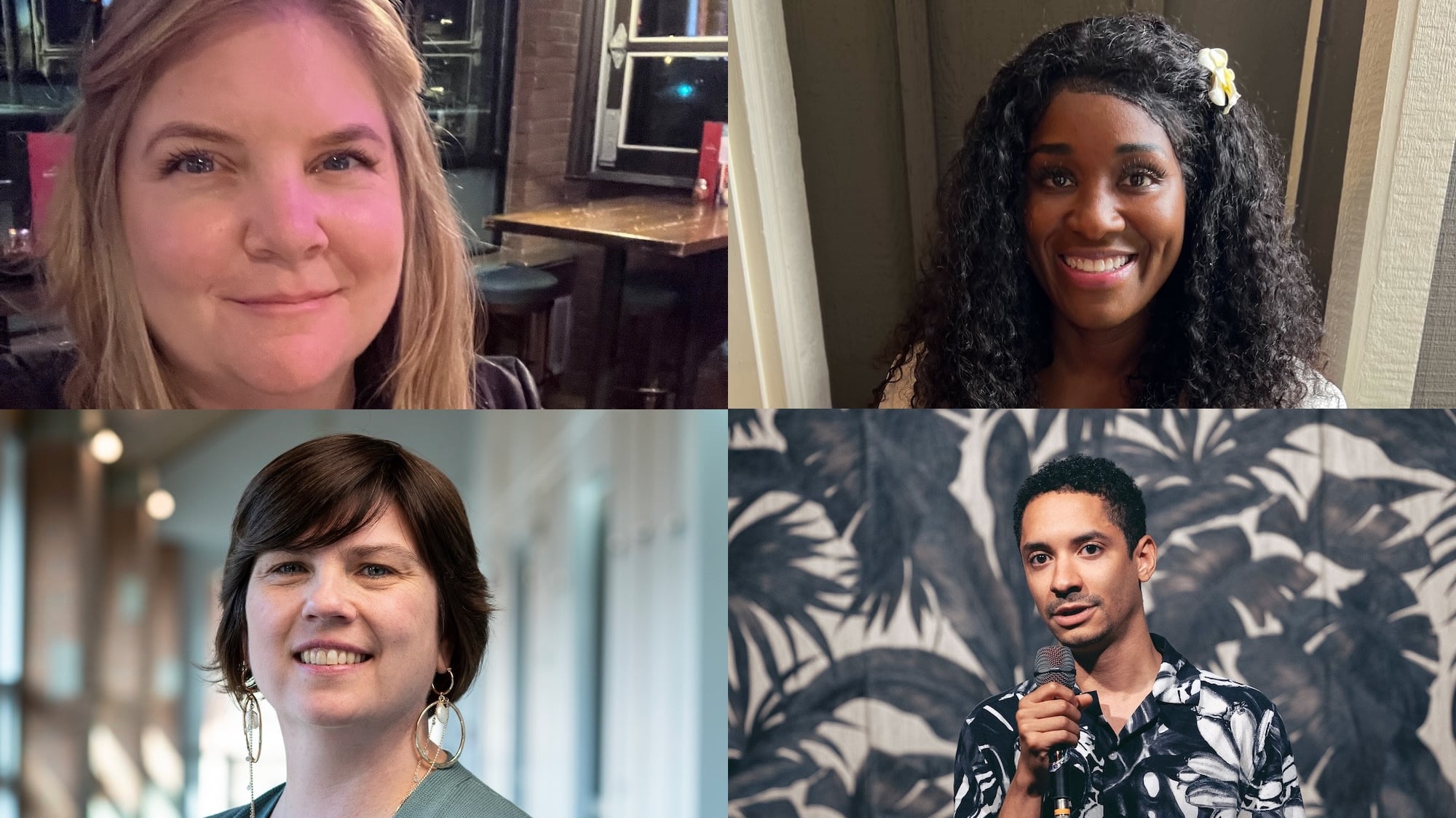
When we fielded our survey of people who had been laid off from jobs in public media, we invited respondents to indicate whether they would be willing to speak with us in more detail about their experiences. Of those who agreed, we selected four to share how their layoff affected them, their thoughts about public media, and their plans for the future. Here are their stories.
Ann Alquist
No one wants to be laid off — but if you are, it helps if you’ve been working on an exit strategy.
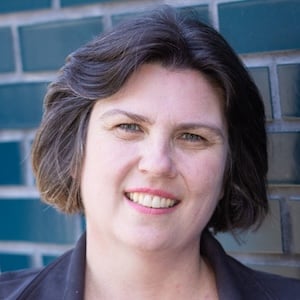
Ann Alquist was among the staffers laid off at North Dakota’s Prairie Public in October. Not only had the network lost its federal support, but the state had cut its funding as well. Alquist accepted a buyout after working for the station as radio director since 2024.
The layoff hastened Alquist’s pivot to focusing on her own ventures, which she had already been planning. The upheaval was inconvenient but pushed her to look for a silver lining.
“The plan was always three to five years at Prairie Public,” she said. “It paid well. … It was a nice, comfortable job. I’ve been making moves slowly over the last couple of years to transition out of public media. That was already in motion.”
Alquist has spent the better part of two decades in and around public broadcasting. In the early 2000s, she was a mentor for NPR’s Next Generation Radio and news director for KFAI in Minneapolis. She has also worked for the CPB-backed National Center for Media Engagement and for stations in four other states.
She describes herself as someone who tries to have “many irons in the fire.” Though she’s open to opportunities in local media, she’s working on growing a nonprofit that hosts cultural events in Sitka, Alaska. Founded in 2022, Alaska Storytellers became a nonprofit last year with Alquist as a new co-founder.
This isn’t the first time Alquist has been laid off. She lost her job with the NCME when CPB, facing a cut in federal support, slashed aid to longtime grantees. The experience contributed to a hardened outlook on public media. Though she loves it, she is frustrated with its lack of growth and innovation and fears that the rescission will halt needed reforms.
The system’s weaknesses, as Alquist sees them, include a hesitance to experiment and an inability to grow and sustain a membership base. “I see some bright spots, but they are few and far between,” she said. “Public media has been at the caboose of innovation for a long time. The choice is if stations will manage the decline, or if they’re going to embrace risk or change.”
Alquist said she wants public broadcasters to work with more nonprofit media organizations that aren’t traditionally seen as part of public media. And the days of stations being able to simply “turn on the pipe” and raise enough funds through pledge drives are long gone, she said.
She worries that public media’s fundraising methods in particular are behind the times. “It’s kind of like Henry Ford going to the buggy manufacturer and saying ‘If I can make something that’s faster than your horses, what would you do?’” she said. “But they say, ‘Oh no, there will never be anything faster than my horses!’”
Public media, which she calls “a sick giant,” is getting left behind — and she doesn’t want to be left behind with it. “Stations know what the problems are, but they look to national to solve them, and national is absent,” she said.
Furthermore, criticisms like hers are dismissed. “Whatever I or anyone else is going to say with legitimate criticism about our business model and how we embrace risk is just not going to be heard,” she said. “… The battle lines have been drawn, so reform always takes a backseat.”
Aside from her work with Alaska Storytellers, she’s keeping her schedule open. She learned to be enterprising when she earned her master’s degree in media studies from Ohio University, which CPB paid for. She was told she needed to focus on one thing but took a different approach.
“Except for engineering, I can do any job at a station, at a nonprofit,” she said. “I’m sure I can go to the corporate sector, even if I choose not to. Being agile has always served me well in my career. I do have public media to thank for that. I feel very lucky.” — Julian Wyllie
Bryant Denton
Bryant Denton was working on adding a weather widget to the homepage of Vermont Public’s website in August when a member of the organization’s human resources leadership asked him to join a brief meeting.
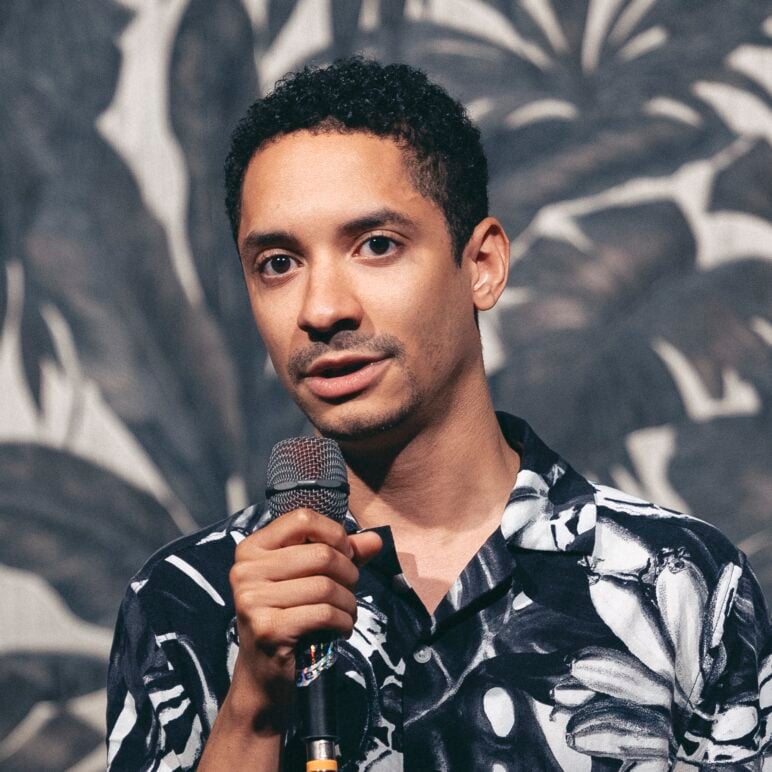
Within 15 minutes of joining the video call — Denton worked remotely from New York City — he had been laid off from the organization where he’d spent the last eight years.
“It was very abrupt,” Denton said. “You don’t get any closure. … You don’t have any way to say goodbye.”
Denton was among 13 employees that Vermont Public laid off in response to losing its federal support. CPB previously provided the organization with over $2 million in funds annually, nearly 10% of its operating budget.
Denton said conditions have rapidly changed across the journalism industry in recent years, and he is considering leaving it altogether following his dismissal from Vermont Public.
“There’s been a lot of layoffs, and what’s going on with the government, you know there’s just a lot of factors in the field that weren’t there when I started my career, or even five years ago,” he said.
Originally from Plattsburgh, N.Y., Denton attended the State University of New York at Plattsburgh, where he majored in broadcast journalism and aspired to become a TV reporter.
Upon graduating in 2015, Denton worked as a server in restaurants while searching for journalism jobs, intending to pursue his aspirations. In early 2017, he interviewed for a role as an on-air host and announcer at Vermont Public Radio, which later became Vermont Public after a merger with Vermont PBS in 2021.
He said the interview was the first time he’d felt he “had a strong interview and got along with the person who interviewed me,” leading him to be officially hired in March 2017 at the age of 24.
Though he didn’t originally intend to work in public media, Denton said he quickly bought into the industry’s principles upon starting his position.
“I felt that the mission really resonated with me,” Denton said. “I honestly didn’t learn a lot about public media in school. It just wasn’t an area of focus. … So I learned about it through working in it.”
Having joined at the beginning of the first Trump administration, Denton said working at Vermont Public felt like a unified effort among staff to inform the public with accessible news as misinformation and alternative news sources gained more influence online.
“They share your values in what’s important to serve the public,” Denton said. “You’re in agreement with a lot of your coworkers.”
Denton worked in a variety of roles during his eight-year tenure at Vermont Public, including positions in production, development services, information technologies and reporting. In 2023, he joined the digital team, working remotely from New York City as a digital services specialist.
Denton said that most of his peers thought Congress was likely to rescind funding for public media. He “foolishly” didn’t expect to lose his job, he said, because his team was already small and because digital work is so vital to the organization. “I honestly was surprised when I did,” he said.”
Since losing his job, Denton said he has struggled to find work in journalism despite his experience. He briefly worked in a contract position with Greater Public and has freelanced but is currently receiving unemployment benefits.
“I’ve been told I need to go to journalism school to get a job,” Denton said. “I live in New York City, so you know everything’s hypercompetitive here.”
Denton is considering returning to school. He said he applied and interviewed for graduate school at the NYU Game Center, the university’s game design department. Though he feels he is on the way out of journalism, Denton said the door is open for returning.
“Say I graduate from this program and there are positions for digital innovation and that sort of thing in public media, maybe that’s a way for me to reengage,” he said.
In the meantime, Denton, now 32, said he has been learning more about game development by getting involved in New York City’s indie game scene.
Additionally, he has been performing stand-up comedy and hosts a weekly show on Radio Free Brooklyn, a freeform community station. Denton said he plans to continue freelancing and is still looking for work.
“It’s a tough situation because you know the way things are right now, the media landscape can be bleak,” Denton said. “I’m thinking about changing. I’m actively working on it.” — Francisco Rodriguez
Jess Berg
Taking a job at Minnesota Public Radio was Jess Berg’s ticket off the tour bus. After years as a freelance audio engineer for musicians and festivals, she wanted a more settled life.
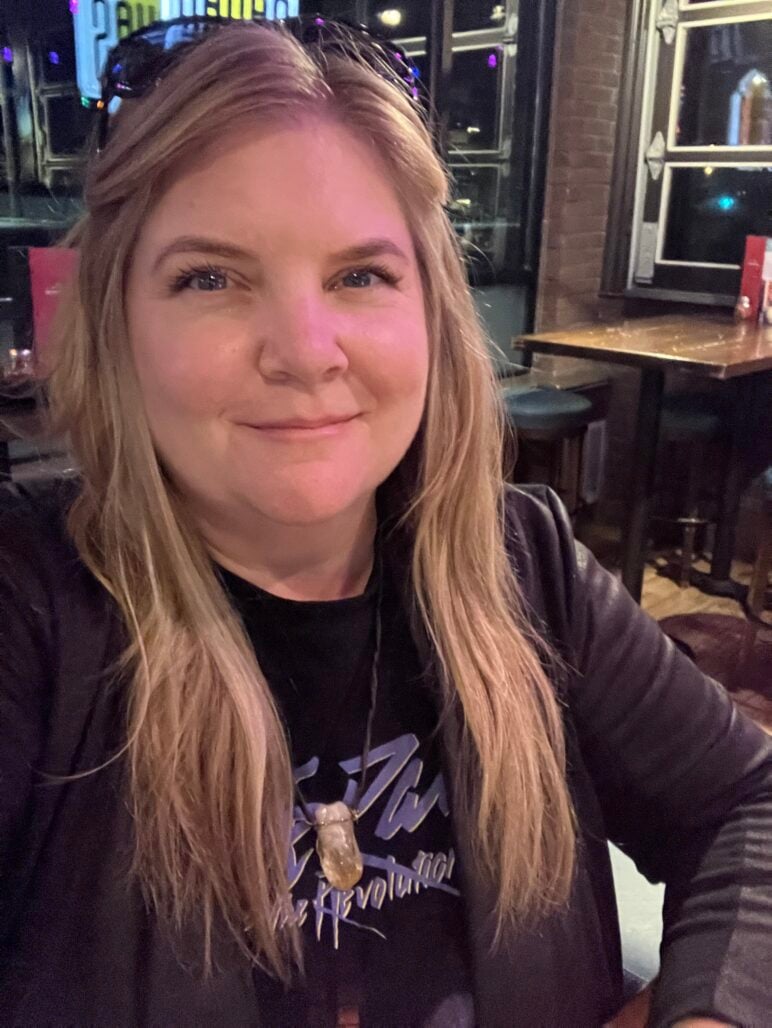
A Minnesota native, she had moved back to the Minneapolis area. Her mom was in a nursing home and needed more care, and Jess had also rescued a dog during the pandemic. “So I wasn’t going to go live on a tour bus again,” she says.
When a recruiter contacted her through LinkedIn about a technical supervisor job at MPR, “my whole heart and every fiber of my being was like, ‘Oh my gosh, yes! This is in total alignment of where I’m at, where … my career is headed,” Berg said.
Berg started her job in January 2022, overseeing a team of four staffers, troubleshooting snafus and training reporters to use their gear. From 4:30 a.m. to 6:30 p.m. every weekday, the team cleaned up subpar audio and kept daily news shows running. Berg bonded with her colleagues and worked to ensure that the long hours and high-pressure duties weren’t burning them out.
“I was on the front lines with my team,” she says.
Berg’s role was newly created and at the top of her pay grade. That gave her cause for concern when American Public Media Group, MPR’s parent company, announced last July that it would cut staff in the wake of losing state and federal funding.
Then, one day in August, “an email went out that there would be layoffs happening and that there would be a staff meeting later that afternoon,” Berg says. “… I got a calendar invite to go see HR in an hour. … I showed my boss. I’m like, ‘I think I gotta go pack my office.’”
Berg had been laid off along with more than two dozen colleagues throughout APMG. Losing a job is “all the emotions you could possibly feel,” she says, “and you’ve got to work through it and get through it somehow.”
With so many people laid off last fall, “it was just a wild time to be unemployed,” Berg said. To get by, she has tightened her budget and dipped into retirement savings. She also leaned heavily into her support network and took advantage of resources offered by the state of Minnesota, including CLIMB, a program that helps people who have lost jobs start their own businesses. The program helped her establish an LLC, and she’s working as a technical supervisor for the U.S. Special Olympics, which will be held in the Twin Cities in June.
Berg says she still loves public media and misses the work and her colleagues. She’s open to returning to the system and would even consider going back to MPR. But she does see room for improvement. For example, she’d like to see a stronger push to find and train the next generation of broadcast engineers, a challenge public media has faced for years.
“We’re going to have a lot of people retiring,” she says. … There’s a lot of opportunity there, even with everything going on.” Berg adds that more engineers need to be women, who now make up just a small fraction of the profession.
If there’s going to be a public media system for her to return to, Berg wants it to stay strong and make a case for its existence.
“I do think the very nature of public media is going to continue to be under attack with this administration, just for the very nature of what it is and what it stands for,” she says. “I hope through this, the infrastructure gets reinforced.” — Mike Janssen
Fieta Robinson
Fieta Robinson entered public media because she wanted to make a difference. Now she’s worried the changes she made may not last.
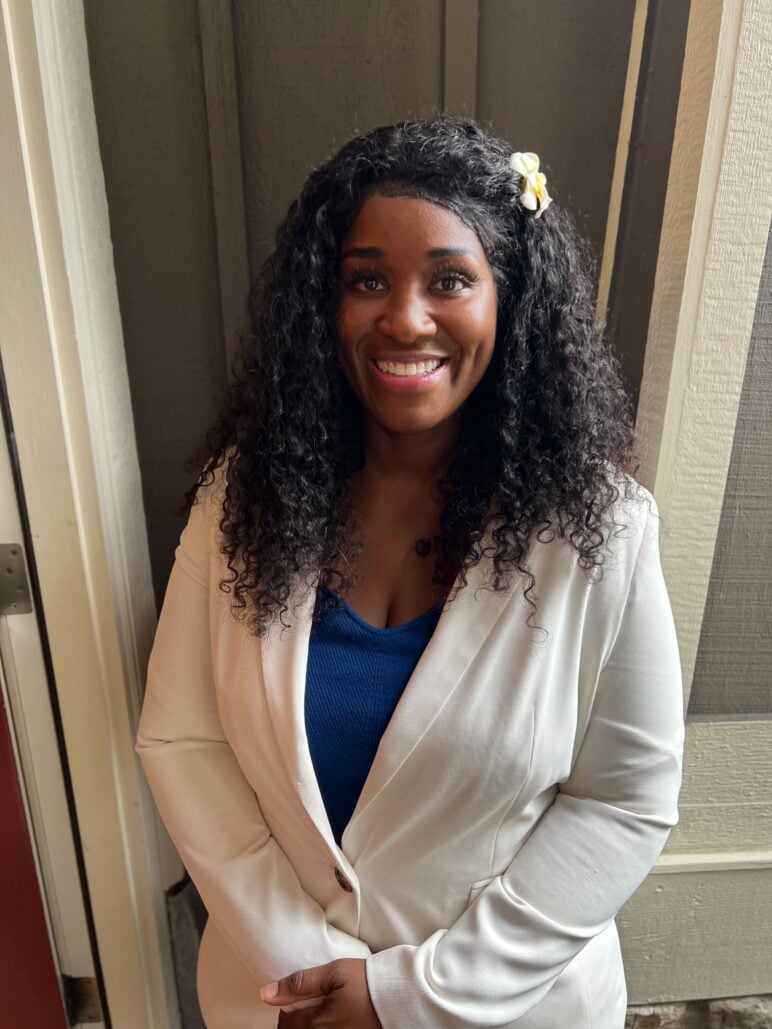
After 17 years of advising private-sector companies on hiring and workplace policies. Robinson felt a need to give back to her community. She said public media appealed to her because of its power to educate and the contributions stations make to their communities.
“I believe in an informed public to keep our civility,” Robinson said.
She took her first public media job in 2013 at KCTS in Seattle (now Cascade PBS). After working as an executive assistant and office manager to KCTS’ CEO, Robinson joined Seattle’s KUOW in 2017 as director of administrative operations, leading a team focused on racial equity in the workplace.
Robinson helped implement changes in training, hiring policies and surveying of staff and leadership on topics such as workplace culture. Her team created a toolkit that standardized hiring processes and ensured that search committees included a diverse range of perspectives.
Robinson felt that she was giving back in the way she had hoped. Over time, she said, station executives better understood the value of diversity in leadership and programming.
Despite that progress, her efforts came to an end amid a budget crunch at the station. KUOW announced in September that it would lay off six administrative employees and terminate three open positions to reduce operating costs, citing in part its loss of federal support. A week later, while on leave, Robinson got notice that all but one member of her team would be let go.
Her layoff took effect Oct. 6. The departure was heartbreaking for Robinson, leaving her fearful for the future of the equity-based initiatives she spearheaded. She said she’s confident that KUOW’s employees believe in inclusivity but worries that her progress could unravel in the face of funding cuts and governmental scrutiny.
KUOW CEO Tina Pamintuan told Current that the station’s diversity and equity projects have moved into her office, including trainings, use of the hiring toolkit, and screenings of performance reviews for bias.
In the last few years, some public media outlets have stepped back from diversity initiatives and equity programs, many of which launched in 2020 after the killing of George Floyd and the subsequent backlash. The work KUOW did to platform diverse storytelling and create an inclusive newsroom amid that wave made Robinson proud to work in public media.
“When we really started to lean into inclusion … that really meant a lot to me,” Robinson said. “I stood behind it, built many programs around it.”
Robinson hasn’t decided what to do next but knows she wants to continue serving the public. She said that since losing her job, she has questioned whether public media is the right space for her, particularly since she feels that industry leaders have capitulated to pressures from the federal government. She said she would need to see changes in leadership and a recommitment to audiences before she would feel comfortable seeking out another public media job.
“I believe that the system itself, which is supposed to be for people, sponsored and paid for by people, should have leaders who have more courage to stand for its people,” she said.
Now that public media has lost its federal funding, Robinson said, she hopes stations will partner across state lines and double down on serving local audiences.
“You want to bring in people who don’t know about you so they can learn about what’s going on in their world,” she said, “because you don’t know your place in the world unless you know what’s happening in it.” — Walker Whalen