


That’s what some network cues say between programs. But who’s responsible for the next program or for this channel in general? (Current illustration adapting Currier & Ives.)
Web and TV journalists coalesce into platform-neutral newsroom: At the NewsHour in May, the top managers told all employees their jobs would soon change — but no one yet knew what their new duties would be. The online and broadcast units, then housed in two buildings separated by a flood-prone creek in Arlington, Va., would coalesce into one newsroom. Everyone would cross-train. Work for on-air and online would become one effort. And all this would happen in less than a year...
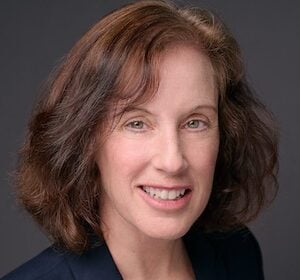
Signaling its ambitions to dig deeper and break more big stories, NPR News has hired a news manager to lead its first-ever investigative reporting unit. ¶ Susanne Reber, a radio journalist who built an investigative program at the Canadian Broadcasting Corp., joined NPR on Jan. 4 as deputy managing editor of investigations... Pictured: Ms. Reber at Canada's Michener Awards ceremony.
Is public radio having one of those Betamax moments when technology slaloms and hurdles right over rights deals and overturns media business models? ¶ Not if the public radio networks can help it. ¶ NPR, Public Radio International and American Public Media jointly wrote to stations Nov. 2, warning them to “exercise caution” and examine contracts offered by tech services vendors to check whether they’d lead to violations of the stations’ rights deals with the networks.
Flying a flag of donors’ rights, the fans of defunct Twin Cities classical music station WCAL decided over the weekend to return to the Minnesota Court of Appeals, which rejected their initial appeal Dec. 29 [2009]. ¶ The three-judge court agreed with a February 2009 state district court decision that Save WCAL waited too long to file suit opposing St. Olaf College’s sale of its station to Minnesota Public Radio five years ago...
What's the job for the Public Media Corps?Nonsa Christian Ugbode offers a job description in a Current commentary. ... At the gatherings in San Francisco and Atlanta, a shared objective was to inject new voices into traditional public broadcasting by creating new job profiles. ¶ What would those job profiles be? What skills are needed by these “legacy” broadcasting institutions to reach their audiences in the age of public media 2.0, which CNN, NBC and other commercial media could easily dominate, at least in the volume of their output?
Webinar on the Public Media Corps, Jan. 13: Ugbode, Public Media Corps Director Kay Shaw and Jacquie Jones, head of the National Black Programming Consortium, will participate in a peer webinar Wednesday, Jan. 13 sponsored by public broadcasting's Natiional Center for Media Engagement. The one-hour online event is scheduled for 2 p.m. Register here.
PBS devises a less-is-more response to its program budget bind: PBS is raising tent-poles to reinvigorate its primetime lineup. Over the next one to three years, it will shrink down a number of as-yet-unidentified series to high-profile special events, then use the freed-up production money and schedule space to nurture new shows it hopes will mature into icons.
Boston’s public radio landscape shifted Dec. 1 when WGBH moved all of its classical music programming to WCRB 99.5 FM and adopted a news/talk-dominated format for WGBH 89.7. ¶ The change, made possible by WGBH’s $14 million purchase of the commercial classical station from Nassau Broadcasting Partners, marks a strategic redirection for the Boston pubcaster that’s known throughout the world as the top producer of television programming for PBS.
CPB will get $25 million for “fiscal stabilization” grants to aid public TV and radio stations this year, a House-Senate conference committee decided last week. The number was a compromise between the House’s $40 million figure and the Senate’s $10 million.
A commentary by Steve Robinson of WFMT in Chicago: So what will journalism and, for that matter, all content look like in five years and how will it be delivered? ¶ It will all come together on devices resembling the rumored iTablet ... connected full-time to the Internet, which will receive audio, video, movies and every flavor of text, . . . while doing thousands of other handy things that laptops and smartphones do.
Baltimore- area Triple A station WTMD and its licensee are proposing to rehab a 70-year-old historic- landmarked Art Deco movie theater into a film and concert theater and headquarters for the station.
It’s scalable, remixable and rich in UGC! In a commentary, retired WNET chief Bill Baker and Evan Leatherwood write: Those calling for more local news from public media — and those experimenting with new ways to provide it — should examine a business model devised for commercial television more than 30 years ago. PM Magazine was an evening primetime news and entertainment show produced by a central cooperative with members from 100 independent television stations ...
City officials in Wilmington, Del., say they will oppose the FCC license renewal of Philadelphia-based WHYY-TV. On the FCC’s books, the channel is assigned to Wilmington, but WHYY based its tri-state service in up the river in Philadelphia and assuaged Delaware’s grievance for 46 years by airing a daily news program about the neighboring state, which has no TV station based on its soil. The relationship soured in July, when the station stopped producing Delaware Tonight ...
... detailed in reports on the Rocky Mountain and Lone Star competitions.
Now a dot-com called Kachingle is starting to roll out an online service designed to make voluntary support easy for even the most Internet-dazed, pledge-averse, marginally committed and low-budgeted Medici to virtually toss coins, or dollars, to reward the online media they love and appreciate.
Health-care legislation now pending in Congress may be one of the best new sources of support for public-service content, public TV’s lobbyists are saying. The Association of Public Television Stations is eyeing the chance to compete for support under the House and Senate bills’ authorization of health education, disease prevention and wellness services, a multibillion-dollar spending area with strong bipartisan support. What they have in mind are projects such as Kentucky Educational Television’s Be Well Kentucky, or the national project Living with MyType2, just announced by PBS, CPB and WGBH ...
Horton and Jones were among the founders of major public stations in Los Angeles and San Diego.

Since Congress last reviewed the Public Broadcasting Act in 1992, public media have had little hope they’d see improvements from a new reauthorization. Now CPB is considering a high-stakes push for a funding mandate to match its ambitions for new digital public services....
A commentary by Caryn G. Mathes. g.m.: As a self-proclaimed evangelist for HD Radio, I am often asked why I have inculcated it so deeply in the workings of WAMU in Washington. We devote several full-time employees to produce more than 50 hours a week of live original programming for our multicast channels — bluegrass and Americana music on Channel 2, and news and information on Channel 3....
Producer Kembrew McLeod: One of the reasons I went to grad school to study this stuff in the early '90s was because groups like Public Enemy and De La Soul, a lot of my favorite groups, started getting sued...
The PBS documentary The Botany of Desire, which aired Oct. 28 [2009], started “with a terrific book,” says producer/director Michael Schwarz. A long time ago. His friend Michael Pollan, author of the bestseller of the same name, sent him a manuscript in October 2000 ... Pictured: Schwarz, Pollan and one of their most troublesome stars: a cannabis plant.
Ellen Rocco on NPR:She was angry at the network when she joined its board seven years ago.Now she wants to work with its new leaders.
Michael Couzens on LPFM: NPR should have better ways to compete than thwarting new noncom radio stations.
Craig Curtis on Arbitron's new meters: Radio seeing a new normal — lower ratings (with no guaranteed cume bump)
Pubradio will sketch workable economics, a case for funding: Having heard two prescriptions for American journalism that recommended major surgery on public broadcasting, leaders in the field most often had two responses to proposals that called for the field to shift focus to local news. ¶ Leading with a consistent “yes,” pubcasters generally endorsed the “broader vision of public service media” ...
PBS will pick up where Reading Rainbow left off, launching a new annual writing and drawing contest for children in cahoots with public TV stations around the country. Buffalo, N.Y.-based WNED, the series co-producer for 26 years, will produce and co-sponsor the new PBS Kids Go! Writers Contest.
A compromise in the long-running dispute over low-power FM stations has put more momentum behind the Local Community Radio Act of 2009, a bill that would largely remove channel-spacing rules that have blocked new LPFMs in urban areas. ¶ But NPR, speaking for its full-power member stations, added a wrinkle to its position, suggesting that the FCC reimpose the spacing rules if and when digital HD Radio becomes the dominant radio technology. ...
Michael Couzens writes: NPR should have better ways to compete than thwarting new noncom radio stations.
Local and watchdog news roles most vital, report says: A study on the future of American journalism commissioned by the Columbia University j-school sharply criticizes public broadcasting for failing to develop the local newsgathering capacity that would enable it to deliver on its mission to inform the public. ¶ “The Reconstruction of American Journalism,” published last week and co-authored by former Washington Post Executive Editor Leonard Downie, who teaches at the University of Arizona, and Michael Schudson of Columbia’s Graduate School of Journalism, recommends new mechanisms to support “accountability journalism” — the in-depth watchdog reporting that they believe is most essential to a functioning democracy ...
A multimedia news organization committed to public service journalism will begin producing regional coverage of the Chicago area and Illinois for The New York Times next month. ¶ WTTW, one of the few public TV stations with a longstanding tradition of producing a nightly news report, is a founding partner in the Chicago News Cooperative ...

Maybe, says CPB's inspector general: Could CPB have avoided the public collision of wills over one of the America at a Crossroads documentaries that tainted its $20 million project in 2007 about the post-9/11 world? ¶ Determining that, in effect, was the assignment that Cheryl Halpern, then chair of the CPB Board, gave more than two years ago to the corporation’s semi-autonomous inspector general, Kenneth Konz. (Pictured: a radical Islamist who issued a death sentence on a filmmaker in France swats away a camera.)
Rather than going independent, the Quad Cities’ fiscally distressed pubTV station, WQPT, will move its license to a different higher-ed institution. ¶ Now it’s expected to be licensed to four-year Western Illinois University, which recently won state capital funding to start building an expanded campus in Moline, on the Mississippi almost 100 miles north of WIU’s home campus in Macomb. ...
Knight Commission’s vision of public media: ‘More local, more inclusive, more interactive’Citing public broadcasting’s “mixed history” in providing local news and information, a blue-ribbon panel has called on the field to “move quickly toward a broader vision of public service media.” ¶ In its final report released Oct. 2 [2009], the Knight Commission on the Information Needs of Communities in a Democracy envisions a public media realm that would be “more local, more inclusive and more interactive"... Bay Area, NPR Argo projects: two ways to expand local journalismPublic broadcasters announced two experiments in local news reporting, both prompted by the decline of newspapers, both nonprofit and supported by philanthropy and both designed to reach most users through the Internet, wired or wireless... |
|---|
North to Alaska but, alas, no Hawaii: Ken Burns’s 4-year-old daughter Olivia eats her meals atop a U.S. map so she can track her father. The documentarian has been absent from his family in Walpole, N.H., more than 200 days this year — so far. Before the broadcast of his National Parks series in late September, the last time Burns had been home to sup with Olivia was Aug. 21. . . Pictured: A fan greets Burns on the street at the indie doc Mountainfilm Festival in Telluride, Colo., in May. (Photo: Gus Gusciora, Mountainfilm.)
Many months into the recession, pubcasting’s fiscal 2008 revenue from investments and “other” revenues had declined by $167 million from the previous year, according to CPB’s recently released annual system revenue report. ¶ The drop in “other” revenues pulled down the system’s total revenue by $73.4 million, or 2.5 percent, to $2.85 billion.
...while African American consortium recasts its midday show with newsman Tony Cox. Two daily public radio programs for African American audiences have risen from the ashes of News and Notes, a talk show that NPR cancelled in March. But acrimony over plans, funding and personalities involved in the midday programs has split the African American Public Radio Consortium ... Pictured: Dyson at left, Cox at right. (Photo: Edward Cates.)
When they come to town, these new Arbitron figures are the only ones that matter, says Craig Curtis of Southern California Public Radio.
Radio seeing a new normal — lower ratings (with no guaranteed cume bump)
SUBMIT A LINK | CLICK TO SUBSCRIBE TO FEED
(What is this?)
Steven Waldman, senior advisor to FCC Chairman Julius Genachowski, says saving journalim "is not our job." However, "we are looking at it in terms of preserving certain functions, in which I do include accountability journalism." Waldman is exploring possibilities for a report to the commission on the future of news in an uncertain time, and sat down for a Q&A with Broadcasting & Cable's John Eggerton.
posted at 7:37 PM EST
Sesame Street gets a new neighbor soon: Carrie Underworm, who looks and sounds very much like country superstar Carrie Underwood. She'll debut Thursday. Get a sneak peek here.
posted at 6:34 PM EST
APTS Capitol Hill Day has been canceled for now. Spokesperson Stacey Karp said that due to the blizzard, there's a good chance that local businesses as well as Congress will be "severely disrupted for several days." Station reps were scheduled to meet tomorrow and Monday, and visit members of Congress on Tuesday. APTS is considering rescheduling or using alternatives such as webinars or video conferences.
posted at 6:05 PM EST
The White House yesterday nominated Dick Lobo, president and chief executive of Tampa PBS station WEDU-Ch. 3, to head the International Broadcasting Bureau. The federal bureau runs Voice of America and two other broadcasts aimed at Cuba, Radio and TV Marti. Lobo, 73, still must be confirmed by the Senate. Lobo recently retired after seven years heading the Tampa station and 23 in commercial TV. He had worked in overseas broadcasting earlier; President Clinton appointed him head of USIA's Office of Cuba Broadcasting in 1994. Lobo's wife, Caren, supervised Florida fundraising for Barack Obama during the 2008 presidential election.
posted at 11:15 AM EST
Text donations for disaster relief in Haiti topped $35 million earlier this week, and donors' sudden willingness to use mobile phones for charitable contributions makes text-giving look like a promising way for pubcasting stations to raise money.
But it's not as easy as it sounds. WXPN in Philadelphia and KQED in San Francisco began experimenting with text-giving programs last year and had modest results.
'XPN asked for text donations during its XPoNential Music Festival last July. "We didn't make a lot of money, but we learned a ton about how to make it work," said Melanie Coulson, a Development Exchange Inc. fundraising consultant who managed the project for WXPN. "I think events are a great way to do it."
KQED tried two different approaches: on-air requests for text gifts during Earth Day programming and promotions over the month of April; and, more targeted, urgent appeals during its year-end fundraising campaign in December. "The results were dramatically improved, with almost four times as much money raised," said Yoon Lee, KQED director of new media marketing, of the latter campaign.
Both Coulson and Lee will report on the projects on Monday, Feb. 8, during a webinar produced by DEI.
posted at 9:55 AM EST
The FCC announced today it is giving Native American tribes a priority (PDF) for broadcast radio licenses in their communities. The FCC statement notes that while more than a million Native Americans and Alaska Natives live on some 55 million acres of tribal lands nationwide, only 41 radio stations are currently licensed to native tribes. The new Tribal Priority gives license precedence to federally recognized Native American Tribes and Alaska Native Villages, or companies controlled by tribes on their land. Here's the order (PDF). In a related statement (PDF), Commissioner Michael Copps explained that the current allocation priorities, intended to provide fair distribution of radio service across America, have not worked for tribal lands.
posted at 9:38 AM EST
The Way We Get By, an indie doc produced in association with WGBH Lab, has won best documentary in AARP Magazine’s annual Movies for Grownups Awards. The honors recognize outstanding productions for the 50-plus audience. The film was made through the Independent Television Service's LINCS (Linking Independents and Co-Producing Stations) initiative.
posted at 4:44 PM EST
Does your station want to get in on broadband stimulus funding? The National Center for Media Engagement is hosting a webinar, the first in a series, at 2 p.m. Thursday. Joanne Hovis, president of Columbia Telecommunications Corp. and an authority on community broadband, will provide technical and strategic advice to pubcasting stations. This is the first in a series of webinars from NCME, CPB and the APTS Grant Center. Sign up at the NCME website. The next one is 2 p.m. Feb. 11.
posted at 10:38 AM EST
The latest public radio offering in Apple's iTunes App store is from This American Life. For $2.99, iPhone users gain access to the 15-year archive of This American Life radio programs; episodes of the Showtime television series can be downloaded for an additional fee. Public Radio Exchange developed the app in collaboration with producers of TAL and Chicago Public Radio. "There is no doubt: it is a high-end app," says Jake Shapiro, PRX executive director. "A lot of ingenuity went into it, and back-and-forth about what it needs to be. It needed a lot of development time to make sure it was high-performing." Among the app's nifty features: customizable searches allowing users to find their favorite episode or contributors, sharing tools, and a countdown clock encouraging users to live stream the first broadcast of each weekly episode, Friday evenings on Chicago Public Radio. “Note, ours is the only app providing a hand-held Geiger counter for the live show that drives interactive media inexorably backwards to 1968,” says WBEZ President Torey Malatia, in a PRX release. PRX recently received CPB funding to upgrade and relaunch its Public Radio Player, the free iPhone app providing access to the web streams of public radio stations, and to create a new local station app in collaboration with WBUR.
posted at 12:30 PM EST
President Barack Obama's new budget proposal includes extending the FCC's authority to auction spectrum "indefinitely," according to Broadcasting & Cable. That move would free up space for wireless broadband carriers. The budget is looking for the National Telecommunications and Information Administration (NTIA) and the FCC to collaborate over 10 years "to make available significant spectrum suitable for both mobile and fixed wireless broadband use." Many broadcasters say spectrum is not available, because it's already being used for HDTV and muliticasting and mobile DTV. The FCC is undertaking a spectrum inventory this year, FCC Commissioner Michael Copps told the CPB Board of Directors at a meeting last week.
posted at 11:29 AM EST
Two documentaries airing on POV this year are among Academy Award nominees announced this morning. “Food, Inc.,” scheduled for April 21, and the ITVS co-production of “The Most Dangerous Man in America: Daniel Ellsberg and the Pentagon Papers," also running in 2010, were both nominated for the Best Documentary Feature award. The Oscars for outstanding film achievements of 2009 will be presented at 8 p.m. Eastern on March 7 from the Kodak Theatre in Hollywood. There's a full list of nominees on the Academy's website.
posted at 11:15 AM EST
At least three public broadcasting requests for broadband stimulus funding have been turned down. The site simulatingbroadband.com, which tracks news about the effort, reports that the federal agency overseeing the grants, the National Telecommunications and Information Administration (NTIA), is mailing out around 1,400 rejection letters and updating its online database to reflect the nonfunded applications. Included in the rejections: Mississippi Public Broadcasting, which wanted $2.2 million for a public computer center for children and childcare providers; Florida Public Broadcasting Service, which requested $22.8 million for a HELPS (Health, Education, Local, Public Safety) Network; and PBS, asking for $8.7 million for an eight-station local and national partnership (California, Nevada, Ohio, Pennsylvania, South Carolina, Texas, Utah and Virginia) to combine content and outreach programs to stimulate demand for educational broadband content. For background, see Current's Sept. 21, 2009, story.
posted at 10:47 AM EST
President Barack Obama's budget for next year recommends $496 million for CPB, including a $460 million two-year advance appropriation for FY13, according to APTS. That's an increase of $40 million from this year and $15 million from FY12. Also included is $36 million for pubTV and radio digital conversion, content and services. "The proposed increase in the advance appropriation reflects a recognition of the enormous return on investment public broadcasting generates regarding education, job training and disease prevention," said APTS President Larry Sidman. But persuasive work remains, Sidman noted: The budget omits funding for the Public Telecommunications Facilities Program, which helps pay for public stations' equipment upgrades, and the Agriculture Department's Rural Utility Service Digital Transition Grant Program. Also, the Obama budget proposes to consolidate Ready to Learn (Current, June 23, 2008) and Ready to Teach into larger education programs, without specific funding for either. Station reps will hear all about this and more as they swarm on Capitol Hill during APTS' annual Capitol Hill Day lobbyfest Feb. 7-9.
posted at 5:10 PM EST
This week, a special Thursday edition of A Prairie Home Companion will be "cinecast" live in HD to some 500 theaters across North America. The two-hour show starts at 8 p.m., with an encore Feb. 9. It's the first time the eclectic program has tried this.
posted at 3:03 PM EST
A former Time correspondent whose reports ran on the PBS NewsHour is the new editor of the Washington Times, the paper announced today. The show carried Sam Dealey's segments from Africa. The paper's top management staff was recently terminated from the Times, which is owned by the Rev. Sun Myung Moon's Unification Church.
posted at 11:52 AM EST
In a story headlined, "PETA Smacks Big Bird in D.C.," Broadcasting & Cable writes that People for the Ethical Treatment of Animals has filed a complaint with the FCC against pubTV stations that air Sesame Street. Two problems, PETA says: The show is presenting a spot showing a sanitary poultry processing plant with children eating eggs and talking about their nutritive value. PETA has long contended that chickens raised for slaughter or egg production live in filthy, inhumane conditions. Also, PETA says the American Egg Board's work is embedded in Sesame Street segments; the board is the industry promotional group created by Congress for egg producers. PETA wants fines and/or sanctions for stations carrying the show. According to the Sesame Workshop's website, the show's "Good Egg Project," sponsored by the American Egg Board, "aims to educate families about how eggs get from the farm to their breakfast tables, along with the many health benefits of eating eggs." PETA is also undertaking an email campaign targeted at the Workshop's Gary Knell, president, and Patti Miller, veep of public policy. In a copy of the complaint provided to Current by PETA, its litigation counsel, Martina Bernstein, wrote that stations "breached their obligation to protect children from excessive and inappropriate commercial messages, in violation of the limits of the amount of commercial matter in children's programming as well as the commission's policy against host-selling." PETA wants "a forfeiture penalty or other sanctions" against the stations. A spokesperson for the Workshop told Current its only statement is at the end of the Broadcasting & Cable article: “Sesame Workshop as a practice does not comment on pending legal matters.”
posted at 11:21 AM EST
PBS President Paula Kerger was on hand Saturday for the grand opening of KAET/Channel 8's new digital media center at the Walter Cronkite School of Journalism and Mass Communication at Arizona State University, reports the State Press student paper. Arizona PBS General Manager Kelly McCullough said the move has been planned for two years. Under three hours after staffers signed off at the former station, they were on the air from the new facility. “The transition was surprisingly smooth,” McCullough said. “There was so much that really could have gone wrong. We have had some glitches and I’m sure we’ll have a few more but the important fact is, we’re on the air on three channels in high quality in nearly all of Arizona.” The station and university have been affiliated for 49 years.
posted at 11:07 AM EST
As a follow-up to its recent report on public radio audience growth strategies, Station Resource Group asked 14 leading pubcasting and public media experts to react to its recommendations on new media. Which of the many activities proposed to advance pubradio in the "networked environment" should be top priority? In Proposals for Investments in New Media (PDF), an analysis and report on what the 14 respondents told SRG, two initiatives appear to have "relatively broad support": developing a flexible local/national Internet structure for distributing all pubradio content, and exploring a coordinated online fundraising system. If you haven't already read the final set (PDF) of recommendations from the CPB-backed Grow the Audience project, the section on new media--which is the focus of this particular discussion--begins on page 43.
posted at 1:49 PM EST
The CPB Board earlier this week approved its FY08-09 affirmative action report and FY10 plan (PDF). According to the document, during FY09, total employees increased from 100 to 114; 12 staffers left during that year. Of the 26 employees hired, 13 are women and 10 are minorities. In FY 2009 CPB also hired five student interns: one male and four females, and three of the five were minorities. That brings the total staff breakdown for 2009 to non-minority, 61 percent; minorities, 39 percent; males, 45 percent; and females, 55 percent. For 2010, CPB says it will work to maintain or increase minority and female representation within executive and senior officials and managers, as well as first and mid-level officials and managers.
posted at 1:38 PM EST
President Barack Obama has released a minute-long video praising Sesame Street on its 40th anniversary year -- or, as he says, "this video is brought to you by the number 40." He congratulates the show "as a parent, and as the president," and recalls watching it with his younger sister. His two girls as well "learned a great deal" from the show. "There are many adults who can stand to learn again the lessons Sesame Street offers: Compassion, kindness and respect for our differences," the president noted.
posted at 1:26 PM EST
Frontline's Tom Jennings is part of a team of journalists that are finalists for the prestigious Goldsmith Prize for Investigative Reporting, the Harvard Kennedy School announced today. The investigation, titled "Law and Disorder," revealed details of police shootings of at least 10 persons in the wake of Hurricane Katrina. In addition to Jennings, reporters included Gordon Russell, Laura Maggi and Brendan McCarthy of the New Orleans Times-Picayune, A.C. Thompson of public interest journalism site ProPublica, along with support from the Nation Institute, a progressive think tank supporting freedom of the press. The winner of six project finalists will be announced at a March 23 ceremony at Harvard. The award is intended, according to the Joan Shorenstein Center on the Press, Politics and Public Policy, to "recognize and encourage journalism which promotes more effective and ethical conduct of government, the making of public policy, or the practice of politics by disclosing excessive secrecy, impropriety and mismanagement, or instances of particularly commendable government performance." Finalists get $10,000, and the winner, $25,000.
posted at 12:09 PM EST
Greg Shanley, 49, longtime news director, producer and show host for Iowa Public Radio, died Tuesday night at University of Iowa Hospitals in Iowa City, according to the Des Moines Register. He was hired in 1987 as a producer/reporter, and served as local host of Morning Edition before moving into the director post. Other obituaries in Current: Carlos Sena of KSUT in Colorado; Robben Fleming, former CPB Board president; and Lillie Herndon, who served on the boards of PBS and CPB.
posted at 10:34 AM EST
PBS NewsHour's "Annotated State of the Union" is being praised by the Poynter Institute's Al Tompkins as a "remarkable analysis." He's the Group Leader for Broadcasting and Online at the institute, which is a school for journalists and media teachers. The feature breaks the speech into clips with links to resources for people who want to learn more. "It's pretty brilliant," Tompkins writes. Anne Bell, spokesperson for the show, said analysis by Mark Shields and David Brooks on YouTube also received more than 22,000 views.
posted at 3:56 PM EST
Relief organizations have raised a total of more than $525 million for victims of the recent earthquake in Haiti, according to the Chronicle of Philanthropy. As of Wednesday, the figures from just a few: A worldwide telethon last Friday, "Help for Haiti Now," raised $66 million; it was carried by a multitude of channels including PBS affiliates. The American Red Cross received about $185 million, some $29 million of that via text messages. And Convio, which provides software to charities, processed more than $195 million online.
posted at 3:10 PM EST
Over the next year, the Station Resource Group and the Affinity Group Coalition will be soliciting input from both inside and outside the pubcasting system for its project, "Editorial Integrity for Public Broadcasters in the 21st Century." Tom Thomas, co-CEO of the SRG, and Ted Krichels, g.m. of Penn State Public Broadcasting, are organizing the effort. The two told the CPB Board at its meeting earlier this week that the project, expected to take about a year, is just getting under way. Both TV and radio pubcasters will be involved, as well as experts and others both inside and outside the system. This will be a "station-centric" undertaking, Krichels said. At that level, "some stations have very well-thought out guidelines, others don't have much of anything," he noted. There'll be a website to share papers and reports as well as recommendations. However, "the website won't be just for stations," Thomas said. "There'll be a broader transparency to invite others to join in."
posted at 2:06 PM EST
CPB and the National Center for Media Engagement are sponsoring two webinars in February to advise stations applying for broadband stimulus funding. Joanne Hovis, president of Columbia Telecommunications Corp. and an authority on community broadband topics, will offer background information on the availability of funds, explain the application requirements and answer questions from participants to help them develop and refine their applications. Sign up here for the 2 p.m. Eastern meeting on Feb. 4, and here for Feb. 11.
posted at 11:20 AM EST
Congress should not only increase money to pubcasting but also use its funding mechanism as a possible model to funnel financial support to news operations, according to a new report from the USC's Annenberg School for Communication and Journalism. Geoffrey Cowan, one of the co-authors, is director of the school's Center on Communication Leadership and Policy, as well as a past CPB board member; David Westphal is a longtime print and wire service editor, heading up McClatchy's Washington bureau for more than a decade. They point out the value of pubcasting: "News coverage on public radio and TV has the highest trust ratings of any American media. . . . In short, policymakers have in public broadcasting an almost sure-fire bet for strengthening the quality and scope of news and information." They also suggest any future government funding of news "should be indirect, rather than direct (as it is through the Corporation for Public Broadcasting and through participating public radio and television stations)." Read the 20-page report here (PDF).
posted at 10:43 AM EST
CPB has become "a needless drain on the public coffers that has outlived its usefulness," writes the Washington Times in an editorial today. Its reasoning: Pubcasting was born of the need to provide alternative programming to only three networks available in 1967; now there are a multitude of channels both on TV and the Internet. The newspaper cites demographics of viewers (mainly white, educated and older) that "reinforce the argument that public broadcasting is an upper-class subsidy. It's highly doubtful that the urban American underclass is rushing home to catch Masterpiece Theater and the best of British comedy." It suggests turning Sesame Workshop, "one of the most lucrative franchises to emerge from the public broadcasting system," into a for-profit publicly traded corporation to support pubcasting.
posted at 10:11 AM EST
Peter Morrill, g.m. of IdahoPTV, appeared before the joint state finance-appropriation committee today in an attempt to persuade members against phasing out all funding over the next four years. One question, from Sen. Jeff Siddoway, a Republican from Terreton: Why doesn't IPTV just sell commercials instead of taking state money? Because federal law prohibits that, Morrill explained.
posted at 3:39 PM EST
Pubmedia blogger and former pubcaster John Proffitt disagrees — strongly — with the the support of CPB, PBS, APTS and NETA for mobile DTV. "All momentum is in the opposite direction," he writes, referencing Current's story. "You seriously think that just by creating yet another distribution channel — one that competes with existing popular channels — millenials will suddenly get interested in news and public affairs programs? . . . “Oooh! Washington Week on my mobile phone? Check it out Kayleigh!”
posted at 3:20 PM EST
Dual licensee KCSM in San Mateo, Calif., has raised only $30,000 of its $1 million goal to stave off being sold, according to the San Jose Mercury News. Tonight, the San Mateo County Community College District board is considering whether a plan to lease digital streams will generate enough revenue to sustain the station. The strategy could generate $750,000 to $1.3 million a year. The 1.5 million watt station broadcasts to San Mateo, San Francisco, Santa Clara, Alameda and Contra Costa counties, and is carried on 60 cable systems. Last year it dropped PBS membership to save money.
posted at 2:57 PM EST
PubTV funding is down $200 million and radio is down $38 million, the CPB Board heard at today's meeting at headquarters in Washington. Mark Erstling, senior veep for system development, and Bruce Theriault, senior veep, radio, presented the figures providing comparisons between actual FY08 totals and FY09 estimates. Also discussed: Waning state support (see this week's Current for details). Board member Bruce Ramer expressed concern about community service grants being tied to the amount of state funding a station receives. "Maybe state funds should not be included in the formula in the same way that federal funds aren't," Ramer suggested. Theriault predicted that for FY11, "we expect many more cuts, some severe." Meanwhile, another station has been accepted for financial stabilization assistance, NPR affiliate WICN, playing jazz and folk in Worcester, Mass. In station equipment news, CPB will continue investing in master controls -- but only for collaborating stations. "We continue to hear about stations pursuing efficiencies and strengthening business models through collaborations and local management agreements where the weaker station is now run by the stronger," Theriault said. "We're encouraging that work."
posted at 2:16 PM EST
KCRW's Ruth Seymour offers some advice to her yet-to-be-named successor in next month's edition of Los Angeles Magazine: stay focused on creating great programming for radio listeners. "[T]he reason people listen is that they’re intrigued or fascinated or interested in the content," she says in an extended Q & A to be published on the eve of her retirement. "That’s the most important thing to remember, and it is the thing that increasingly concerns me—that independent producers, the people who are the creative types, are marginalized today in favor of the technology people. It’s a real failure not to understand that the business you’re in is programming." NPR itself would benefit from shifting its focus back to creating new programming, she adds. "It cannot simply invest in Morning Edition and All Things Considered. It must be seen—and it isn’t now—as a place that welcomes independent productions. NPR doesn’t have a program director right now who listens to new stuff....Instead the focus at NPR is online. The Internet gives NPR a voice to go over the heads of the local stations, OK? That’s the big danger." With its eclectic mix of contemporary music and news programming, KCRW has built a radio and web service that reaches far beyond the Los Angeles market; Seymour dismisses the notion that stations would benefit from uniting online behind NPR's brand. "We are not interested. We want to sing our own song."
posted at 11:30 AM EST
A past WGBH employee has pleaded guilty to embezzling almost $500,000 from the station, the Boston Herald reports. Philip McCabe of Reading, Pa., who worked as accounting manager from 1987 to 2007, used the money for "vacations, golf, dining, liquor and clothes," according to the paper. He was sentenced to two years in prison. He'll serve six months with the remainder suspended. McCabe also has to pay the station's $25,000 deductible on its insurance policy covering much of the loss. “We’re satisfied with the outcome and appreciate all the work of the attorney general’s office in handling the case and bringing it to resolution,” WGBH spokesperson Jeanne Hopkins told the Boston Business Journal.
posted at 6:09 PM EST
Will public broadcasters someday be made to give up their portion of the spectrum? That concern surfaced during a wide-ranging discussion on the future of broadband at today's CPB Board meeting, going on all day at headquarters in Washington. FCC Commissioner Michael Copps told the board that the agency's proposed broadband plan, which he considers "perhaps the biggest initiative ever at the FCC," will be delivered to the president on March 17. Interested parties — including pubcasters — are currently "in question-asking mode" before drafting recommendations. One idea being floated is compensation for pubcasters that voluntarily turn over some of their spectrum to support the nation's growing appetite for broadband. CPB Board member Beth Courtney expressed concern that financially struggling stations may feel compelled to do so for monetary reasons. Copps said such issues would need to be taken into consideration before any decisions are made. The priority with any recommendations, he added, "is first do no harm." Another possibility was posed by another speaker, Ken Solomon of Dow Lohnes, a law firm that reps many public stations before the FCC: As over-air signals fall away, pubcasters might be given permission to keep a "lifeline" for viewers that need that service. Pubstations would receive compensation for carrying over-air signals from commercial stations. But Solomon also issued a warning. "I don't know that we can rest assured that ultimately some sort of coercive action will be taken if [relinquishing spectrum] is found to be necessary." But Copps stressed he wants a "good discussion" of broadband, adding that the spectrum needs to be put to good use, "and public broadcasting does that." He also said the FCC will undertake a spectrum inventory within the next year.
posted at 12:23 PM EST
On Wednesday, Idaho Public Television chief Peter Morrill makes his case for continued state aid in a state legislative finance committee hearing at 10:30 a.m. Mountain time. Like many other legislative meetings, it will be streamed live on IPT's Idaho Legislature Live.
Friends of Idaho Public Television, a nonprofit support group for the state-owned network, has created a webpage, "Save Idaho Public Television," to get viewers involved in its fight against a four-year total phaseout of state funding. The station’s $7 million bud
posted at 2:54 PM EST
On his personal blog, Public Purpose Media, Rob Bole, CPB veep for digital media strategies, delves into how pubcasting can and should adopt innovations he saw at the recent International Consumer Electronics Show in Las Vegas. "Public media needs an innovation agenda," he writes. "It needs to be clear, rational and focused on providing short- and medium-term value to the system and the consumer. The good news is that this is not hard. The bad news is that we have to change our ways, especially how we collaborate to get it done." Specific ideas: PubTV should enhance the "value and utility" of programming by developing widgets, especially with set-top box manufacturers like Boxee. Also, invest in educational gaming. Create interactive content for multiple platforms; he calls that "an opportunity for low costs and high returns."Increase accessibility to archived content. His suggestions for doing all this include reallocating resources to create an annual $10 million dollar public media innovation development fund, and creating a Public Media Research & Development Council. Bole notes on the blog it "reflects his own personal opinions."
posted at 2:23 PM EST
"Help for Haiti Now," the worldwide telethon for earthquake relief that ran on many stations including PBS last Friday night, has raised $58 million so far, reports the Eurweb news site. That's a record for donations to a disaster relief telethon, it noted. The figure will go higher: Yet to be tallied are donations by corporations or via iTunes. Users can contribute by purchasing performance recordings of the telethon for 99 cents, or the entire album for $7.99.
posted at 11:13 AM EST
With the announcement last week of four more broadband grants under the Recovery Act, the National Telecommunications and Information Administration has awarded $200 million or about 4 percent of its $4.8 billion broadband purse.
Meanwhile, NTIA and the Ag Department’s Rural Utilities Service, which runs a separate grant program, set the deadline for their second rounds: Both will accept apps Feb. 16 to March 15. Grantees will be announced by Sept. 30. Details are online.
NTIA’s latest grants will help expand fast Internet networks in two states: In Michigan, nonprofit Merit Network Inc. got $33.3 million to extend its fiber-optic backbone by 955 miles in 32 counties. (Merit will discuss plans in a webcast Monday morning.) And in North Carolina, nonprofit MCNC got $28.2 million to expand the North Carolina Research and Education Network, adding 494 miles of middle-mile connections to 685 miles of existing routes in the urbanized center of the state.
Much smaller sums went to the University of Massachusetts-Lowell for broadband awareness and literacy outreach and Michigan State University to add 500 workstations in computer centers around the state.
NTIA said it will give top priority to Comprehensive Community Infrastructure that complete the “middle mile” hookups for libraries, colleges, hospitals and other key institutions in an area. It also will put at least $150 million into public computer centers that give broadband access to the general public and $100 million into Sustainable Broadband Adoption grants to educate and equip “vulnerable population groups” that don’t often use broadband.
Agriculture’s Rural Utilities Service will concentrate funds on last-mile projects while streamlining its aid options: All supported projects will get 75 percent of their funds as grants and 25 percent as loans. The agency will announce a later app period for projects providing broadband via satellite in rural areas that are left unserved by other Recovery Act projects.
For potential grant-seekers, both agencies will offer live webcasts from technical assistance workshops this week: On Tuesday, Agriculture’s from Portland, Ore., at noon Eastern time, 9 a.m. Pacific. On Friday, Jan. 29, NTIA will stream its workshop from Denver, at 11 a.m. Eastern, 9 a.m. Mountain. Online participants must register more than 24 hours in advance.
In addition to the events in Portland and Denver, the agencies will hold public workshops around the country: Reno, Nev., Jan. 27; San Antonio, Feb. 1; Eureka, Mo., Feb. 2; Sioux Falls, S.D., Feb. 4; Detroit, Feb. 5; Blacksburg, Va., Feb. 9; Fayetteville, N.C., Feb. 11; and Atlanta, Feb. 12.
The agencies also offer a website, at match.broadbandusa.gov, to help applicants hook up with potential partners.
posted at 7:34 PM EST
Oregon Public Broadcasting has purchased KWYA-FM from Way-FM Media Group, a contemporary Christian network, for $85,000, according to the online Radio Business Report. KWYA is in Astoria, Ore., in the far northwest corner of the state.
posted at 10:32 PM EST
CPB is taking entries for the 2010 My Source Education Innovation Awards. Pubradio stations are now also eligible. CPB is looking for station work that uses new approaches to deliver educational tools and resources, President Patricia Harrison said in a letter to stations. Award winners receive a $3,000 grant to support the work, plus a $500 stipend to travel to the ceremonies on March 20 in Washington, D.C. Honors will be presented during the 2010 Council of Chief State School Officers/Public Media Executive Summit. Application deadline is Feb. 12. Click here for more information.
posted at 3:29 PM EST
A behind-the-scenes profile of Secretary of State Hillary Clinton kicks off Tavis Smiley Reports, a series of four hourlong primetime specials on PBS. It premieres at 8 p.m. Jan. 27, just before President Obama's State of the Union address. Smiley and his production crew were granted wide access to Clinton, accompanying her on diplomatic missions abroad, in meetings on Capitol Hill, and within the State Department. Watch a clip here.
posted at 2:36 PM EST
As the late-night war of Conan vs. Leno rages on, comedian Jimmy Kimmel took time on his show last night to ponder how the fracas might look in a Ken Burns documentary. A lot like the PBS documentarian's Civil War, it turns out.
posted at 2:25 PM EST
The Bay Area News Project backed by San Francisco philanthropist Warren Hellman has forged a new alliance with the New York Times, the project announced today. The nonprofit news entity is to be helmed by C.E.O. Lisa Frasier, a McKinsey & Co. consultant who has been involved in planning the project since April 2009, and Executive Editor Jonathan Weber, founder and c.e.o. of New West, the Montana-based new media enterprise. The c.e.o. appointment, confirmed last weekend, was reported to have been a point of departure for San Francisco's KQED, which was dropped as a founding partner in the news project after several months of involvement. President Jeff Clarke told Current that the news project opted to sever formal ties with KQED in late December. Hellman informed Clarke that the pubcaster was seen as "such a force" in the Bay Area media landscape that its participation hinders the nonprofit start-up as it tries to establish itself as an independent news organization. "I respect the decision but was a little surprised by it," Clarke said. KQED still hopes to collaborate with the news project on editorial matters; Weber, a co-founder and editor of the defunct San Francisco-based Industry Standard that chronicled the dot-com boom, is highly regarded within KQED's newsroom, according to an insider who requested anonymity. And it appears the feeling is mutual. Weber told Current he intends to explore an editorial relationship with KQED. "I was not involved in the collaboration prior to the holidays," he said. "KQED has great talent and assets, and I'd like to see how we can work together."
posted at 3:57 PM EST
The FCC has issued a preliminary list of questions (PDF) and created a website for public comments on policy recommendations regarding media at the community level. In announcing the Future of Media initiative, Commission Chairman Julius Genachowski said this is a "critical juncture in the evolution of American media. Rapid technological change in the media marketplace has created opportunities for tremendous innovation. It has also caused financial turmoil for traditional media." The FCC noted that the effort "will not include any effort to control the editorial content of any type of media."
posted at 3:57 PM EST
NPR's Weekend Edition anchor Scott Simon has emerged from cervical spinal surgery to resume Tweeting about the experience. "Long surgery, went well, thanks for all lovely encouragement," he wrote late yesterday from his hospital bed in the Cleveland Clinic. He detailed the need for the operation last week on the NPR site. The surgery is used to correct neck problems.
posted at 10:19 AM EST
CPB, the American Red Cross and the Ad Council are working together to provide stations public service announcements on the earthquake in Haiti from First Lady Michelle Obama and former presidents Bill Clinton and George W. Bush. CPB is also working with the National Center for Media Engagement to allow stations to "share effective practices with their peers and access resources to help them support Haitian relief initiatives in their own communities," according to a CPB statement. CPB also provides links to various aid groups under the announcement on its website.
posted at 5:40 PM EST
"Hope for Haiti Now," an MTV-produced global telethon for earthquake victims on the island, will run on many cable and broadcast channels including PBS on Friday. PBS will provide the show on hard feed HD01 from 8 to 10 p.m. Eastern, and HD02 from 8 to 10 p.m. Pacific. The telethon will be hosted by actor George Clooney in Los Angeles, musician Wyclef Jean in New York and CNN's Anderson Cooper in Haiti, with other performances and appearances to be announced. Donations will go to Oxfam America, Partners in Health, Red Cross, UNICEF and Wyclef's Yele Haiti Foundation. PBS's primetime lineup will shift: Washington Week and Now on PBS will feed at times to be announced, Bill Moyers Journal will be pre-fed at another time, according to PBS.
posted at 3:31 PM EST
Jane Austen's Emma gets a thoroughly modern treatment from Masterpiece this Sunday: A Twitter party. During the premiere of episode one, 9-11 p.m. Eastern, Austen experts and insiders from PBS and Masterpiece will be tweeting along with fans. Participants have a chance to win a prize, too. Use hashtag #emma_pbs. The three episodes of Emma run through Feb. 7. UPDATE: And the prize will be . . . a Jane Austen action figure!
posted at 2:42 PM EST
A study released today by the Kaiser Family Foundation reveals that for the first time, kids ages 8 to 18 spent less time watching regularly scheduled TV. That daily total is three hours, 51 minutes, a 25-minute drop from 2004. Now they spend an average of seven hours, 38 minutes per day on all entertainment media. But all those new ways to watch TV -- such as the Internet, cell phones and iPods -- actually increased total daily TV viewing to four and a half hours per day, including 24 minutes of online viewing, 16 minutes on iPods and other MP3 players, and 15 minutes on cell phones. That means that 59 percent of young people’s TV viewing is on a TV set, and 41 percent is time-shifted, DVDs, online or mobile. The foundation also noted that because kids spend so much time "media multitasking" (using more than one medium simultaneously) that they actually pack 10 hours and 45 minutes into that seven-hour-plus daily figure. The study (PDF) was presented at the forum "Generation M2
posted at 12:09 PM EST
A three-day course to help producers develop and sell preschool TV shows is coming up Feb. 13-15 in New York City. Little Airplane Productions, headed by former Sesame Street writer Josh Selig, is hosting its Little Airplane Academy that covers everything from pitching and designing a show to directing and production. Appearing will be Andrew Beecham, senior VP of programming for PBS Kids Sprout, and an exec from Nickelodeon. For more information contact Melinda Richards at 212-965-8999.
posted at 11:42 AM EST
WAMC/Northeast Public Radio will open its phone banks at 8 p.m. Friday during a James Taylor benefit concert for Haiti in Great Barrington, Mass. The Albany, N.Y., station will simulcast the concert, "Help for Haiti: An Intimate Evening with James Taylor." All contributions will go to Partners in Health, a group on the island providing medical care to victims. "We need to do everything we can to help the country recover after this tragic earthquake," Taylor said in a station statement. "I'm grateful to do my part and hope my neighbors here in the Berkshires will join me and be as generous as possible." UPDATE: This benefit performance sold out within 90 minutes, already raising $150,000, matched by James and Kim Taylor for a $300,000 total. A second concert has been added for Saturday.
posted at 10:15 AM EST
U.S. public TV’s 17 entries in the annual INPUT international public television screening showcase have been selected, including five Independent Lens and three P.O.V. docs, plus programs from Masterpiece, American Experience, Frontline and History Detectives, according to Amy Shumaker of the national secretariat at South Carolina ETV. Here’s the list. The global selection of programs to be screened at the festival in May will be selected next month from among national entries. INPUT 2010 will be held May 8-12 in Budapest, Hungary. INPUT rules require that entries be split equally among three categories—documentary, drama and other. Thirteen of the 17 entries were PBS-distributed shows. Others were repped by APT and NETA.
posted at 1:27 PM EST
The Federal Communications Commission will assist Haiti to provide a "continuity of service" for communications in the aftermath of the devastating Jan. 12 earthquake, Broadcasting & Cable reports. Chair Julius Genachowski made the announcement after hearing from Conatel, the Haitian communications agency, that its headquarters had been destroyed and several staffers killed or injured. Genachowski also said U.S. communications companies are looking to help out as well. "Many companies have made significant offers of help, and urgent efforts are under way to coordinate and deliver assistance," he added. Meanwhile, pubstations are also stepping up. Among projects: KQED in San Francisco has a list of links to aid agencies, as does Oregon Public Broadcasting. WFUV, from Fordham University in New York City, has posted a Strike A Chord: Haiti campaign with links to information and opportunities to donate. And today is the last day listeners may contribute through WTMD at Towson University in Towson, Md., its Haiti fundraising drive wraps up at 8 p.m.
posted at 11:04 AM EST
San Francisco's KALW-FM launched a new website today that combines local news, arts and culture coverage and community engagement. KALWNews.org features reporting from the station's drive-time newsmagazine Crosscurrents and provides links to reporting by other local news organizations. It also invites users to share their stories, report on their communities and submit comments or commentaries. One of the five reporting beats carved out by the KALW newsroom--criminal justice coverage--will expand under NPR's Argo Project, a national-local pilot testing station-based approaches to online news coverage, according to Holly Kernan, news director. KALWNews.org was developed in collaboration with Margaret Rosas of Quiddities, the Santa Cruz-based company that received a Knight Foundation grant to develop an open source web publishing system for public radio stations. Kernan described the launch as a beta test. "This is an experiment in public media," she said.
posted at 2:41 PM EST
The long-running weekly pubaffairs series Think Tank With Ben Wattenberg is ceasing production at the end of the month, according to a press release. "It is no secret that it is very hard to raise money for any kind of media underwriting or advertising now, public or private," Wattenberg said in the statement. "But I hope that when the economy turns around, which I believe has already begun, we will be back not only with our weekly public television program, but with some exciting specials which are already in development." Over the past 15 years guests have included legal scholar Robert Bork, economists Milton Friedman and John Kenneth Galbraith former ambassador Jeane Kirkpatrick and congressman Daniel Patrick Moynihan.
posted at 1:09 PM EST
Public radio needs to completely re-engineer itself for the networked environment, writes Hearts of Space producer and host Stephen Hill, in a critique of public radio's Grow the Audience project final report. The recommendations "are mostly bland reiterations of the core values of the public media catechism . . . , cautiously extending a toe outside the box while continuing to view the world from inside it," he writes. "This approach cannot work, because innovation is not needed at the level of the public radio value system. Nor will modest, incremental online innovations be sufficient. What is needed is a new set of incentives and structural relationships between the major elements of the system and the audience that will enable and fuel an expanded set of digital services with their own logical business models" [Emphasis in original]. Hill, who produces radio programs and operates a subscription-based online music service, has been a leading advocate for creation of a comprehensive web service of pubcasting content. Hill's critique is adapted from a report he wrote for the Grow the Audience project last summer.
posted at 9:49 AM EST
"Real Stories, Real Impact" is the subject of this year's Making Your Media Matter confab sponsored by the Center for Social Media at American University. The meeting, In Washington on Feb. 11 and 12, will examine "methods for assessing various elements that contribute to high-impact public media projects," according to the center. Register online.
posted at 3:00 PM EST
Tim Graham, a blogger with the conservative site Newsbusters, was upset during a recent drive-through visit to Chick-fil-A. Included in his daughter's kid's meal was a Between the Lions CD, with logos of WGBH and Mississippi Public Broadcasting. "This underlines how blurry the line is between public broadcasting and private-sector merchandising," he writes on the site that calls itself "the leader in documenting, exposing and neutralizing liberal media bias." The "Hypocrisy!" in the headline refers to PBS President Paula Kerger's comments at the recent winter press tour that children's programming on commercial stations is built mainly around opportunities to sell toys to kids.
posted at 11:48 AM EST
Frontline has delayed its Dancing Boys of Afghanistan documentary due to concerns over the safety of a boy in the film, Broadcasting & Cable reports. It's about the custom of "Bacha Bareesh," in which boys are sold to men who keep them as concubines. In the film, an Afghan journalist infiltrated one of the rings and spoke with several boys and their "masters." It was schedule for Jan. 19; a repeat of A Death in Tehran will air instead.
posted at 10:06 AM EST
The deal to start up a local nonprofit news organization in San Francisco (Current, Oct. 13, 2009) has fallen apart, according a BNET blog report quoting anonymous sources. KQED, the public radio and TV outlet that was to partner with the journalism school of the University of California in Berkeley to launch the organization with backing from philanthropist Warren Hellman, is beset by internal turmoil, reports David Weir, a journalist/blogger and former KQED exec. "Sources have told me that the various parties to the negotiations have not been able to come up with a consensus over how to run the new news organization, and as of today, financier Hellman’s patience has apparently run out." UPDATE: Neil Henry, dean of the UC Berkeley Graduate School of Journalism, tells Poynter Institute blogger Jim Romensko: "The Bay Area News Project is alive and well and ready to start business. The first board meeting will be conducted next week. We have secured an outstanding CEO and an extraordinary editor in chief whose names will be announced later this month. The only change since our announcement in September is that KQED will not play a role as a founding partner, but we look forward to its active participation."
posted at 3:22 PM EST
Public radio marketing consultant John Sutton is troubled by the "something for everybody" approach outlined in "Public Radio in the New Network Age," the final report from the CPB-backed Grow the Audience project. "'Do everything' is not a strategy," Sutton writes on his blog. Even if decision-makers follow the report's recommendation to focus resources on stations in the top 50 markets, "the reality is that there aren’t enough resources to serve the objectives listed....Further prioritization is necessary to make smart, effective investments in audience growth." The report, written by the Station Resource Group after an 18-month research and consultation project, is "silent" on how these priorities will be set, Sutton notes. "We believe the difficult decisions about who gets help and who gets left behind should be fully transparent."
posted at 12:51 PM EST
In an interview with BayNewser, Andy Carvin explains how NPR News is using social media to track developments and find sources in Haiti. The network's social media guru also offers some insights about how to cultivate contacts and reliable news sources over time.
posted at 12:41 PM EST
PBS was expecting online streaming of PBS Kids shows for the 2-5 set to be popular when it started late last year; the usage of shows for older kids, 6-plus, which went online earlier, had fluctuated around 2 million video streams a month. They were not prepared for the tots’ appetite: 87.5 million streams in December. PBS kept mum about the number until the press tour and the NETA Conference this week. Station folk broke into applause Wednesday as PBS education chief Rob Lippincott announced the figure. Streaming of the little kids’ programs rises in the evening as the grownups’ NewsHour grabs the TV sets, he said.
posted at 10:47 AM EST
Today pubcasting stations received their share of $25 million in fiscal stabilization grants (Current, Dec. 14, 2009) from the Consolidated Appropriations Act from CPB. According to the act, the funds are provided “to maintain local programming and services and preserve jobs threatened by declines in non-Federal revenues due to the downturn in the economy” at both public TV and radio stations. President Barack Obama signed the bill Dec. 16, with funds to be distributed within 45 days. Station grants were calculated on a multiplier of each station's three-year average community service grant, a CPB statement said.
posted at 4:02 PM EST
Nature e.p. Fred Kaufman remained surprisingly calm yesterday considering he was sitting next to a man with a 13-foot Burmese python named Pugsley around his torso at TV critics press tour in Pasadena (PBS photo). Kaufman and herpetologist Shawn Heflick answered questions from reporters about the upcoming episode, "Invasion of the Giant Pythons." Questions included: How does one go about helping a person being crushed by a python? (Pour alcohol on it, snakes despise that.) Kaufman also discussed the impetus for the show: Pythons, some dumped by owners, are quickly reproducing in the Florida Everglades; the episode takes a close look at how the species is having a serious impact on the environment. Critics also got a chance to have their photo taken with Pugsley.
posted at 12:50 PM EST
Barry Garron, reporting on the TV Critics Association winter press tour in Pasadena for the Hollywood Reporter, tells Current the PBS executive session was generally heartening. "Except for the struggle for donations during these recessionary times, these are good years for PBS," Garron notes. "No one is accusing them of controversial programs, following a hidden agenda or pushing their liberal ideas on children. Even better, with the Democrats in control, there are no credible threats to funding. [PBS President Paula] Kerger even said they're getting an 8 percent increase in federal aid." Regarding Kerger's critical comments on commercial children's programming, "In some respects, her attack . . . was somewhat gratuitous. It didn't directly tie in with anything in particular other than to show that, when it comes down to it, PBS is the only programmer that parents can count on."
posted at 12:20 PM EST
The Federal Communications Commission has given permission to noncom stations to raise money for Haiti earthquake relief (PDF). Rules usually limit NCE (noncommercial educational) stations to fundraise on the air only for their own benefit. The FCC has waived the rules for past disasters including Hurricane Katrina (Current, Sept. 19, 2005), the Southeast Asia tsunami, and the Sept. 11 terror attacks (Current, Sept. 24, 2001). UPDATE: Twin Cities Public Television has set up a page to refer visitors to Minnesota's statewide Haiti relief effort. Is your station raising money for victims of the massive earthquake? Contact reporter Dru Sefton, seftond@current.org.
posted at 12:12 PM EST
Four of the 2010 duPont-Columbia Awards announced this morning went to public broadcasting news programs, including investigative reports by American RadioWorks and Frontline/World. NPR News received a silver baton for "The York Project," a series of conversations with voters about the role of race in the 2008 election. P.O.V., a PBS series showcasing independent film, won for The Judge and the General, a documentary about the prosecution of human rights violations in Chile. The first-ever duPont Award for a Web-based production was presented to MediaStorm and photojournalist Jonathan Torgovnik for a multimedia presentation about Rwandan children born of rape. Awardees, recognized for excellence in U.S. broadcast news that aired between July 1, 2008 and June 30, 2009, will receive their silver batons Jan. 21 during a ceremony at Columbia University in New York. Details about all of the 2010 winners are here. UPDATE: American Public Media has released an updated version of its duPont-winning American RadioWorks documentary, "What Killed Sergeant Gray," and is offering it for broadcast on public radio stations starting Jan. 22.
posted at 10:47 AM EST
PBS President Paula Kerger said NPR news content will be included on the upcoming pubaffairs website, according to insiders at the Television Critics Association winter press tour in Pasadena, Calif. (Kerger speaking at the conference, right.) She said the site also will compile reporting from PBS news series including Frontline, NewsHour and the new Need to Know weekly series from WNET. That content, along with NPR stories, will provide viewers and web users with a central place to go for news of the day, Kerger told critics. The Washington Post reports that Kerger also explained that PBS's subscription to more detailed Nielsen ratings is not for making decisions based on those numbers but to help funders determine the number of viewers they're reaching. More big news announced at the tour: Visitors viewed more than 87.5 million video streams across the PBS Kids sites last month, putting it on track to become one of the most popular video sites in the world, according to a statement. Jason Seiken, PBS's s.v.p., interactive said, when the team saw the first week's numbers, "our jaws dropped."
posted at 10:40 AM EST
In kids' programming on commercial networks, "The line between commerce and content are blurred beyond recognition. . . . Advertising is so thoroughly embedded into the content," PBS President Paula Kerger told reporters at the Television Critics Association's winter press tour, continuing this week in Pasadena, Calif. According to the Hollywood Reporter, Kerger said she welcomes an upcoming FCC review of the 1990 Children's Television Act, which requires that stations run a minimum of three hours of educational programming weekly.
posted at 4:02 PM EST
PBS President Paula Kerger announced details of PBS's long-planned arts initiative at a Town Hall Los Angeles meeting yesterday, according to the website for Miller McCune, an academic news firm. The effort includes a shift in the primetime schedule to allow for one evening per week devoted entirely to the arts, beginning probably next fall or winter; an online arts portal on PBS.org coming in April; and new materials for the PBS Teachers website to help them better incorporate arts into their classrooms. "To be candid, over the last years, we haven't done as good a job [with cultural programming] as we could," Kerger told the audience. "I think we can do more. We're looking to increase the investment we're making in the arts. The budget (for such programs) has been flat or slightly down. I want to ramp it up." The story noted: "PBS's cultural programming — which is expensive to produce and doesn't necessarily draw the largest viewership — has gradually become marginalized." And, Kerger said, the shows are usually "strewn about" on station schedules. PBS has already has a $100,000 grant from the National Endowment for the Arts for the website. John Boland, PBS chief content officer, told Current last May that PBS will seek funding of $15 million over three years.
posted at 10:47 AM EST
Update, Friday, Jan. 15: WNET will discontinue two other public affairs series, Expose and Wide Angle, while starting up production of Need to Know, the new Friday-night series announced by PBS this week, production chief Stephen Segaller told Current. Bill Moyers' Journal and Now will remain on the schedule until Need to Know begins in May, PBS President Paula Kerger said at the NETA Conference in Las Vegas yesterday.
The New York Times reported earlier that PBS has green-lit a new public affairs series from WNET. Need to Know, a one-hour show that launches in May, will originate from the New York station's new studios in Lincoln Center. It replaces Bill Moyers Journal and Now, two series that go off the air in April. PBS will formally announce the new show, as well as its plan to create a new Web portal for its news and public affairs content, during the Television Critics Association Press Tour today.
posted at 9:40 AM EST
The Television Critics Association winter press tour is under way in Pasadena, Calif. Tomorrow is the big day for PBS, with 12 previews and an executive session (schedule here, Word document). Highlights: Actress Jamie Lee Curtis will be onstage for Dirt! The Movie; she's the narrator. Also, John Densmore, drummer for the Doors, will appear as a panelist for When You're Strange: A Film About the Doors from American Masters. Director Jonathan Demme talks about Tavis Smiley's upcoming specials. And Daniel Ellsberg will be on hand Saturday for POV's preview of The Most Dangerous Man in America: Daniel Ellsberg and the Pentagon Papers.
posted at 12:22 PM EST
For public radio's field of independent producers, 2009 was a year of both retrenchment and movement, writes Sue Schardt, executive director of the Association of Independents in Radio, in an AIRmuse feature story assessing the state of affairs from the perspective of indies. Network shows that had been platforms for the creativity of AIR members were canceled, but a new CPB-funded initiative to experiment with multi-platform production, Makers Quest 2.0, took flight and garnered support from both stations and networks. "The ability of public radio to retain and cultivate its talent pool remains compromised, and there is no clear resolution in sight," Schardt writes. "This is a significant crisis, not only for AIR, but for stations, the networks, CPB, and all concerned about the viability of the industry going forward." She sees opportunities ahead in the push by outside constituencies to restructure public broadcasting as public media, and by the growth of AIR's membership to a historic 760 members, an increasing portion of which are young adults just beginning their careers. Schardt also shares four tenets that bolster her resolve to forge ahead, despite the setbacks, including this one: "Put energy towards the projects, the people, the organizations who create a positive charge, who 'get' your vision."
posted at 11:43 AM EST
Idaho Gov. C.L. Otter is looking to end funding for the Idaho Public Television statewide network over the next four years starting with fiscal 2011, reports the New West Boise news site. IdahoPTV, affiliated with the state board of education, gets about $1.5 million yearly for the network, about $1 million for salaries for 11 administrative and technical positions and $350,000 to lease of the station’s Boise facility. The governor told the Spokesman-Review newspaper he thought IdahoPTV could survive loss of the funding. “They really do have an opportunity to bring in outside money and to become self-sufficient,” Otter said. Peter Morrill, IdahoPTV g.m., told New West: “We’re not going to be dramatically cutting and still have a statewide system.” Meanwhile, Boise Weekly said station's telephone message yesterday said, "We are unable to personally answer your telephone call at this moment due to the fact that our staff is in a staff meeting to discuss the governor’s recommendation to cut funds for Idaho Public Television."
posted at 11:09 AM EST
Robben Wright Fleming, former president of the Corporation for Public Broadcasting, died Jan. 11 at age 93 in Ann Arbor, Mich., reports numerous media outlets including the Capital Times of Madison, Wisc. During his CPB tenure from 1979 to '81, he secured the original Annenberg Project funding vital to the growth and stability of CPB and its programs, the newspaper notes. He also was president of the University of Michigan during the turbulent 1960s and '70s, when student protests of the Vietnam War shook the campus.
posted at 10:38 AM EST
Really. Check out the Austin, Texas, station's blog for the wacky video. Guess what song accompanies it?
posted at 10:26 AM EST
The National Black Programming Consortium is hosting a webinar on its Public Media Corps initiative at 2 p.m. tomorrow. The social media project hopes to expand the reach and relevance of public media to underserved groups, a statement says. Speaking at the webinar will be Jacquie Jones, executive director of the consortium; Kay Shaw, director of the corps; and Nonso Christian Ugbode, the consortium's digital media director. (Ugbode recently wrote a column for Current on the project.) They'll detail the goals of the national initiative, its use of digital tools and its local residency program. Register online for the event. David Leroy of TRAC Media Services recently told Current the project created quite a buzz at a PBS round robin late last year.
posted at 10:02 AM EST
The Sundance Film Festival today announced that Jeffrey Brown, a senior correspondent with PBS NewsHour, is on the 2010 jury. Brown will help judge the World Cinema Documentary category. His specialty on NewsHour is reporting on on culture, arts and the media, and created Art Beat, the show's culture blog. The festival runs Jan. 21-31, in Park City, Salt Lake City, Ogden and Sundance, Utah. Awards will be announced Jan. 30 at ceremonies hosted by actor David Hyde Pierce.
posted at 3:02 PM EST
In anticipation of its opening night showcase at the South by Southwest music conference in Austin, NPR Music is offering an advance stream of the next release by Spoon, the band headlining the March 17 event. Transference, the third album by the Austin-based band, can be heard in its entirety, for free, through Jan. 18. Additional bands are to be added to the bill for NPR Music's Stubbs showcase, which will be produced as a live broadcast and webcast here. Spoon's set will kick off the band's U.S. tour supporting the new album. More details here.
posted at 1:44 PM EST
CPB is pumping more funding into its ongoing pubradio Leadership for Philanthropy effort, it announced today. The project, managed by Development Exchange (DEI), has trained 20 station general managers and boards to connect more with communities and work to increase gifts. The $1.5 million infusion will help 10 stations to continue work, and 30 more to get in on the next phase. "By the end of its first year, the participants raised over $1.4 million despite challenges presented by a failing economy," CPB noted in the announcement.
posted at 12:44 PM EST
Alaska's three largest pubcasting stations are moving toward a formal partnership. General managers from dual-licensees KUAC in Fairbanks, KTOO in Juneau and Alaska Public Telecommunications in Anchorage are meeting today to brainstorm ways to share administrative costs and content production, reports the Fairbanks Daily News Miner. Those talks began last summer but have been "dormant for several months," the paper says. “We’re still talking about whether this makes sense and how it would work,” KUAC general manager Keith Martin told the publication. A plan could be finalized within a month.
posted at 12:33 PM EST
"For nearly two months, the animated political cartoon sat on NPR.org virtually unnoticed. And then someone discovered it, was disgusted and launched it into the blogosphere -- making it a raucous rallying point for conservatives," writes NPR Ombudsman Alicia Shepard in her column on "Learn to Speak Tea Bag" by cartoonist Mark Fiore. The 90-second animation caricatures activists aligned with the conservative Tea Party movement and uses a sexual reference that was lost on Ellen Silva, the NPR editor who approved the piece, and many others, apparently. '[T]here are problems with the Tea Bag animation," Shepard writes. "Chief among them is it doesn't fit with NPR values, one of which is a belief in civility and civil discourse. Fiore is talented, but this cartoon is just a mean-spirited attack on people who think differently than he does and doesn't broaden the debate. It engages in the same kind of name-calling the cartoon supposedly mocks." NPR is standing by its decision to publish the cartoon. Shepard warns that NPR needs to recruit an equally funny conservative cartoonist fast: "Critics are right to take NPR to task for only representing one side using such a strong visual medium as an animated cartoon with sound and text."
posted at 12:00 PM EST
Maryland Public Television and NPR affiliates WEAA and WYPR in Baltimore were part of the study "How News Happens" by the Pew Research Center's Project for Excellence in Journalism. The research looked at all media that produced local news in one week. Eight of 10 stories either repeated or repackaged previously reported information, it found. "As the economic model that has subsidized professional journalism collapses, the number of people gathering news in traditional television, print and radio organizations is shrinking markedly," it notes.
posted at 11:50 AM EST
When it comes to new media, Jessica Clark blogs, "the [pubcasting] system as a whole can barely make it onto the mat. The problem is an increasingly urgent mismatch between current infrastructure investments, and those needed to keep pace with the volatile digital media ecosystem." Clark directs the Future of Public Media project at American University's Center for Social Media. Her entry on MediaShift draws on a recent presentation by pubcasting consultant and former Alaska Public Telecommunications veep John Proffitt (that video is included on the post). In addition to infrastructure issues, Clark writes, pubcasting needs investments to create contexts for public participation through partnerships with existing social media platforms or open-source customized tools and interface development.
posted at 11:03 AM EST
Duquesne University is looking to sell Pittsburgh's WDUQ, an NPR News and jazz station. "Over the years, DUQ has evolved into a station that is virtually independent of the university," a university spokeperson tells the Pittsburgh Post-Gazette. "This could be an opportunity for Duquesne to reallocate assets for the enhancement of our educational enterprise and for the station to thrive on its own. We believe that DUQ will be even stronger under ownership that focuses on radio."
posted at 10:43 AM EST
Nearly all of the year’s major public broadcasting conferences have been dated up. Latest to be announced was the Music Personnel Conference, April 21-23 in New York City.
Two have changed their names: PBS Showcase reverts to "the PBS Annual Meeting" as it consolidates with the PBS Development Conference, which was postponed from last fall, and DEI's Public Radio Development & Marketing Conference, which changes its first name to “Public Media . . .”
A quick rundown:
Jan. 12-15 — NETA Conference, Henderson, Nev.;
Feb. 7-10 — APTS Capitol Hill Day and Members Meetings, Washington, D.C.;
April 7-9 — PBS Technology Conference, Las Vegas; before the big National Association of Broadcasters NAB Show, April 10-15;
April 8-10 —Public Radio Engineering Conference, Las Vegas, sponsored by the Association of Public Radio Engineers, ditto;
April 21-23 —Music Personnel Conference, New York City, sponsored by the Association of Music Personnel in Public Radio;
May 17-20 — PBS Annual Meeting, Austin, TX;
June 1-4 — Public Broadcasting Management Association, Tampa;
June 9-12 — National Federation of Community Broadcasters, St. Paul, Minn.;
June 24-25 — Public Radio News Directors Inc., Louisville, Ky., with preconference training sessions June 23;
July 8-10 — DEI’s Public Media Development and Marketing Conference, Ft. Worth, Texas;
Sept. 23-26 —Public Radio Program Directors Conference, Denver; and
Nov. 10-13 — American Public Television Fall Marketplace and 50th anniversary celebration, Palm Desert, Calif.
Yet to announce dates: Integrated Media Association’s Public Media Conference.
Current will have fresh issues at many of the events; its new publication schedule is posted on Current.org.
posted at 6:12 PM EST
So. Will the George W. Bush Institute "co-produce a public television show . . . in a rare convergence of public broadcasting and a partisan research organization," as reported by the Huffington Post? Nope. That and more in this week's PBS Ombudsman column.
posted at 4:11 PM EST
A report released today by Maryland-based Station Resource Group proposes new audience service goals for public radio in the next decade and recommends seven broad approaches for achieving them. Top recommendations of "Public Radio in the New Network Age" call for the field to "commit to a greater inclusiveness of people of color in every dimension" and to expand its journalistic output to become the "most trusted and most widely-used source of daily journalism." In the biggest change from the draft that SRG issued last year, the report recommends that public radio "create a renewed vision" for music programming that incorporates both broadcast and digital platforms. "Music is a critical part of public radio's audience service equation...and warrants a higher profile in public radio's vision and goals," the report says. There's 95 pages of details about tactics, points for further discussion and analysis here. SRG worked with a task force of public radio leaders to manage an extensive consultation project and produce the report, which was funded in 2008 through CPB's Grow the Audience initiative.
posted at 2:10 PM EST
PBS is undertaking a multi-year initiative to recognize excellence in pre-K through 12th grade educators and practices in science, technology, engineering and math (STEM). The PBS Teachers Innovation Challenge was announced today, as President Barack Obama spoke at the White House on the second phase of its Educate to Innovate campaign. “America's leadership tomorrow depends on how we educate our students today, especially in science, math and engineering,” the president said, praising the numerous partnerships that include PBS. The National Science Teachers Association is encouraging educators to participate in PBS's Challenge. Fifty winners will be announced this spring.
posted at 12:51 PM EST
The Online Media Legal Network will provide legal assistance to independent digital journalists via the Online News Association, the Citizen Media Law Project announced today. The association, part of Harvard University's Berkman Center for Internet & Society, has more than 1,600 professional members who gather or produce news for digital presentation. The new collaboration offers them access to media, intellectual property and business lawyers nationwide. “Journalists starting up their own sites now need to focus on issues that help them create and sustain their businesses,” said Jane McDonnell, association executive director. “This partnership helps address one of the most critical—providing a legal safety net for small news operations.”
posted at 11:05 AM EST
Washington Week is upgrading to HD this week, tweaking everything from the set to the graphics. Senior Producer Chris Guarino tells Current the show has been using HD cameras and down-converting; after several months of preparation, "it was finally time to pull the trigger." Lighting director Charlie Ide (in photo on the set) has been busy installing additional lights. He points out that viewers will see gradations of dark tones in the backdrops instead of just solid black. Two copper-colored columns widen the set to fill the new image format. Guarino also said a revamped website will launch at the end of the month. Online will be a new feature, "From the Vault," drawing on the 42-year-old show's extensive archives.
posted at 10:19 AM EST
After 10 years, PBS talk host Tavis Smiley is ending his State of the Black Union event. He crisscrossed the country for the free gatherings, which served as "as a pulse check on how African Americans were fairing economically, politically and socially," according to a statement. Tens of thousands attended in person and millions viewed the annual live broadcasts on C-SPAN, the statement said. In a video on his site, Smiley says that during the past 10 years, many venues for those discussions have developed -- especially the Internet -- which reduced the need for a once-yearly meeting. He also cited his work on a series of primetime specials for PBS that will put more demands on his time. Smiley thanked numerous supporters of what he calls SOBU, including a group of participants that literally followed the event from city to city.
posted at 9:49 AM EST
Remember Antiques Roadshow's first million-dollar appraisal, filmed last June? You may have seen it in the season premiere last night. Owner Jinx Taylor was stunned when appraiser James Callahan said her Chinese jade collection from the Qianlong era could bring up to $1 million at auction. But Taylor sold the pieces in October and they didn't bring nearly that much, according to the Maine Antique Digest. Instead, Taylor got $494,615 for the collection. She also consigned to the same sale about 30 other items she had not brought to the Roadshow; seven of those brought in another $350,523.
posted at 4:55 PM EST
FCC Chair Julius Genachowski's Facebook account was briefly taken over late last month by spam-spewing malware, the New York Times tech blog Bits reveals. On Dec. 31, Genachowski appeared to send Facebook friends a message saying, “Adam got me started making money with this.” Attached was a link to a nonexistent website. Facebook suspended the account, as per its policy. No comment from the FCC. Facebook said it takes security "very seriously" and has devoted "significant resources toward helping our users protect their accounts."
posted at 10:58 AM EST
Another nonprofit news site has come online, says the Philebrity blog. Metropolis covers the Philadelphia region. According to the site, it's "dedicated to the notion that the time has come to stop worrying about the future of local journalism and to start creating it." It's a project of Tom Ferrick, a former columnist for the Philadelphia Inquirer and now an instructor at Bryn Mawr College. No word on funding.
posted at 10:40 AM EST
PBS Hawaii will "break national ground" with its new multimedia statewide middle- and high-school student news network, reports the Star Bulletin in Honolulu. The effort is dubbed "Hiki No," meaning "can do" in Hawaiian. Station President and CEO Leslie Wilcox said in a blog post that the project has been in the planning stages for two years. Students will meet in a virtual newsroom and their reports will be shown on the web and Hawaii PBS, Wilcox said. At the helm is Susan Yim, a 20-year newspaper and nonprofit veteran. CPB contributed $200,000 toward the effort.
posted at 10:07 AM EST
The number of K-12 teachers using digital media is up 7 percent from last year, according to a PBS-funded ongoing study by Grunwald Associates. The research and consulting firm has been tracking educators' media use for PBS since 2002. Other findings: Of those teachers using digital media in the classrom, 80 percent are frequent or regular users. Seventy-two percent say they stream or download content from the Internet, up from 65 percent in 2008. And PBS content and websites are the top choice for pre-K educators.
posted at 9:47 AM EST
California Watch, a special project of the Center for Investigative Reporting, launched a new website with more interactive features. Users can dig deeper into databases connected to the project's reporting, such as this new report examining loopholes in the state's campaign financing rules; interact with each other and team reporters; and find contact information for public officials. "We've created an investigative reporting team for California that will not only expose corruption and wrongdoing, but will spark debate and give people the tools to learn more and identify solutions that will hopefully improve the quality of life in the state," said Robert Rosenthal, CIR executive director.
posted at 2:56 PM EST
NPR hired two key staff members for Project Argo, its $3 million pilot testing new approaches to online local news. PaidContent reports that Joel Sucherman is leaving USA Today to become Argo project director as of Jan. 11; Matt Thompson, a web producer with the Knight Foundation, signs on as editorial product manager on Feb. 1. Two more NPR-based positions are still to be filled, as are blogger/reporter jobs at 12 pilot stations.
posted at 2:22 PM EST
Ratings powerhouse Antiques Roadshow has announced its 2010 tour cities and dates. "We're calling this our Crystal Anniversary Tour," Roadshow e.p. Marsha Bemko said in a statement. "It's our way of celebrating Roadshow's 15-year romance with America's stories, its objects, and its extraordinary history." Bemko is also author of the new book, Antiques Roadshow Behind the Scenes. Here's the schedule: San Diego, June 12; Billings, Mont., June 26; Miami Beach, Fla., July 10; Biloxi, Miss., July 24; Des Moines, Aug. 7; and Washington, D.C., Aug.21.
posted at 2:11 PM EST
CPB sources reveal that Matthew White has been hired as the first executive director of American Archive. White's firm managed the yearlong Smithsonian Networks Archive Project, and is working on the Inter-Organizational Group on Archives at Risk (PDF), "a global effort to identify distressed audio-visual archives in developing countries, and to help build digital infrastructures and the necessary resources to ensure these materials survive the transition from analog to digital formats," according to his website. White's experience dates to the 1980s when he and a partner established the stock-footage WPA Film Library. A formal announcement on White's appointment is expected later today from CPB.
posted at 11:17 AM EST
The Joan Ganz Cooney Center at Sesame Workshop is co-sponsoring a research study on children and Internet keyword searching, reports the New York Times. Eighty-nine children ages 7, 9 and 11 participated. The newspaper says that because more children are using search as a tool for homework or entertainment, search-engine developers are studying youngsters for guidance on how to improve features -- which leads to improvements for all users.
posted at 10:50 AM EST
Rich Samuels, longtime reporter on WTTW's Chicago Tonight, did not have his contract renewed due to a "seven-figure shortfall" in the station's budget, according to blogger Robert Feder on Vocalo. The 68-year-old Samuels spent a total of 35 years in Chicago broadcast media, the last 18 at Channel 11. It's the latest blow for the pubaffairs show; host John Callaway died last June. A station spokeswoman declined to detail any financial troubles at the station in the Chicago Sun-Times. She did confirm that Samuels would not be replaced.
posted at 9:39 AM EST