
KCUR employs all-out approach for World Cup coverage
KCUR
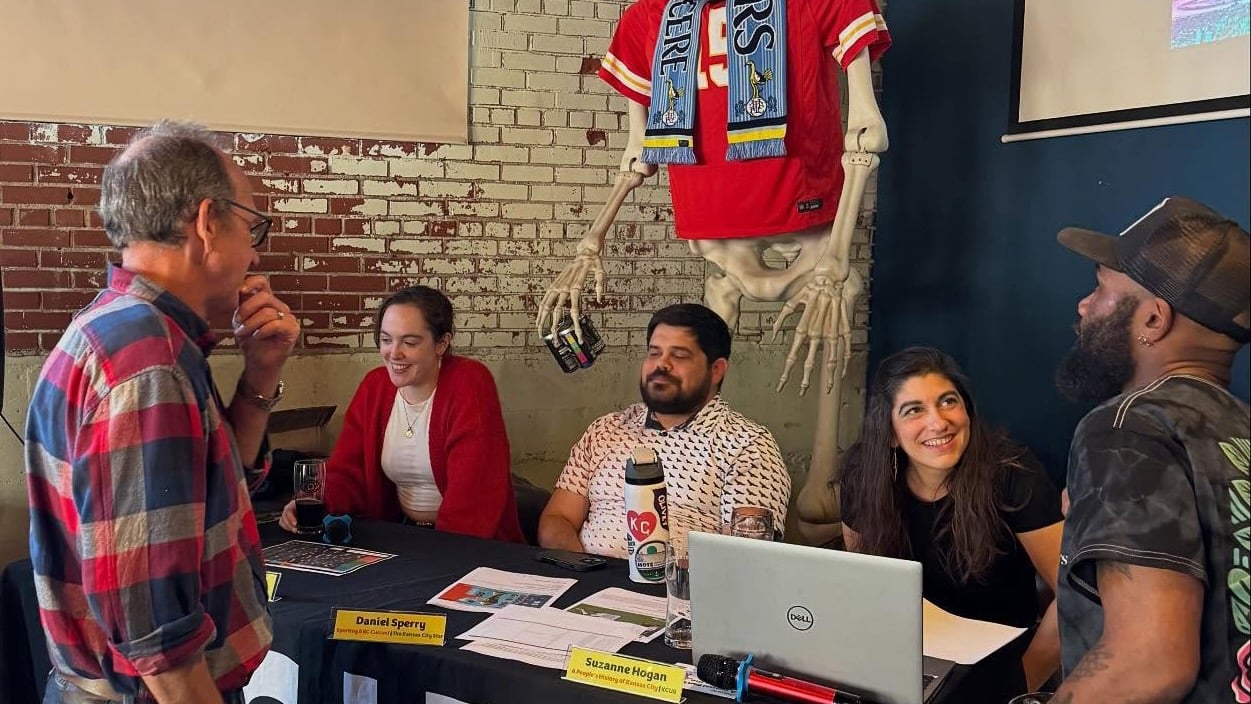
KCUR News Director Madeline Fox (left), Kansas City Star soccer freelancer Daniel Sperry (center) and KCUR Studios Managing Producer Suzanne Hogan (right) talk with community members at "A Casual Fan's Guide to the World Cup," an event co-hosted by KCUR's "A People's History of Kansas City" podcast and the station's friends group Generation Listen.
KCUR in Kansas City, Mo., is marshaling the full breadth of its newsroom’s resources to deliver sweeping coverage of an unusually large event for its market: next month’s 2026 FIFA World Cup.
The tournament will take place in 16 host cities, with Kansas City as the smallest metropolitan area among the 11 U.S. cities in the mix. That makes the city “kind of the underdog,” says KCUR News Director Madeline Fox.
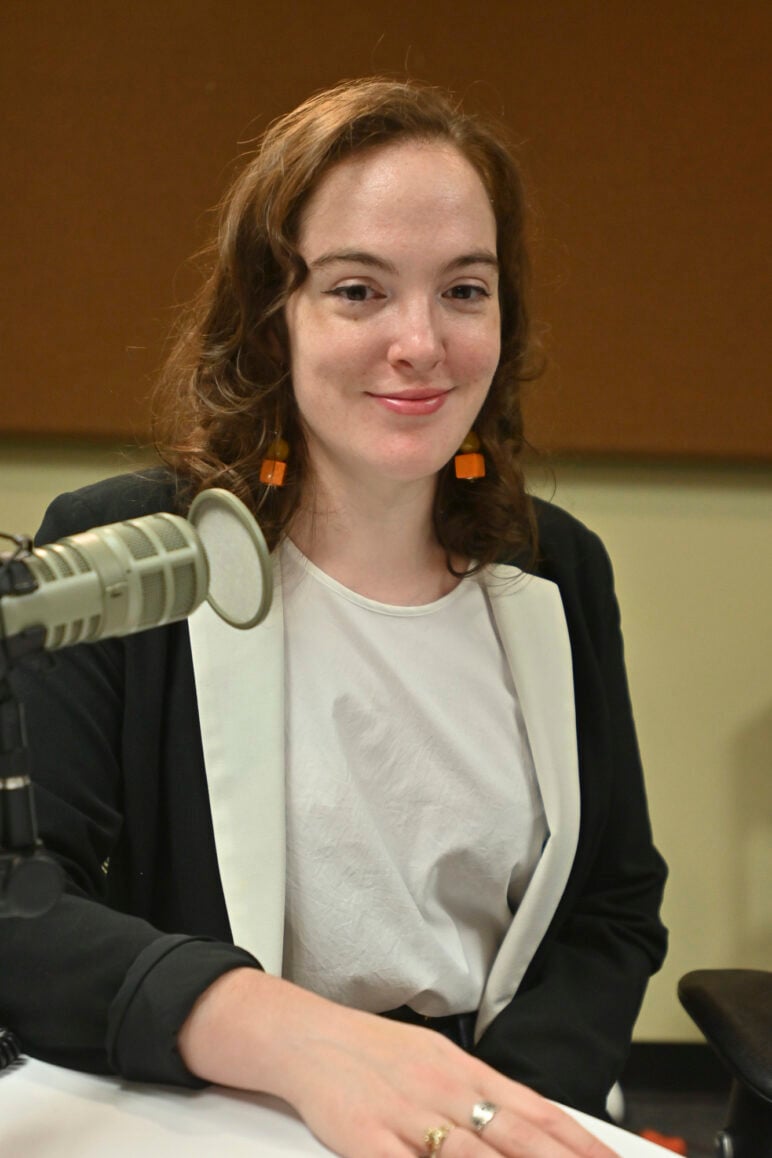
“We’re not as used to hosting these massive events,” Fox said. When FIFA announced the host cities in June 2022, “we knew immediately that this was going to be … a completely new test for Kansas City, because we just have not had anything on this scale,” she said.
So far, the station’s coverage has included a complete guide to the tournament for locals and visitors, a podcast exploring Kansas City’s storied soccer history, and a biweekly newsletter featuring the latest coverage of the tournament, both from the station and nationwide.
“People are not looking to us for game coverage. We just don’t have the capacity for that, and it’s not traditionally what public media does,” Fox said. “But we know that people are super interested in the culture of sports. … That kind of enthusiasm is so baked into the culture here that we knew if we were going to be serious about covering what people are interested in and the culture of this place, … a massive sports event was going to hit all those boxes for us.”
Suzanne Hogan, managing producer of the station’s KCUR Studios podcast division, is leading production of How We Became a Soccer City, a four-part series on the history of soccer in Kansas City. She said the station’s tournament coverage comes on top of its daily journalism, “but we’re making the time for it because we know how important it is and want to take a chance to try to do some creative things that we think the audience is really going to want.”
Kicking off
KCUR’s news team began detailed planning for tournament coverage roughly a year ago. Fox said that given the World Cup’s “all-encompassing” nature, the team realized it would affect every beat, from city infrastructure and transportation to arts, culture and the restaurant industry.
That called for an all-hands-on-deck approach. Fox said the message to the newsroom has been “everybody’s going to learn, and you might not love it, but you’re not going to hate it, because we’re going to get you really comfortable with this and it’s going to let you look at some of the stuff that’s been percolating on your beat for a while with a fresh eye and a better excuse to dig in.”
“In terms of the workflow, it’s pretty reporter-directed within that larger mandate of ‘Everybody’s going to have to do something, so claim your piece of it now,’” Fox said.
The station also had to tap the entire news team because its newsroom is “no bigger and in some cases a lot smaller” than those at public media stations in other host cities, she said. Reporters are rotating through roles such as covering breaking news and contributing to the station’s daily newsletter so that someone is always available to cover World Cup news when it breaks.
The reporters have been given license to be creative with their coverage, Fox said. For example, the station’s health reporter will depart from his beat and travel to Mexico with his father and brother to watch a match, covering “what it’s like to travel from Kansas City to another World Cup game,” she said.
KCUR has also introduced “Soccer City ’26,” a biweekly newsletter that rounds up its World Cup reporting alongside coverage from other stations and news outlets nationwide.
“As they do more reporting, we’ve been able to kind of highlight that as well, like, ‘Oh, you know our transit is not actually that expensive. You wouldn’t believe what they’re fronting over in Jersey!’” said Fox.
The newsletter also offers a platform for first-person writing about the tournament and other local soccer coverage. In a recent newsletter, Fox wove her personal history of watching women’s soccer with coverage of Kansas City’s candidacy to host the 2031 Women’s World Cup, which will be held across the U.S., Mexico, Costa Rica and Jamaica.
The newsletter “is kind of a better space for that more first-person narrative stuff, which we haven’t been doing a lot in traditional news media,” Fox said.
Finding community
For Hogan, the managing producer for KCUR Studios, inspiration for How We Became a Soccer City came from her grandfather, a Costa Rican immigrant who found community with other immigrants in Kansas City through soccer. His experience suggested a way to highlight the city’s rich relationship with the sport in the lead-up to the tournament, she said.
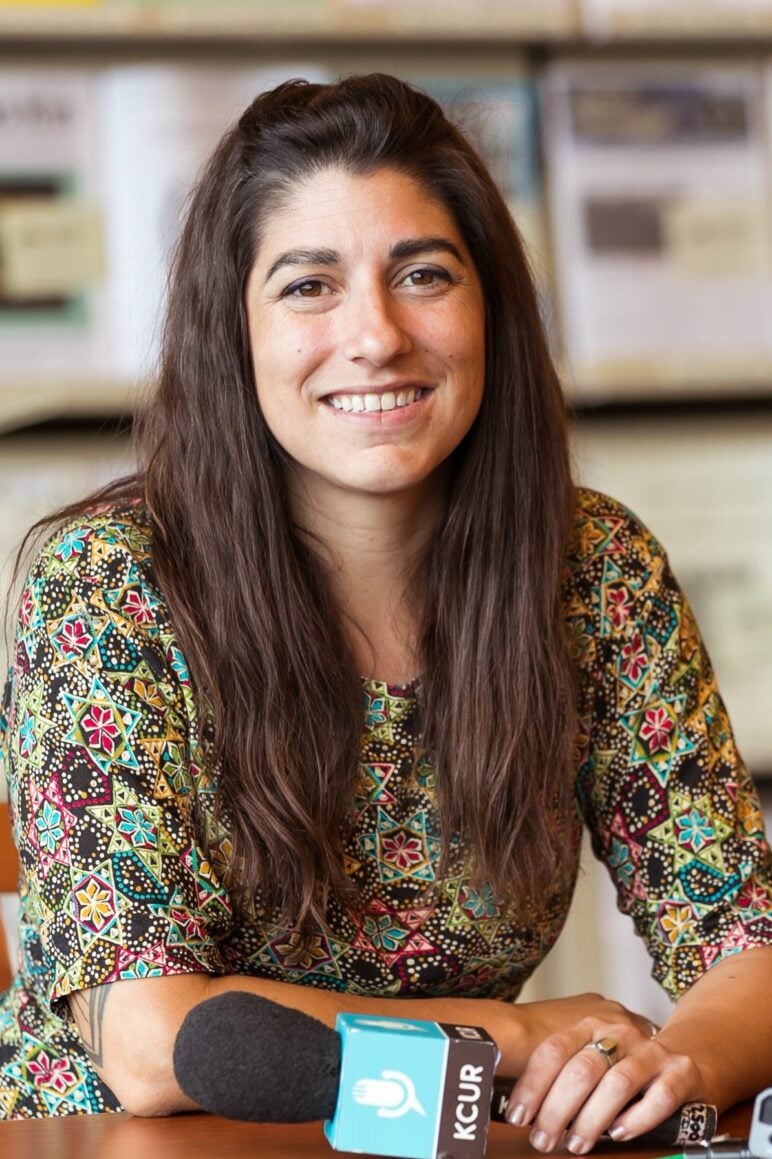
“I knew that Kansas City had this deep history that people didn’t know about, about how it became a soccer city,” Hogan said.
An opportunity surfaced when Andrés Martinez, co-director of Arizona State University’s Great Game Lab, reached out to Hogan about the lab’s Great Game Cities initiative, which aims to fund storytellers from World Cup host cities to create long-form projects about their cities. After meeting with Martinez in early 2025, Hogan applied and became Kansas City’s designated fellow for the initiative.
The four episodes of the podcast are being released in both English and Spanish as part of the KCUR podcast A People’s History of Kansas City, which Hogan hosts. Three episodes have been released since the series’ debut last June. Hogan said releasing the first episode a year ahead helped with reporting later episodes by enabling “a callout to others in the community to be like, ‘Hey, do you have a soccer story? Do you know about Kansas City’s history?’ That did end up being how I was able to source out the rest of the stories.”
Hogan said that ideally, maybe the show’s episodes “would have all launched back-to-back. But part of the struggle, but also the beauty of it, was that I was doing enterprise reporting that no one had done before. I had to call out to the community and find people who held the keys to some of these answers, and that wasn’t something that I could do all at once. One piece kind of had to lead to the next.”
To promote the podcast episodes, KCUR has prominently featured them on a landing page and has had NPR boost them on the NPR app, Fox said. The station also partnered with Kansas City’s library system on an exhibit based on the series featuring historic photographs related to the podcast. Hogan and KCUR Studios Senior Producer Mackenzie Martin, who also hosts A People’s History of Kansas City, will kick off the exhibit with an event where they will share behind-the-scenes stories about the episodes.
Hogan said she intended the episodes to “live in a way that could be displayed during the World Cup, too. So I used existing partnerships with the library to make that happen.”
‘Team play’
Fox said the World Cup allows KCUR to demonstrate its unique brand of sports coverage, which is somewhere between “the kind of traditional public media — ‘We don’t cover it very much’ — and daily sports section … way of doing things.”
“There’s a danger in public media of assuming your audience is not necessarily die-hard sports fans, that you have to explain a lot of this stuff from zero and be kind of the lowest common denominator because of some stereotypes about who a public media fan is,” Fox said. “That’s never really worked for us in Kansas City, because we know that there’s such broad appeal across the metro for sports.”
The coverage seems to be resonating with audiences, Fox said, adding that World Cup coverage “consistently does extremely well” in the station’s weekly website traffic rundowns. Coverage has ranked among the station’s weekly top five stories 30% of the time in 2026, and more than 2,000 people have signed up for the Soccer City ’26 newsletter.
The three available episodes of How We Became a Soccer City have accrued nearly 100,000 total downloads. While episodes of A People’s History of Kansas City generally garner around 15,000 downloads in their first month, Fox said the soccer episodes have “a staying power that other episodes don’t usually have.”
KCUR has endured a turbulent year with the loss of federal funds last summer and an unexpected departure from its longtime studios. Hogan said that the station’s World Cup coverage shows its commitment to serve the community despite such setbacks.
“I’m really proud of our team being so creative and not shying away from doing ambitious things,” Hogan said. “It’s a lot of team play, you know. There are no timeouts, and you’ve got to make it work.”