
Maryland legislature passes advertising set-aside legislation for state news outlets
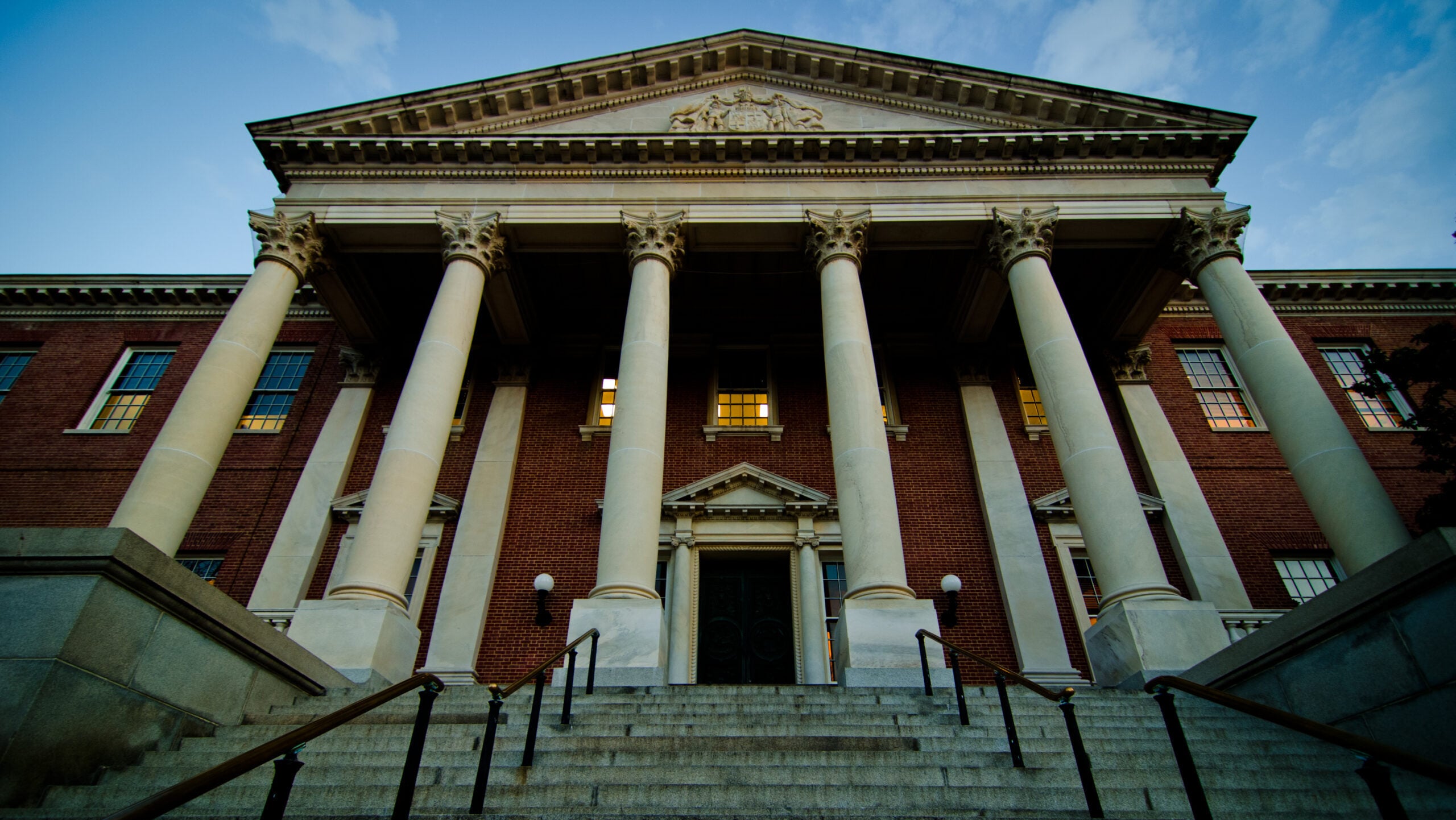
Kevin Galens / Wikimedia Commons
The Maryland State House in Annapolis, the state's capital.
The Maryland General Assembly has passed a bill directing state agencies to allocate half of their advertising dollars to Maryland news organizations, the first state nationwide to pass such legislation.
The state senate unanimously passed the bill in a final vote April 13. Maryland Gov. Wes Moore has 30 days to sign the bill into law. Once signed, the legislation will take effect Oct. 1.
Rebuild Local News, a nonprofit coalition that aims to bolster local news through public policy, worked to get the legislation passed with Baltimore Public Media, members of the Maryland-Delaware-DC Broadcasters Association, and Maryland-Delaware-DC Press Association Executive Director Rebecca Snyder, who led coalition work in the state. The coalition’s work with members of the state legislature was crucial to the effort, said Lori Henson, RLN’s manager of government advertising policy.

“The policy process only works as well as the coalition that we have,” Henson said, “We don’t do this work alone, and we’re very grateful for how the Maryland coalition showed up for this legislation. And we hope that … they reap the rewards.”
Henson said the legislation is crucial to bolstering local news sources across the state. She said that areas with stronger local news outlets have more competitive elections, higher voter turnout and less political polarization among residents.
Strong local outlets are “the most trusted sources of news,” Henson said. “They have untold positive impacts that extend well beyond what any other media source can offer, and the state’s spending priorities should reflect the value of local news in those ways.”
The legislation will establish Maryland as a blueprint for other states that might consider similar laws, said David Belew, director of development at Baltimore Public Media.
“This is an example of Maryland really leading the way,” Belew said. “Other states that value public media and want to ensure that it’s still serving their communities well into the future, regardless of what’s happening at the federal level, I hope that they follow suit.”
What the bill does
Once Maryland’s new legislation takes effect, state agencies must spend at least 50% of their advertising budgets directly on news organizations within the state, whether they are public media, commercial or nonprofit news outlets. This does not include promotions directed at an out-of-state audience, such as state tourism, employee recruitment or economic investment advertisements.
The bill outlines that eligible outlets must not receive more than half of their funding from political organizations or 501(c)(4), (c)(5) and (c)(6) organizations. Henson said these provisions will help prevent “pink slime” journalism, which is political propaganda that “masquerades as news sites,” from benefiting.
“They’re often funded by dark money, so those kinds of organizations are excluded from this in this bill,” Henson said.
Additionally, the bill requires that eligible organizations have at least one employee living either in or within 50 miles of the state. Print publications must dedicate at least 25% of coverage to Maryland-related news, have published at least one print edition in the last year and hold a valid U.S. Postal Service periodical permit.
Digital organizations must have published at least one Maryland-related story each week over the past year, and at least 33% of their digital audience must have been Maryland-based.
These conditions ensure that “D.C.-based commercial broadcasters that have a much broader reach” don’t receive resources that should benefit “Maryland-based news organizations with Maryland coverage,” Henson said.
Furthermore, the bill ensures public broadcasters are eligible. It includes nonprofit organizations that are neither print nor digital outlets but have included Maryland coverage in their official mission statements to the IRS, have previously received Community Service Grants from CPB, and are broadcast stations under the Federal Communications Act of 1934, holding a community license from the FCC.
Henson said the coalition worked to add the language to the bill following Congress’ rescission of federal public broadcasting funds last year.
“We wanted to make sure that any public media organization that had received funding prior to the defunding was specifically eligible under this policy,” Henson said.
Maryland Public Television does not qualify as an eligible Maryland news organization under the bill’s language, said Tom Williams, the organization’s senior managing director of communications. He said this is because the network is a state licensee and does not hold a community license from the FCC, as the bill requires.
MPT already receives nearly $200,000 of state advertising annually “in the form of public service announcements and other related paid state agency messages,” Williams said.
The bill permits state agencies to consult with a third-party nonprofit organization to “prepare and maintain” the list of eligible news outlets.
Individual eligible outlets are not guaranteed state advertising dollars and must still compete for them once the legislation is enacted, Henson said. That will protect taxpayer dollars by ensuring that “advertising professionals are still able to make good strategic decisions,” Henson said.
“They still have to provide up-to-date analytics, … current and competitive media kits and rate cards,” Henson said. “The state still has a choice in where its advertising dollars are spent based on the kinds of audiences they’re trying to reach and the goals of the marketing campaign. … It’s important for us to preserve the effectiveness and efficiency of the advertising process.”
Adapting and scaling
Though Maryland has become the first state nationwide to pass such advertising set-aside legislation, New York City laid the groundwork for similar legislation at a municipal level years prior.
In 2019, then-New York City Mayor Bill de Blasio issued Executive Order 47, mandating that the city’s agencies direct at least 50% of their digital and print advertisements to “community and ethnic media outlets” by FY 2020.
The order, which stemmed from work done by CUNY’s Center for Community Media, states that it was issued to ensure that all city residents and communities could access “critical information about city services, policies, and opportunities.” The New York City Council passed Local Law 83 in 2021, which expanded on de Blasio’s order to include qualifying broadcasters.
This legislation directed over $72 million into local news outlets in its first five years, according to an impact report by CUNY’s Center for Community Media. Henson, who joined RLN in 2023, said she was hired specifically to take the framework set by New York City and “adapt it and scale it at the state level.”
“It really has been an incredible resource and a lifeline to publishers there,” she said.
RLN worked with Maryland State Del. Linda Foley last spring to try to pass HB 1119, which would have directed 50% of state agency advertising budgets to print and digital advertisements for local news organizations. RLN President Steven Waldman testified in favor of the bill.
Despite its aims, she said, the bill’s language lacked specificity regarding eligibility and who would benefit from the advertising set-aside legislation. It also didn’t explicitly include commercial and public broadcast media in the definition of local news organizations, Henson said. So earlier this year, RLN reconvened with Foley to iron out the details.
“It became clear that with the language itself, we needed to add some specificity,” Henson said. “Especially in light of the pressure that public media has been under now, having been defunded, we wanted to make sure that it was clear that the set aside applied to public [media].”

Henson said her team reached out to Baltimore Public Media’s Belew to ensure public media organizations were “represented and comfortable with the language” the team developed for the bill, while also ensuring that it remained broadly inclusive of local news outlets statewide.
The bill faced more friction along the way. Despite a fiscal impact statement finding that the legislation would have “no significant fiscal impact,” Henson said some agencies, such as the Maryland Department of Transportation and the Maryland Lottery, expressed concern that the bill would restrict their advertising.
She argues that the legislation will merely push state agencies to be more deliberate with their ad placements.
“This bill does nothing to restrict the tools available to marketing staff; it really is just a matter of proportion,” Henson said. “You can still use Google, Meta, billboards and digital point of sale advertising. … It’s just a matter of being intentional about the spend and giving locals a proportion of that spend that reflects their value in communities.”
A group of eight state senators brought SB0459, an updated version of the bill cross-filed with Foley’s original bill, back to the Senate in mid-March following a favorable vote from the Senate’s budget and taxation committee on amendments that the coalition helped shape. This also included more tweaks to the bill’s language, such as changing the label of “local” news organizations to “Maryland.”
After an adjustment to language regarding employment levels at eligible outlets, the bill passed.
‘A good first step’
Henson said she will consider the bill successful if it bolsters the number of reporters at news organizations across the state. She said RLN has a director of research on staff who will track the legislature’s progress and impact to unearth “important policy questions with actual data and inform our policy work.”
“Success in five years will mean that there are more reporters covering Maryland communities than there were before the bill took effect,” Henson said.
RLN has been working concurrently with other cities and states to enact similar bills, Henson said. She said she is working with the Center for Cooperative Media at Montclair State University to pass a bill that would set aside 30% of New Jersey’s state agencies’ advertising budgets for local news organizations and require annual reporting on where state advertising money is going.
Henson said the transparency around advertising budgets is an important facet of kicking off advertising set-aside legislation.
“One of the questions we often get from state officials is, ‘How do we know where to set the percentage for the set aside if we don’t know what we’re already spending?’” Henson said. “Sometimes getting that transparency piece is a good first step to getting the set aside.”
In the meantime, Belew said, the new legislation will give public broadcasters and other local news organizations more resources to ensure they can continue serving their communities, adding that “it’s just another tool in our toolkit” for development staff at news outlets.
“It’s our job to keep the lights on and make sure that our journalists and our broadcasters have the resources they need to grow their teams and cover the stories that they need to cover and build those authentic connections with the community to do so,” said Belew.