

New ‘Marketplace’ podcast aims to bring financial advice to younger, diverse audience
Marketplace
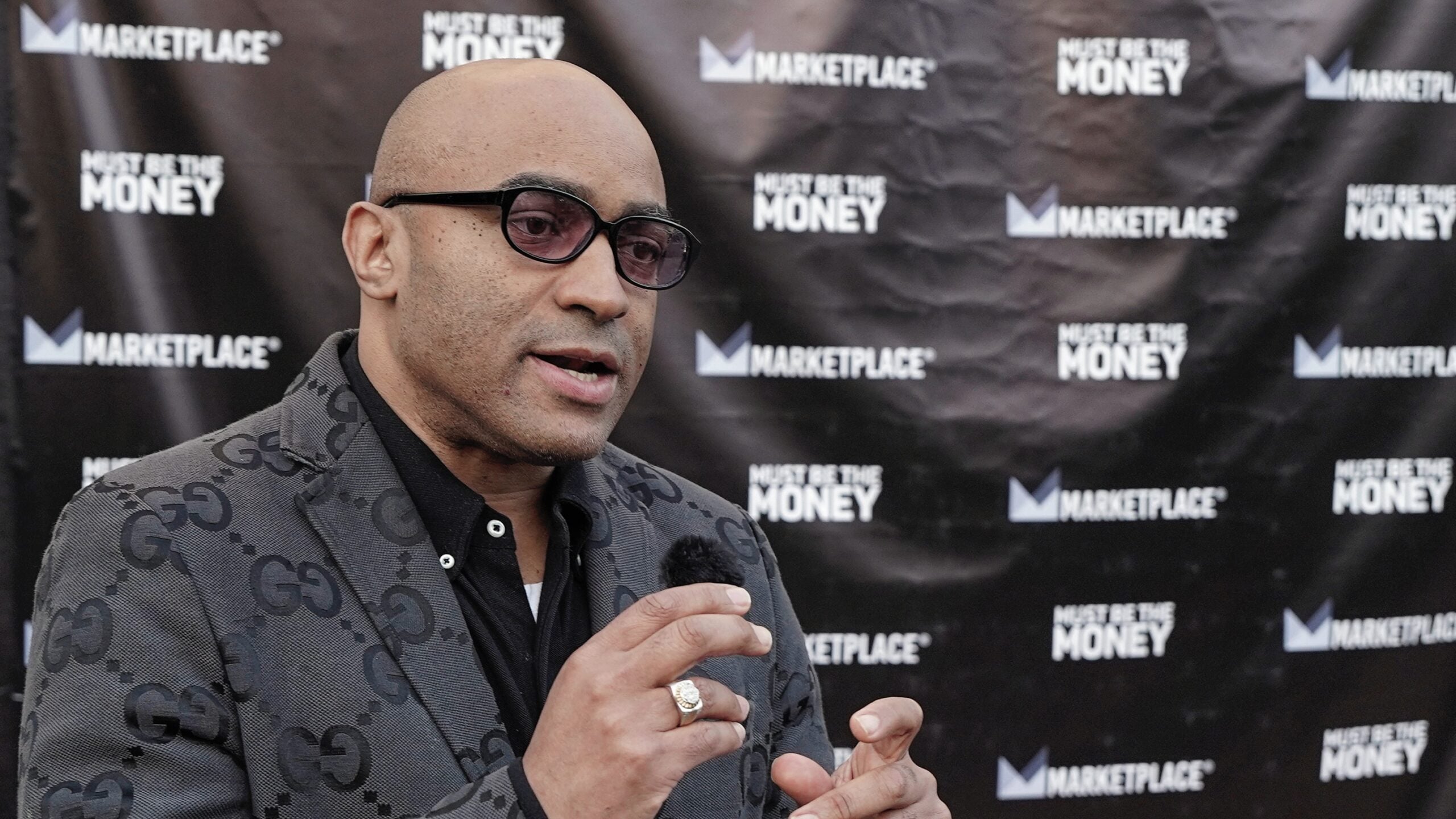
"Must Be the Money" host Lee Hawkins is interviewed outside the podcast's launch event May 19 at Miracle Theater in Inglewood, Calif.
Everyone uses and cares about money, yet it seems like most financial journalism, from CNBC shows to the Wall Street Journal, has traditionally been aimed at and consumed by a limited class of citizens: already wealthy, mostly middle- to retirement-aged white men.
A new weekly video podcast from American Public Media and Marketplace seeks to change that by demystifying wealth building and personal finance for audiences traditionally excluded from the genre. Hosted by veteran financial journalist and Pulitzer Prize finalist Lee Hawkins, Must Be the Money blends cultural storytelling and frank discussion with financial advice, all with the aim of reaching an audience of Black and Latino college students and young professionals.
Produced in partnership with For the Culture by the Culture Media and All the Smoke Productions, Must Be the Money features weekly chats with luminaries of color, all of whom have made their mark in the financial world. The series’ premiere episode, which dropped May 18, finds Hawkins chatting up Angie Nwandu, founder of the popular entertainment news platform The Shade Room.
The first season consists of 10 episodes, each 30–45 minutes long. Other episodes will feature guests including Revolt CEO Detavio Samuels, TV host Van Lathan, former L.A. Laker Matt Barnes, and BlackRock Managing Director Jabari Magnus.
“Right now in our economy, we’re seeing a major shift from the industrial economy to the knowledge, creative and AI economy, so we’re trying to give people tools that they can use to start to plan not just financial literacy, but also their careers,” Hawkins says. “We want to teach people how to pivot in the case of a layoff, how to start their own business, how to get involved with 401(k)s when they get their first job, and how to understand all of the different financial instruments that they can use to build wealth.”
Neal Scarbrough, GM and VP of Marketplace, says he sees Must Be the Money as the logical next step in the brand’s evolution. “We’ve got another series, Million Bazillion, for kids and their parents, and a couple of years ago we jumped onto YouTube with Financially Inclined, which is more for 14- to 18-year-olds,” he says. “But we always wanted to do more for young adults who maybe have a first business idea but don’t know how to complete it or who are looking for stories of success or failure that they can model. Must Be the Money gives those older kids or young adults the tools to help navigate their own view of the economy.”
And while Marketplace has always aimed to cover financial stories that appeal to all people, Scarbrough says the average person the show reaches on radio is 58 years old, white and “not so demographically diverse.”
“When we talk about financial literacy [at Marketplace], we tend to realize that all these people who are so represented in our work are not so represented in our audience,” Scarbrough says. “They don’t know as much about who we are, so part of the thought behind Must Be the Money was ‘How do we create a product that brings community into Marketplace?’ as opposed to just finding people who already respond to our reporting on the economy.”
“The truth is that, in terms of demographic change, America is getting browner and browner, and it’s not going to stop,” Hawkins adds. “I see diversity not as something that is all about altruism but as something that is very much about capitalism. If you want to grow, you have to grow your audience. If you’ve already reached a critical mass in one area — in this case, with the average viewer of traditional media being white and older — then you have to move into other opportunities.”
Harnessing the YouTube algorithm
Both Scarbrough and Hawkins say that making Must Be the Money available in both video and audio forms was always a key part of the team’s marketing plan. Hawkins says that he’s been doing video interviews since the mid-’00s and has always found value in viewers being able to see subjects’ expressions and grasp a conversation’s overall dynamic.
Beyond that, Hawkins says, anyone looking to attract a new audience has to meet them where they are. A 2025 Pew Research study found that 95% of 18- to 29-year-olds are active on YouTube, with 65% saying they use it daily. And because YouTube is so SEO and algorithm-driven, it also shows viewers content that might already appeal to them, regardless of where it comes from. That lowers the barrier to entry for someone who might be interested in Must Be the Money but who might not know to search for the show on their favorite podcast app — if they even listen to podcasts at all.
Scarbrough says that he believes Marketplace and public radio have “moved historically slower” toward leveraging on-air success for multimedia clicks but that it’s now something creators can no longer avoid.
“Radio usage is shrinking, time spent listening is shrinking, and the size of the audience is shrinking,” he says. “We can rest on our laurels of radio success, but we know that’s a bucket that’s getting smaller every year. If we’re going to appeal to young audiences, we can’t say that radio is where we’re going to find them. It’s going to be on Instagram and TikTok, on digital platforms and YouTube.”
And while Marketplace’s brand is strong among certain audiences and demographics, Scarbrough is quick to admit that it has a lot of room for growth among other audiences. That’s another reason to lean into YouTube, he says.
“Our research has shown that a lot of young folks who are into financial wherewithal go and search on YouTube for certain issues, but they’re not looking for Marketplace. They’re not looking for the Wall Street Journal,” Scarbrough says. “We want to be in their stream, and we want to already be able to solve questions for them.”
Authenticity is key
For the APM team, bringing on production companies All the Smoke and For the Culture by the Culture was critical to Must Be the Money’s authenticity and success. Scarborough says he admired All the Smoke’s work on its self-titled podcast, which he says has about 20 million listeners.
“They have the same values that we have, but we felt like we could package [our podcast] differently with a production house that was well versed in reaching those audiences,” Scarbrough says. “The marriage is one of necessity, where we had the content and the financial literacy chops, but we wanted to put it in a wrapper that reached some new audiences.”
For the Culture by the Culture and All the Smoke not only helped with Must Be the Money’s packaging but also its overall vision and production. Hawkins says having someone like For the Culture founder P. Frank Williams attached is invaluable. A multiple NAACP Image Award–winner and former editor of The Source, P. Frank Williams has produced countless TV shows and movies, including Hulu’s acclaimed documentary Freaknik: The Wildest Party Never Told. Hawkins believes having Williams’ de facto stamp of approval gives Must Be the Money not only instant cultural cachet but also helps assure that its stories and messages come from an authentic place.
“If you work with production companies and partners who do not understand the Black and brown creator or entertainer or sports figure other than through stereotypical tropes or what they see on television, then the show won’t be successful,” Hawkins says.
Measuring success
While it’s still early days, Must Be the Money appears to be reaching its target audiences. Marketplace News Director Kelly Silvera says that while the company hasn’t calculated the show’s download performance yet, preferring to wait until 30 days after each season’s final episode drops, she believes that “discovery is working.”
“The audience is finding the content across platforms, particularly through recommendation engines rather than existing Marketplace audiences,” Silvera said in an email. “On YouTube, Suggested Videos account for 60% of watch time, indicating that the platform is successfully surfacing the series to viewers beyond our existing followers.”
Silvera said that Marketplace is now focused on building loyalty and repeat engagement with the show, pointing to stats that indicate long-form episodes outperform short clips in terms of retention and additional click conversion. Visitors who are returning to the show rather than discovering it for the first time are more likely to keep watching, meaning that building an audience of repeat listeners and viewers is key to the show’s success.
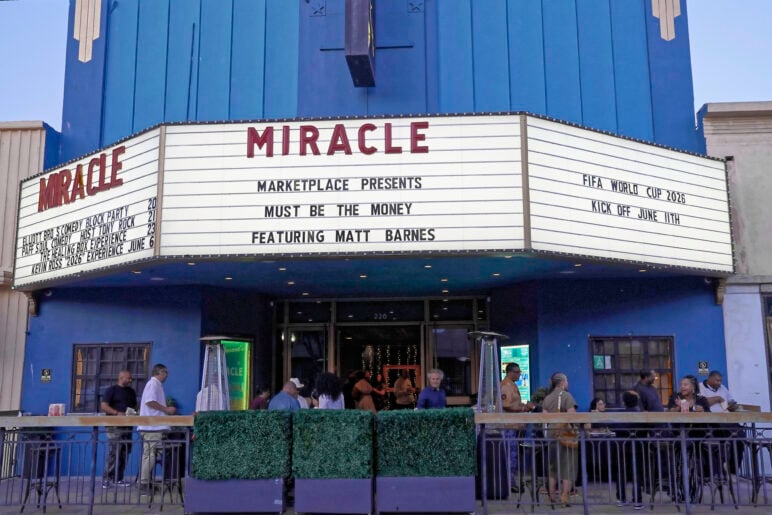
The show also appears to be reaching audiences Marketplace has historically struggled to reach, Silvera said. Anecdotally, she noted that Must Be the Money’s launch event in Inglewood, Calif., brought together community members, influencers, media, entrepreneurs, athletes and families in a way that “felt markedly different from a traditional public media event.”
“It demonstrated our ability to show up in new spaces and introduce the Marketplace brand to people who may not have previously engaged with our journalism,” Silvera said, highlighting Bailey Rae Fenderson, a 14-year-old student athlete who attended the event seeking help in navigating the world of name, image and likeness opportunities.
Fenderson’s “participation highlighted exactly why this project exists,” Silvera said via email. “Through Must Be The Money, Marketplace was able to connect a family of student athletes and entrepreneurs to reporting and resources that directly address questions they’re facing today. The conversation wasn’t theoretical, it was immediately relevant to their lives.”
Future investments
Though Must Be the Money is only partway through its first season, Scarbrough says the team behind it is already looking toward the future. They want to re-promote the show when the whole season is available and lean into different marketing approaches, like reaching out to the National Association of Black Journalists or featuring Hawkins on Marketplace to discuss issues relevant to the show.
APM initially developed the first season of the show with money it had set aside in a general innovation fund. It hasn’t lined up funding for a second season, but Scarbrough says he’s cautiously optimistic that APM will be able to make it happen. The show is already starting to curry attention from potential funders, including the Ranzetta Family Charitable Trust and Next Gen Personal Finance, which already back Million Bazillion and Financially Inclined.
Scarbrough says potential presenting sponsors have also shown interest, with many seeing value in reaching customers who “are interested in being a little bit smarter about the economy.”
Ultimately, Hawkins says, the Must Be the Money team just wants the show to find a wide and varied listener base, not only because it’ll help build awareness for Marketplace but because its messages can help serve people as a whole.
“We’re trying to bring [young] people inside these conversations so that they will watch it, turn it off and go in the other room and ask their dad, ‘Hey, Dad, do you have a will?’ Or, ‘Dad, what was growing up like for you? Did you pay for your own college, or did Grandma and Grandpa pay for it?’” Hawkins says. “These kinds of conversations about money and how to make it even if you don’t come from wealth are important, especially because they’re conversations most of us have traditionally been unable to witness.”