

Is the American dream a farce? A new documentary from David McCourt aims to find out
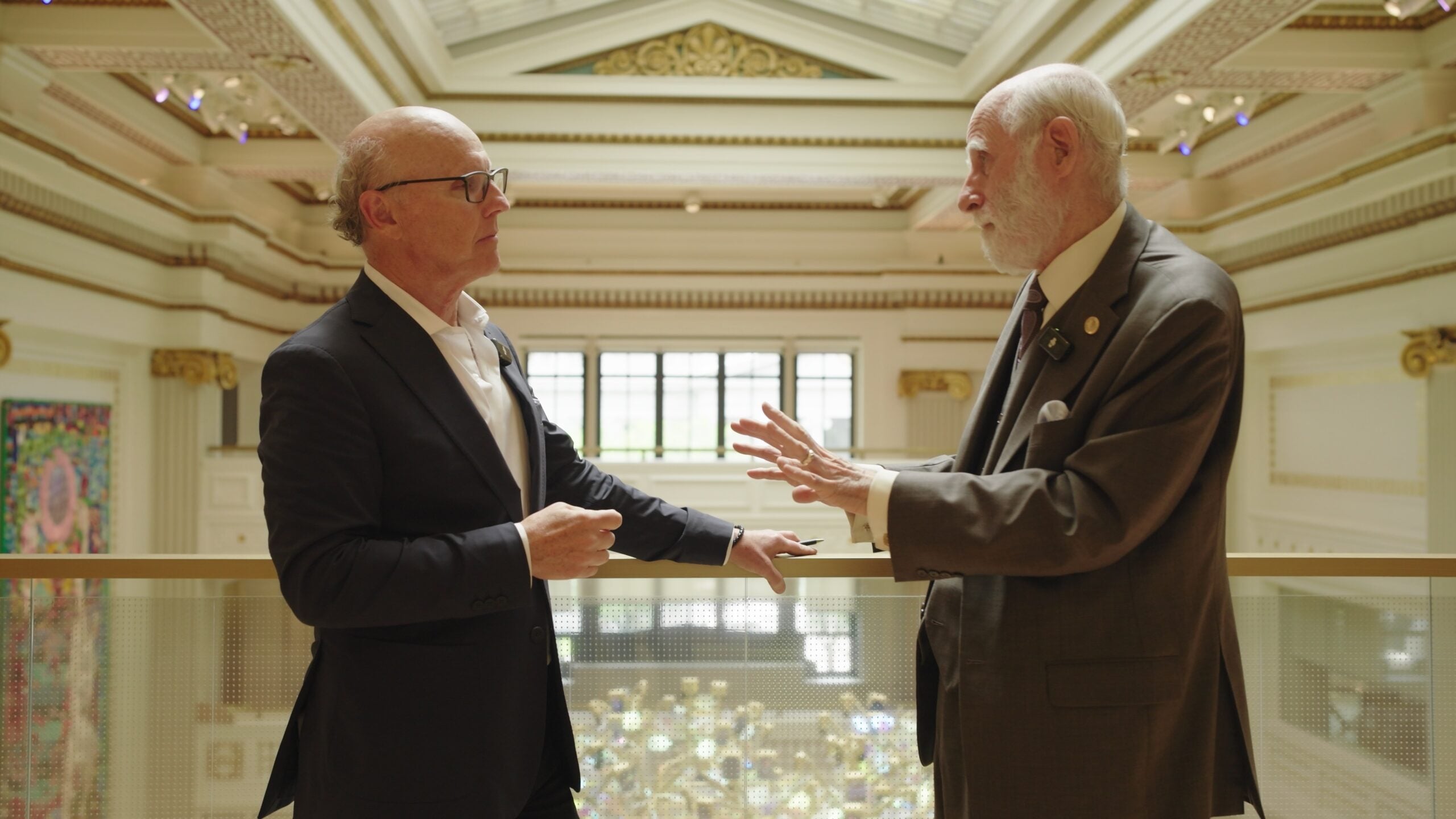
Filmmaker David McCourt, left, speaks with Vint Cerf, a co-creator of the internet.
What, exactly, is “the American dream”?
When historian James Truslow Adams coined the phrase in 1931, he was aiming to sum up a sentiment he felt among his countrymen. Defining it as the “dream of a land in which life should be better and richer and fuller for everyone, with opportunity for each according to ability or achievement,” Adams said the American dream wasn’t necessarily one of economic abundance but of a “social order” where each person could be recognized for the breadth of their capabilities.
Though the American dream has come to mean different things to different people in the 95 years since the phrase’s debut, it’s still a driving force in modern American life. Whether it’s still attainable could be another story.
That question is the impetus for a new documentary, Amerigo: The Search for the American Dream, which is now available to stations and streaming on PBS.org and the PBS app. It will premiere on the World channel Thursday at 8 p.m. The show is distributed by American Public Television and presented by South Florida PBS.
Filmed across all 50 states over the course of two years, Amerigo is produced, narrated and hosted by David McCourt, whose previous EP work included Reading Rainbow and the 10-part Showtime documentary series What’s Going On, which focused on the impact of global conflict on children. (McCourt Entertainment also funded the film’s production.)
In its 90-minute run time, Amerigo captures a snapshot of the nation as it stands, thanks in part to copious man-on-the-street interviews, which it mixes with expert commentary from sources like podcaster Sophia Bush, author Megan Greenwell, and Rachel Goslins, the head of the Milken Center for Advancing the American Dream in Washington, D.C.
The team also shot around 1,000 impromptu chats with average citizens for the film, with each conversation sparked by asking the subject for their thoughts on the American dream, which some say is more like “an American nightmare” or “feels more like a joke or something that’s mocking us.”
In Lawrence, Kan., McCourt talks to Mark and Katie, a couple navigating the healthcare system after Mark’s diagnosis of colon cancer several years ago. In Carbondale, Penn., McCourt talks about the importance of community and local politics with Michele Bannon, the city’s mayor. And in Boston, the filmmakers chat up a bus driver who says his version of the American dream is simply to “retire with some dignity.”
‘More united than you think’
McCourt and wife Julie, who co-produced the film, say Amerigo was originally envisioned as a more global piece about how the world sees America. After filming in Ireland, Costa Rica and Saudi Arabia, though, the pair and director Adam Mason decided that there was enough of a story in America itself, particularly considering the country’s upcoming semiquincentennial.
“There are too many issues that we need to unbundle, and that other documentary would have made Ken Burns’ films look short,” McCourt jokes.
By asking Americans of all stripes about the American dream, McCourt says he came to realize that “people are a lot more united than you think they are when you’re reading the news.” Everyone, he says, wants to be happy and healthy. They want their kids to be educated and to have the chance to be economically better off than the generation before them.
McCourt says what’s changed in the years since Adams coined the phrase, though, is that a majority of adults now say the American dream is firmly out of reach.
“The scale of the loss of faith in American institutions really surprised me,” McCourt says before rattling off a laundry list of statistics. Three-fourths of the American workforce can’t afford to buy a home. About a quarter of the country’s population has a mental health issue. Labor as a percentage of GDP is down 6% since 1970, so people are earning less. And while home prices were about three times the median income in America for nearly 100 years, they’re now at least five times the income of most middle-class people and downright unattainable for anyone earning less.
Amerigo doesn’t attempt to solve these issues, taking a notably nonpartisan stance on the nation’s status as a whole. McCourt says that simply identifying and acknowledging that there are problems that need solving can be an important step toward rebuilding public trust in institutions and recapturing the optimism needed to believe the American dream is possible.
“If people lose hope, bad things happen, especially with young men,” McCourt says. “That’s not the situation America should be in. If you remember, Hitler wasn’t a dictator. He was voted into power because people were upset. Brexit happened because people were upset. People act in a very irrational way if you push them too far.”
Looking ahead to a follow-up
That’s not to say the message of Amerigo is all doom and gloom. McCourt simply hopes to make the case that as America reflects on its past this Fourth of July with what he calls “spiking the ball and having fireworks,” we should give just as much attention and airtime to what we think its future should be.
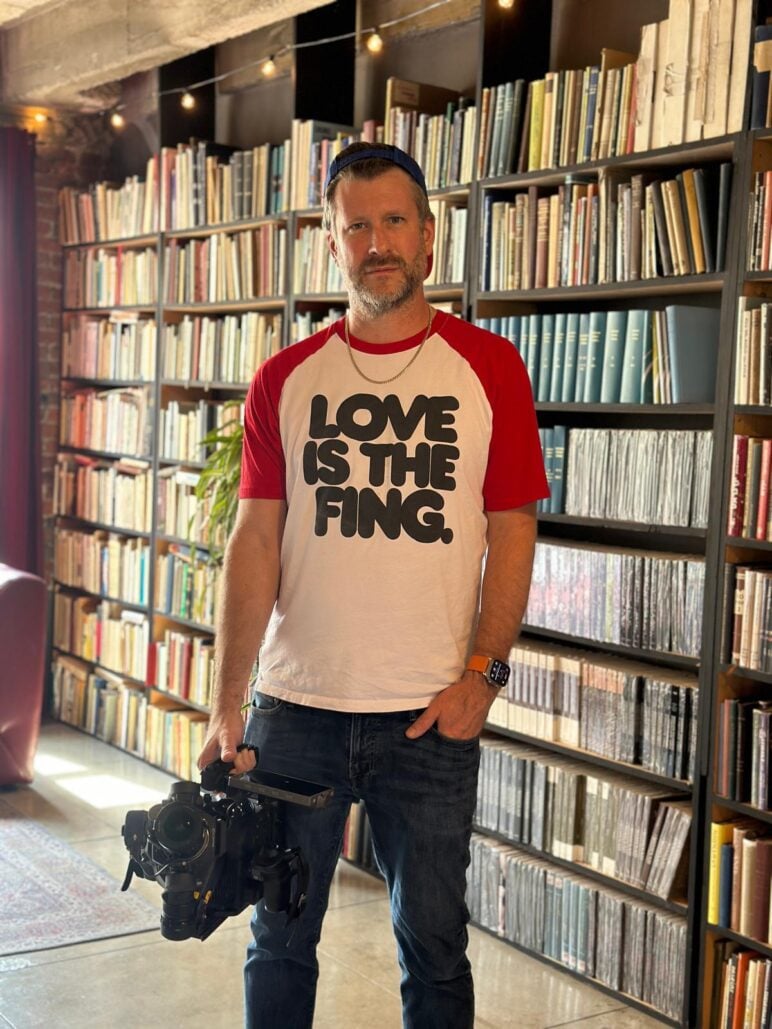
To that end, the McCourts and Mason have been focusing on creating a follow-up documentary to Amerigo. At screenings for and conversations around the film — including a recent event in New York moderated by McCourt and featuring Hillary Clinton, Chuck D and Ian Bremmer — the trio is asking attendees to go on record with their thoughts about the American dream.
The filmmakers have also been touring in support of the movie over the past six or so weeks, covering 30 states in 35 days and interviewing anyone willing to talk. They’ve also launched a website, AD250.com, where they’re soliciting video submissions from the general population.
Mason says that to date they’ve probably captured video from about 5,000 subjects. The team says that ideally, they’ll reach a total of 1 million voices over the next few years. The resulting documentary — tentatively titled A Million Voices — will hopefully be what Mason calls “a time capsule or record” of what the American dream meant at this moment in time.
“It feels to me like change is coming,” Mason says. “I’ve seen it even in my own life. My wife has five brothers and, politically, they haven’t seen eye to eye for the past decade and that’s caused huge problems within the family and within their friendships.”
Talking to people on the road, Mason says, he got the sense that Americans are trying to reconcile their political differences. “They want to change,” he says, “to go back to what was, and they’ve got a lot to say about it.”