
FCC’s ATSC 3.0 rules would slow transition to Next Gen TV broadcasting
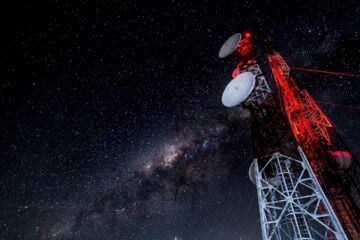
Marco Piunti / iStock
Public broadcasters won’t have to adopt ATSC 3.0 anytime soon if they don’t want to.
That’s the biggest takeaway from the FCC’s notice of proposed rulemaking for ATSC 3.0, also known as Next Gen TV. While the commission wants to strip away some regulations that could hinder support for the new broadcast standard, for now it’s stopped short of setting cutoff dates for the existing ATSC 1.0 standard or mandating ATSC 3.0 tuner support in televisions. The FCC will likely vote on its proposed rules next year.
The lack of an ATSC 3.0 mandate should come as a relief for public broadcasters that aren’t prepared to upgrade, but some broadcasters believe that the new standard won’t go anywhere without a clearer path to phasing out the old one.
“If you don’t mandate it, it’s probably not going to happen,” Franz Joachim, CEO at New Mexico PBS and former chair of America’s Public Television Stations, said in an interview.
Breaking the logjam
ATSC 3.0 uses an IP-based architecture to broadcast information over the public airwaves, similar to how data flows over the internet. It also makes broadcasts more efficient by using newer compression formats such as High Efficiency Video Coding.
For viewers, the bandwidth improvements could allow for better video and audio quality — including 4K, HDR and Dolby Atmos immersive audio — or give them headroom to launch additional channels. The IP-based delivery, meanwhile, can enable interactive features, richer emergency alerts and new datacasting applications.
Still, the standard has been at an impasse due to limited tuner support in televisions, weak demand from viewers and simulcasting requirements that limit available bandwidth for new features. The FCC believes that relaxing some of its rules will help ATSC 3.0 deliver on its promises and spur demand.
For instance, the FCC has proposed scrapping requirements that broadcasters simulcast their primary ATSC 3.0 channels in ATSC 1.0. For stations that continue to simulcast, the commission also wants to end a requirement that both feeds carry “substantially similar” content. This would allow broadcasters to offer content in just one format or the other, freeing up bandwidth for other uses.
The proposal to end simulcast requirements will primarily cater to commercial broadcasters, said Vincent Curren, a senior consultant for the Public Media Venture Group. PMVG believes commercial broadcasters’ success with ATSC 3.0 would ultimately affect public stations as well.
PMVG is a nonprofit business consortium that specializes in developing ATSC 3.0 technology and business models for public media.
“We hope that it provides the incentives that some commercial stations need to put more ATSC 3.0 transmitters on the air, which will drive more television sets,” he said.
The bigger deal for public broadcasters in the FCC’s proposal, Curren said, is that they wouldn’t have to cover 95% of a population with ATSC 1.0 to get expedited processing for their ATSC 3.0 applications. The FCC has proposed dialing back its coverage requirement to serve at least the “community of license” for stations that continue to simulcast in ATSC 1.0.
For an example of how this could help, Curren described a state-run public network with two transmitters that provide overlapping coverage in about two-thirds of the state. If the remaining third was a rural area with few viewers, the station could more easily convert one of its transmitters to ATSC 3.0 and offer converter boxes to residents in the rural area.
The FCC is also proposing to let stations use the MPEG-4 multimedia compression standard instead of MPEG-2 for their ATSC 1.0 streams. While there’s some concern around how many TVs support MPEG-4 (smart TVs from the past decade can likely handle it, Sinclair has claimed), it’s a much more efficient codec that could help free up more bandwidth.
“You can start to do higher definition. You can start to do more robust signals for better central-city coverage,” Curren said. “You can start to deliver on some of the consumer benefits that we’ve talked about with ATSC 3.0.”
To mandate, or not to mandate?
The National Association of Broadcasters had hoped the FCC would go further. In February, it filed a petition asking the FCC to wind down ATSC 1.0 in the 55 largest U.S. markets by February 2028 and in all markets by 2030, with only “limited waivers” for smaller or noncommercial stations. NAB had also asked the FCC to force television makers to include ATSC 3.0 in their sets.
Still, public broadcasters are mixed on whether a firm transition to ATSC 3.0 would make sense.
APTS, which represents the interests of public broadcasters in Washington, is satisfied with how the FCC proposes to move forward. While the group was an early advocate for ATSC 3.0, it does not yet support a hard cutoff date for ATSC 1.0. (APTS has not taken a position on tuner mandates for TV makers.)
“We were pleased that there was an effort to minimize regulatory burdens and maximize local broadcasters’ independence,” said Michelle Shanahan, APTS general counsel.
APTS President Kate Riley noted that public stations received federal grants to help shoulder upgrade costs for the analog-to-digital conversion. A similar program might be necessary for ATSC 3.0 in the future, she said. Data from APTS shows that only about 10% of public TV stations are broadcasting in ATSC 3.0 today.

“For some of our stations, they are very small, so it will be something that does take time, and … a significant amount of financial planning,” Riley said. “It’s something where we think ultimately there may need to be additional funding to support this transition.”
Some individual broadcasters, meanwhile, are open to the idea of a mandate, but only if it provides clear guidelines for the entire industry.
KVIE in Sacramento, Calif., has the infrastructure to support ATSC 3.0 today but lacks a simulcasting partner, said President David Lowe. When commercial broadcasters entered channel-sharing arrangements in 2021, the public station was left out. In addition to ensuring that every station has a fair shot at supporting the new standard, Lowe also has concerns around “must-carry” rules, which do not yet apply to ATSC 3.0 channels.
“A coordinated, mandated transition by the FCC would make this process far simpler and more equitable, ensuring that every station and every household benefits from NextGen TV at the same time,” Lowe said via email.
Nine PBS in St. Louis was similarly shut out of channel-sharing agreements with commercial broadcasters in 2021, said Chrys Marlow, VP and CTO. While he doesn’t rule out ATSC 3.0 support in the future, he’s skeptical that it’ll happen until the FCC requires it.
“What the commission has done is basically dumped the problems on the broadcasters rather than making any real decisions,” he said, referring to the FCC’s proposed rules.
Justifying the upgrade
In lieu of clear transition rules from the FCC, public broadcasters will need to find their own reasons for upgrading.
Proponents have described all kinds of potential revenue opportunities with ATSC 3.0, particularly around datacasting. For instance, broadcasters could pitch their states on replacing costly LTE receivers for highway signage, or offer backup connectivity for wireless carriers.
Still, those efforts remain experimental and in some cases have already stalled out. Both Riley and Joachim confirmed that wireless carriers haven’t been interested in ATSC 3.0 datacasting with public broadcasters in areas where their cell networks don’t reach.
“We’re like most people, still struggling to find a good business case, other than that it’s coming and we should be prepared for it,” Joachim said.
ATSC 3.0’s public service possibilities have also been slow to emerge. New Mexico PBS has tested a wide range of these features, such as live AI-generated content translation, live sign language by digital avatars, public alerts with tailored real-time data, and even a way to broadcast educational materials without an internet connection. Joachim noted, however, that the educational system is no longer in use, and AI features are still being developed.
“These are ideas that are still in their infancy, they’re not really rolled out very far, there’s a lot of resistance because change is hard, so it’s going to take some time,” Joachim added.
Meanwhile, viewers aren’t yet demanding ATSC 3.0 on the basis of new features. Enthusiasm from early tech adopters has also cooled as more commercial broadcasters have encrypted their ATSC 3.0 signals.
“The unfortunate thing at this point is that we’ve had, to my knowledge, no public outreach on 3.0 in some time,” Nine PBS’ Marlow said. “I don’t know of any callers who’ve said, ‘What about this new system, should we be interested in it?'”
Looking ahead
For the FCC, the next steps are to seek public comment on its proposed rules. The 60-day comment period will kick off when the Federal Register publishes the NRPM. Then a 30-day window opens for replies. The FCC can then vote on the rules after that, but it has no clear timeline for doing so.
The NRPM also seeks comment on all the aspects of ATSC 3.0 for which it hasn’t tentatively proposed new rules yet. Those include potential cutoff dates for ATSC 1.0, tuner mandates for TV makers, ways to reduce upgrade costs for smaller broadcasters and concerns around digital rights management over the public airwaves. The commission could issue further proposed rules based on public feedback in the future.
In other words, don’t expect ATSC 1.0 to go away for a while, regardless of what some broadcasters were hoping for. There’s still plenty to figure out first.
“I think it’s going to happen,” Joachim said. “It’s just going to take longer than it should.”