
Opinion: Public media needs to show that it still matters after childhood
PBS Utah
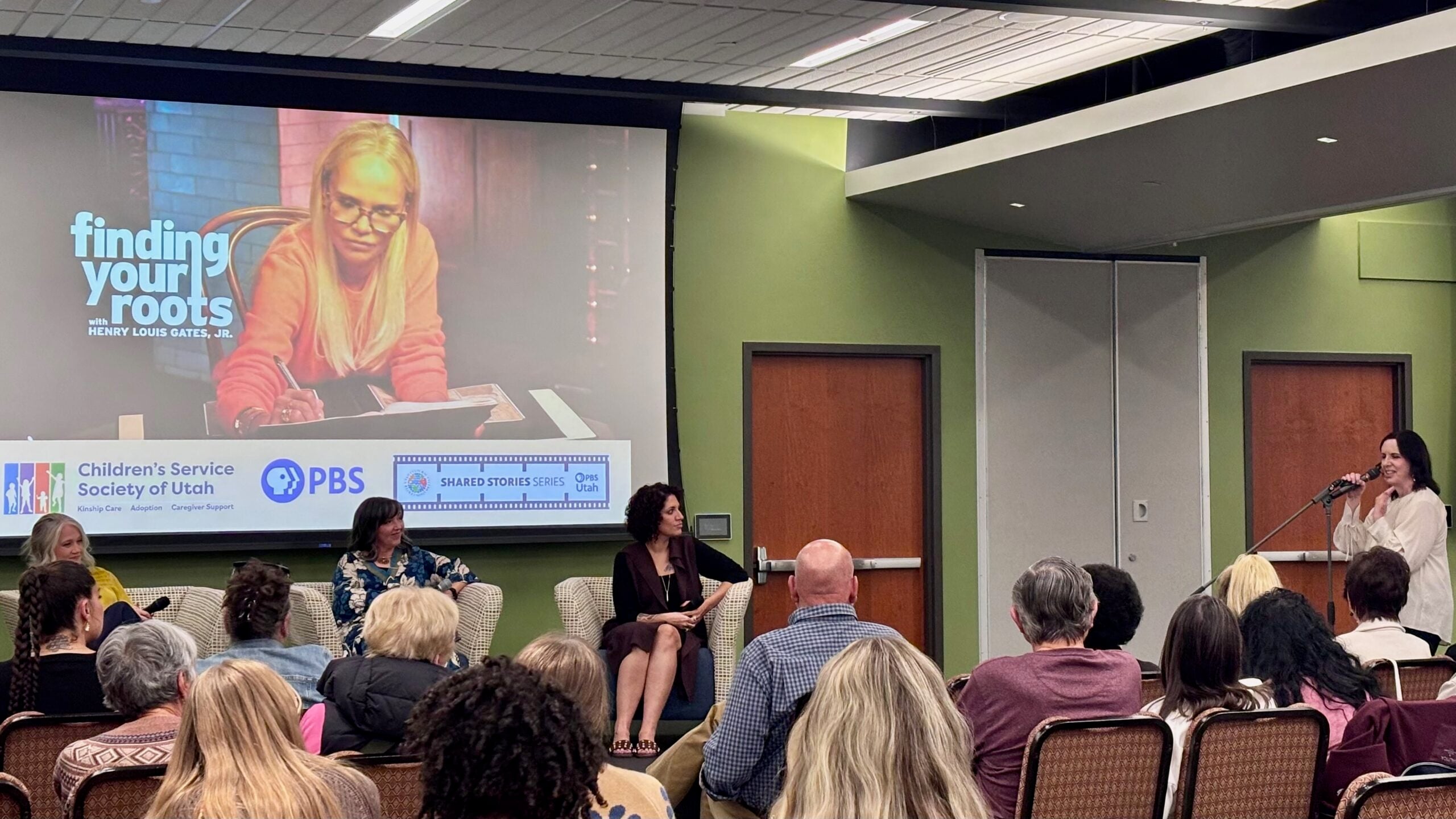
An audience member shares her experience of reconnecting with her birth mother later in life during a panel with adoption professionals alongside individuals with lived experience at PBS Utah’s Hidden Histories event in April at the Utah Cultural Celebration Center in West Valley City.
It happens to me in grocery stores, on hikes and even at the doctor’s office. People notice the PBS logo on my shirt or the water bottle I’m carrying and smile. Most of them tell me, “I love PBS. I grew up on Sesame Street and Mister Rogers.” Some of the younger ones say, “I loved Daniel Tiger and Wild Kratts as a kid.” They talk about how Wishbone taught them to love reading or how Mister Rogers felt like their friend.
What very few people say is how much they need PBS now. I don’t think that’s because PBS stops mattering after childhood. I think it’s because, as a public media system, we’ve become remarkably good at telling one half of our story and almost forgotten the other.
Parents love the children’s programming on PBS because it helps their kids feel steady and they don’t have to worry about an advertiser trying to sell them cereal. PBS Kids teaches values like curiosity, kindness and problem-solving. We want our kids to feel empowered and hopeful about the world, not confused or scared.
We spend a lot of energy being mindful and protective of what our kids need from their content, but don’t these same values that shape our children also matter for adults?
We have endless streaming services and publications that push content to our phones and tablets, but we are left to monitor ourselves. The speed at which we encounter media can make us feel unsteady. Our brains are not capable of comprehending the nonstop news articles and social media posts we scan on a daily basis. It feels either unbearable or numbing.
If there’s one media outlet that is built to slow us down, it’s PBS. PBS asks us to sit with complexity, history and ambiguity. Its content curators trust that we are capable of sustained attention and reflection.
PBS isn’t asking for more of our attention. It’s asking for a different kind of attention. In a media environment that often rewards speed, certainty and outrage, PBS still rewards curiosity.
The news isn’t flashy — it’s informative. Shows like Nova and Nature continue to challenge our understanding of the world. Finding Your Roots puts celebrities and viewers on equal footing. Celebrities have a lineage and a desire to know about where they came from just like us. A viewer who studies her own genealogy once told me that Finding Your Roots gives its guests something that not everyone gets while researching family history: a guide. The host, Henry Louis Gates Jr., guides individuals through each discovery with care and compassion, preparing them for difficult revelations and talking them through their emotions.
The programming PBS offers begins with listening. It treats the public (both kids and adults) not as a commodity to be managed but as a community to be served. To serve that community, we must first listen.
This may be one of public media’s greatest strengths, yet it’s rarely how we describe ourselves. We often talk about educational programming, trusted journalism or children’s television. We spend less time talking about the experience we create for adults: helping people feel informed without feeling overwhelmed, connected without being manipulated, and hopeful without ignoring reality.
One of PBS’ most underappreciated strengths is its local station model. PBS stations remain embedded in the places they serve. Across the country, stations partner with schools, libraries, arts organizations and civic groups, creating opportunities for people not just to watch public media but to experience it together.
A few months ago, I stood near the exit after a community event our engagement team organized, watching people file out of a room where we had spent the evening talking about the Great Salt Lake. The conversation wasn’t easy. We all know the lake is shrinking. The dust is a health concern. The science is sobering. But the tone of the night was different from what many of us have come to expect from talks about environmental issues.
As one woman passed me on her way out, she stopped and said simply, and with a smile, “I feel hopeful.”
Those words stayed with me and made me incredibly proud of my team. Hope wasn’t an accident. It was the result of careful reporting, thoughtful moderation and a community willing to spend an evening listening instead of arguing. The producers we worked with created a smart story grounded in research about how the dust coming off the lake is affecting local residents and what solutions are being explored. We weren’t there to paint a dire picture or push policy; we were there to present research from local scientists and professors who have studied the lake for years. The panelists invited questions, and each voice that wanted to be heard was heard.
When done well, public media doesn’t simply inform us. It steadies us. That woman who left hopeful was the equivalent of a kid leaving an episode of Mister Rogers feeling curious instead of scared.
So much of the media circulating overwhelms us with opinions, sensational headlines and inflammatory claims. Don’t we deserve stories that respect the time we devote to them? At this moment, while our attention is fractured and we’re constantly wondering if what we’re watching is real, we need exactly what we want for our kids: to feel grounded and capable. We also want to feel that same awe and wonder our kids do when they learn and discover something new.
PBS is built for this moment and takes its stewardship seriously. It understands that media can nourish rather than deplete.
Whether it’s Masterpiece, Finding Your Roots, Nova, Independent Lens, Nature or a locally produced documentary, PBS assumes adults are capable of curiosity instead of outrage.
One of my favorite events we do each year is an advance screening of the upcoming season of All Creatures Great and Small. You might think that people prefer to stay home on their comfortable sofa and watch their shows, but our local drama fans come out in record numbers to watch together in a theater with us. We get to hear collective laughs and sniffles and experience the characters’ journey together.
This is what public media is all about; we take care of each other. Whether we’re taking care of our children, our neighbors or the stranger down the street, knowing we don’t have to manage or experience challenging times alone is incredibly healing. Those evenings remind me that public media has never been solely about content. It’s about creating spaces for people to experience stories and one another in community. So much of our media consumption is solitary, and I believe public media is perfect for creating these moments of shared discovery.
When community interaction and impact are prioritized over profit, that’s when real connection is built. PBS might not be the biggest media organization out there, but it is the most intentional.
Perhaps we should spend as much time telling the public why PBS matters after childhood as we do explaining why it matters during childhood. Because public media was never designed simply to help us grow up. It was designed to help us keep growing. Its purpose, whether you’re growing up or all grown up, is to help you meet the world with a little more confidence than you had before.
Laura Durham is Director of Programming & Community Engagement at PBS Utah. She believes programming and community engagement are strongest when they inform one another, shaping what stations broadcast, how they engage audiences, and the connections those stories inspire in the communities they serve.