
Baltimore Public Media, Delmarva Public Media partner to strengthen local reporting
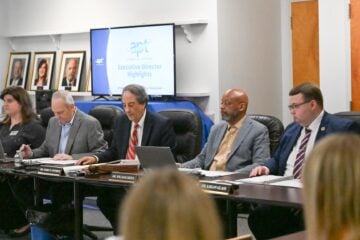
Baltimore Public Media and Delmarva Public Media in Salisbury, Md., are entering into a strategic partnership that aims to expand local reporting and increase their value to audiences.
The partnership will commence with the hiring of a shared reporter who will cover agriculture and the environment across Maryland, with BPM and DPM aiming to have the reporter in place by September. The organizations plan to use this editorial connection as a launchpad for further collaboration, which could include fundraising and sharing other content.
BPM CEO Craig Swagler said that the shared reporter position lays a framework that will hopefully maximize the services and value each organization can bring to audiences.
“We have to be more valuable to the communities we serve,” he said. “We’re partnering in a way that’s investing in people and reporting, because we see this as the most impactful way that we can have action. … What we saw is a really good starting place to try to get the most out of where the collaboration could impact the people we serve.”
Congress’ rescission of federal public broadcasting funds last summer eliminated roughly 6% and 15% of BPM and DPM’s annual budgets, respectively. Despite the turmoil in public media, the partnership represents an effort among the organizations not just to continue serving audiences but to build on their offerings, said Bryan Russo, CCO of DPM.
“Collaboration is the new competition, because we want to serve our communities in the best way, both in quantity of stories and quality of journalism,” Russo said. “I think this collaboration will help us deliver that to both sides of the [Chesapeake Bay] Bridge.”
An editorial collaboration
Swagler said he had been in conversation with DPM GM Judy Diaz since his August 2023 arrival as CEO of BPM, then Your Public Media. Because the organizations have overlapping coverage areas and felt their audiences needed “very similar” services, resulting in “duplicative work,” talks focused on potential editorial collaborations, he said.

“Judy became a really great partner very quickly, and Delmarva was very interested in how we could work together editorially on the news side of things,” Swagler said. “We started by saying, ‘Hey, how about we figure out a way to collaborate on just simply sharing some editorial content?”
Conversations escalated following the rescission of federal public broadcasting dollars. The organizations decided that the best use of their pooled resources would be an “editorial asset that we both share and supports an area of coverage that matters to both of us,” Swagler said. Hiring a reporter to cover an important beat for both parties would have a direct impact, he said.
Because both organizations have coverage areas along Maryland’s Eastern Shore, where there is a bustling agriculture industry and environmental issues are of utmost importance, BPM and DPM settled on hiring for an agricultural and environmental beat, Russo said.
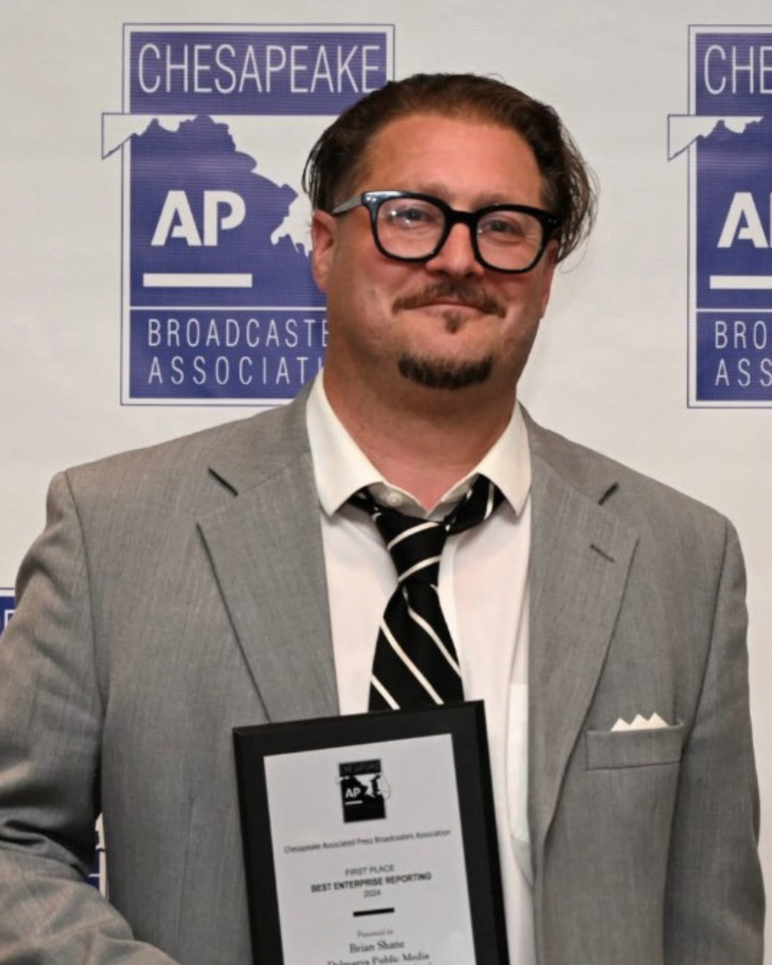
“Agriculture here on the Eastern Shore is one of the biggest industries other than tourism, and food supply, cost of food, kitchen-table issues — a lot of those things can be linked back socially and politically to things that happen with environment or agriculture stories,” Russo said. “We thought they were … regional and locally minded … topics that would be very fruitful.”
The new reporter will be employed by and receive benefits through BPM, but the stations will split the reporter’s salary, share editorial oversight and hold regular meetings between newsrooms, he said.
“We think it will be an ‘all boats rise’ approach to things that will just give us more power in our reporting across the entire state,” Swagler said.
Sticking the landing
The stations are focused on hiring and acclimating the new reporter before engaging in more robust cooperation, Russo said.
“Any time you’re embarking on things, the danger is to try too many things too quickly,” Russo said. “With everything we do, we want to make sure we really stick the landing well.”
The next collaborative effort will likely focus on fundraising, Swagler said. He said the stations’ development departments have been in conversation and are looking to use the editorial collaborations to find support from major donors. The stations see major gifts “as being the biggest opportunity to help fund this and other things we might do collaboratively,” Swagler said.
Stations need to be open to adapting in a landscape without federal funding, Russo said, where public radio’s “playbook of the past” doesn’t apply. In the aftermath of CPB’s closure, collaboration gives stations a great opportunity to continue serving listener areas adequately, he said.
“We’re trying to be proactive rather than coming from a place of having to be reactive in a post-CPB world,” Russo said. “It’s definitely tough out there, but I feel like we owe it to the listeners and to our communities to do our best to deliver them good local stories that they come to public radio for.”