

Consultant suggests Jefferson Public Radio ‘spin off’ from university licensee
Jefferson Public Radio
A consultant studying financial pressures at Southern Oregon University has suggested that the school consider changing its relationship with licensee Jefferson Public Radio.
Deloitte Consulting said in a preliminary report released April 28 that the Ashland university would need to cut $20 million to stabilize its finances. One suggestion was to “Spinoff Jefferson Public Radio,” which it said would save $300,000.
“This is an element that’s going to reduce staff by about 14. … So, not an easy path, but finding a new home for that,” Megan Cluver, principal at Deloitte, said during an April 28 special meeting of the university’s board.
In its full report, released Tuesday, Deloitte said the university should consider a review of “auxiliary activities.”
“For units such as parking, the radio station, or other non-core enterprises, the University should assess the impact to the institution; connection to the institution’s mission; and whether they can realistically reach break-even performance and, if not, whether divestiture, outsourcing, or spin-off models may be more appropriate,” the report said.
Deloitte said the university is operating with a $12.5 million deficit due to rising expenses and enrollment declines. Even with $15 million in emergency funding from the state, the university will not be able to meet its cash obligations by next fall, according to the report.
JPR Executive Director Paul Westhelle said Deloitte’s $300,000 savings figure is outdated. The university’s direct financial support is now about $192,000, Westhelle said, which covers his salary and benefits. It accounts for about 5% of JPR’s budget this year, he said.
Westhelle said he did not meet with anyone from Deloitte before the report was released and that he first heard about the idea of spinning off the station during last week’s presentation. He said he has “no idea” what spinning off the station means and that he has written a letter to the university’s board.
The station’s relationship with the university has been “positive” and “constructive,” he said.
“It would be a shame to undo a relationship that began in 1969, over 50 years of history and a strong relationship,” he said. “And if spinning it off means spinning it off to our private foundation and undoing that relationship, I guess, I’m pretty disappointed in that. But we’ll do whatever we can to serve the community in the best way possible.”
Losing financial support from the university within a year of losing federal funding would cause “significant financial challenges” for the station, he said. JPR lost $525,000 of federal support, about 15% of this year’s budget, with the rescission of CPB funding. Donors have made up the difference, but “what happens going forward is the big question,” he said.
“Station managers all around the country are asking, ‘How durable is some of that surge giving that took place after we lost federal support going to be?’” he said. “And certainly losing one of the key funding sources for JPR is not going to put us in a stronger position, and it could significantly weaken us if private giving doesn’t hold up as strong as we hope it does.”
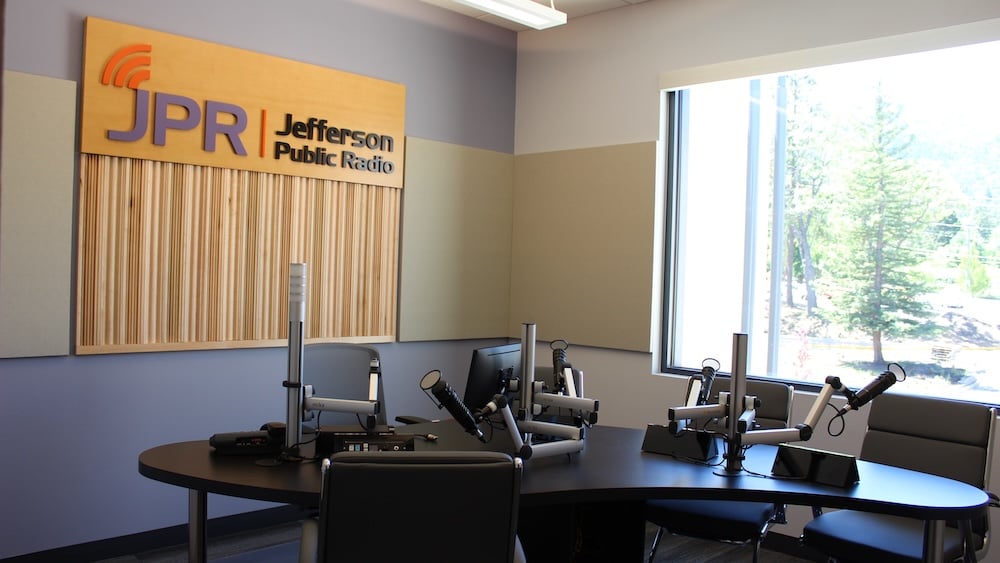
He added that the station built and paid for its own facility in 2018. Westelle said the university has assured him that it would not kick the station off campus.
“It’s my hope that the university in some way can preserve our funding,” he said. “And if it can’t … then we’ll start to look at ways that we can create a structure that serves the community in the strongest possible way and does not weaken our ability to be an excellent NPR station.”
Students protested against Deloitte’s proposed cuts Monday, Ashland.news reported.
The board will hear public comment and take action on the plan at a meeting Friday.