
In farewell remarks, Pat Harrison looks beyond CPB’s end to public media’s future
CPB
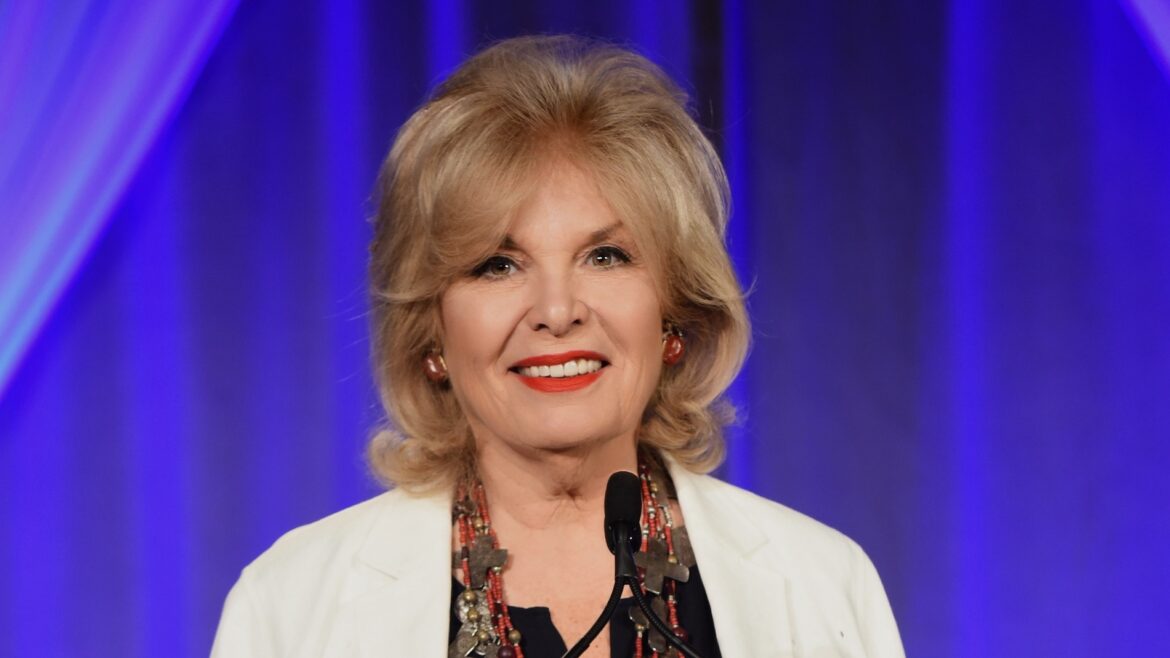
Pat Harrison, CPB president and CEO, 2005–2026
During what was expected to be CPB’s final public board meeting Thursday, Chair Ruby Calvert and Vice Chair Liz Sembler joined the remaining staff to discuss their decision to dissolve CPB and disperse its final grants — and to acknowledge the many people who contributed to CPB’s legacy. In their brief remarks, Calvert and Sembler noted they were struggling to hold back tears.
After readings of resolutions and tributes to CPB staff and other supporters, Pat Harrison delivered her final remarks as CPB’s president and CEO. This edited transcript is from a recording of her speech.
Generations of Americans have supported and benefited from national and local public media, and the federal appropriation was very appreciated. We never, ever took it for granted. But few of us really believed that any administration would seek to totally eliminate such an essential component of democracy and civil society. And at first, most Americans did not understand what the defunding of CPB meant.
For nearly 60 years, CPB’s management and dedicated boards of directors served as true and quiet stewards of the federal appropriation, reporting to Congress and the administration how these funds were applied in ways that enabled local and national public media to respond to the information, community and civic needs of the American people.
Year after year, Americans in rural and urban communities affirmed the value they’ve received from trusted content and services that connected Americans to view one another as neighbors. … What does that mean? It means people volunteering when those wildfires were out in California. People from all over the country viewed Californians as their neighbors. That’s our ethic. That’s the character of our country.
It’s profoundly ironic that, precisely because public media remains so essential to American civic life, CPB’s final act had to be to dissolve [for] the greater good.
Why was public media’s appropriation rescinded? Was it a burden to the taxpayers? Was this a cost-saving move? We all know that’s not true. Unlike in other countries where citizens are heavily taxed and they’re willing to pay that tax — for example, [to fund] the BBC and NHK — American public media really was like a free enterprise and volunteer effort of all citizens. …
It’s a public-private partnership, which is uniquely American. And for $1.65 or even less a year in taxes, every American has access to content that inspires independent thinking.
That’s interesting, isn’t it? … Independent thinking. You get the information, then you come to your own conclusion. Trusted information, trusted reporting, understanding of the rights and responsibilities of Americans living in a vibrant democracy.
What are those rights? And more importantly, what are those responsibilities? In the wake of Congress’ decision to defund CPB, we knew we really had a limited time to protect a proud legacy and the important work that public media does every day to serve the American public.
Under the law, if CPB tried to exist without funding, it would have increased the prospect that our remaining funds would never reach the public media system. … We were also deeply concerned that new funding directed to public media could become subject to new content restrictions and that compliance would further harm stations and, most importantly, erode the trust that we have earned over decades.
It’s profoundly ironic that, precisely because public media remains so essential to American civic life, CPB’s final act had to be to dissolve [for] the greater good.
That may not make sense to a lot of people at first. But it would if you were privy to the conversations with the board, with other public media leaders and corporate America. It’s the advice we got from legal. At the end of the day, we had to … put our personal preferences to one side and work for the good of the order to protect all of you who are working in public media.
After all the political attacks and congressional defunding, we recognized a hard truth. Without funding and independence, CPB risked becoming a liability to public media rather than a protector of it. I can’t stress this enough. The board and management carefully assessed the reputational and institutional harm that would come from compliance. Could we go dormant, stay alive a while, and to what purpose? That would increase risk.
We had already taken a courageous stand. CPB was the first organization to sue this administration for attacks on public media’s independence and withholding of congressionally appropriated funding. We did not comply with executive directives that violated our mission or stations’ editorial independence — that word again. And we continue to fund PBS and NPR.
And, no, we did not curry favor.
We could have survived by complying with demands for political control over news coverage, by rewriting history. Where does it stop? By limiting the stories and information shared with the American public. By abandoning diverse talent, or by supporting content that increases divisiveness through disinformation.
But I can tell you right now … that was never going to happen on our watch. That is less than what the American people deserve.
It would have been great not to serve at this time. But, at the same time, I’m grateful I had this opportunity … to work with people who have the courage and the strength to really stand up. You don’t get that in every organization. To put the mission above their personal desires.
Of course, we all want to stay here. Of course, we want to keep CPB running forever. CPB was created to protect editorial independence and support creatives like Ken Burns and Frontline, Stanley Nelson, Dr. Henry Lewis Gates, John Leguizamo and many more.
We invested millions to strengthen journalism and the First Amendment. Let’s not forget all our investments in journalism. We educated Americans about the responsibilities of citizenship. We nurtured new and diverse voices.
“Diverse” is not a bad word, by the way, to tell America’s story in all its complexity. That work will continue through people who have already started, because they care deeply about public media, whether it’s the Public Media Bridge Fund, foundations’ work or Americans waking up to understand what is slipping between their fingers while they sleep.
We really are a nation of neighbors. And for the future, I’m sure we’re going to be telling and shaping America’s story through a fully funded future for public media.
Since just October … CPB has granted over $170 million in funding to the public media system. That’s a lot of money. But it doesn’t even begin to describe the effort required to do something like that. The agreements that have to be in place, the conversations. Does this meet the highest standards of stewardship, legality — all the different pieces that make us a trustworthy organization — mission, legacy and service to the American people? I want to thank the staff again and our board for this incredible accomplishment.
We were all on the same page. The strategic investments that preserve public safety’s legacy and the expected future … include the American Archive of Public Broadcasting, so our shared civic history not only endures but reminds Americans that if it’s going to endure, you have to wake up and make it happen; sustaining national distribution of locally produced programming through American Public Television, so that local stations can find strength in celebrating what is unique about America; trusted, research-backed, educational content, like Carl the Collector, the PBS Kids show that connects to kids who may not be 100% physically able and helps them understand that they have a role to play as leaders or citizens participating in a great democracy.
We’re going to be giving a grant to StoryCorps for commemorating the nation’s 250th anniversary. And as we move toward that 250th anniversary, we want to make sure we have something to celebrate voices from across America and the commitment to keep those voices heard. We’re also advancing rigorous research that documents public media’s impact and important role in our democracy.
I’m really proud of the people I have worked with. I’m going to continue to work with them in an unofficial capacity.
All of the talent here and those people who have left CPB are still out there. They’re influences — hundreds and hundreds of people, a multiplier effect of people who support public media. And, by the way, they vote. Together, we are going to prove that a nation of neighbors really describes this country.
I can’t even express the honor I have had to be part of CPB’s work and legacy, and … that is why I am not sad, exactly. What gets rid of that sadness, or that “What can we possibly do?” feeling that the country has been expressing for a while now, is action. It’s thinking how you can contribute, what you can do. It requires commitment and, another important element, courage. You’ve got to muster up the courage to fight for what you believe in and to ensure that our democracy really prevails.
In closing, I want to thank the board and everyone I’ve worked with here. And a special thank you to my battle buddy, PBS CEO Paula Kerger, who I’ve watched now for 20 years, always putting public media above self.
Thank you all for your commitment to our mission, your courage, your unwavering support of public media.



It gave me a sense of deep satisfaction to work with Pat Harrison, Paula Kerger and Liz Sembler when I served on the CPB board. These closing remarks help to explain why I felt that way then–and why I do so now. For–in the many years that I worked in media spaces I rarely saw such dedicated –and truly smart– leadership as that shown by Pat Harrison. She helped to guide her co-workers to navigate treacherous waters and hostile territory with the best interests of the country foremost in her thoughts and actions! Our country was blessed to have her leadership and her true courage when it was needed. ….Jannette Dates, Dean Emerita, School of Communications, Howard University
Pat Harrison’s farewell words are well worth reading. The thoughtful and clear response she and others put together in light of the threats — and promises — of harm were well-considered and sensible, and must have been agonizingly difficult to take.
They did what was best for the PBS, NPR, and station offspring to carry on delivering education and trusted information, available to all Americans, without a paywall.
Thank you Pat.
Dan Alpert