
New documentary feature will examine life and work of Bill Moyers
Dale Robbins
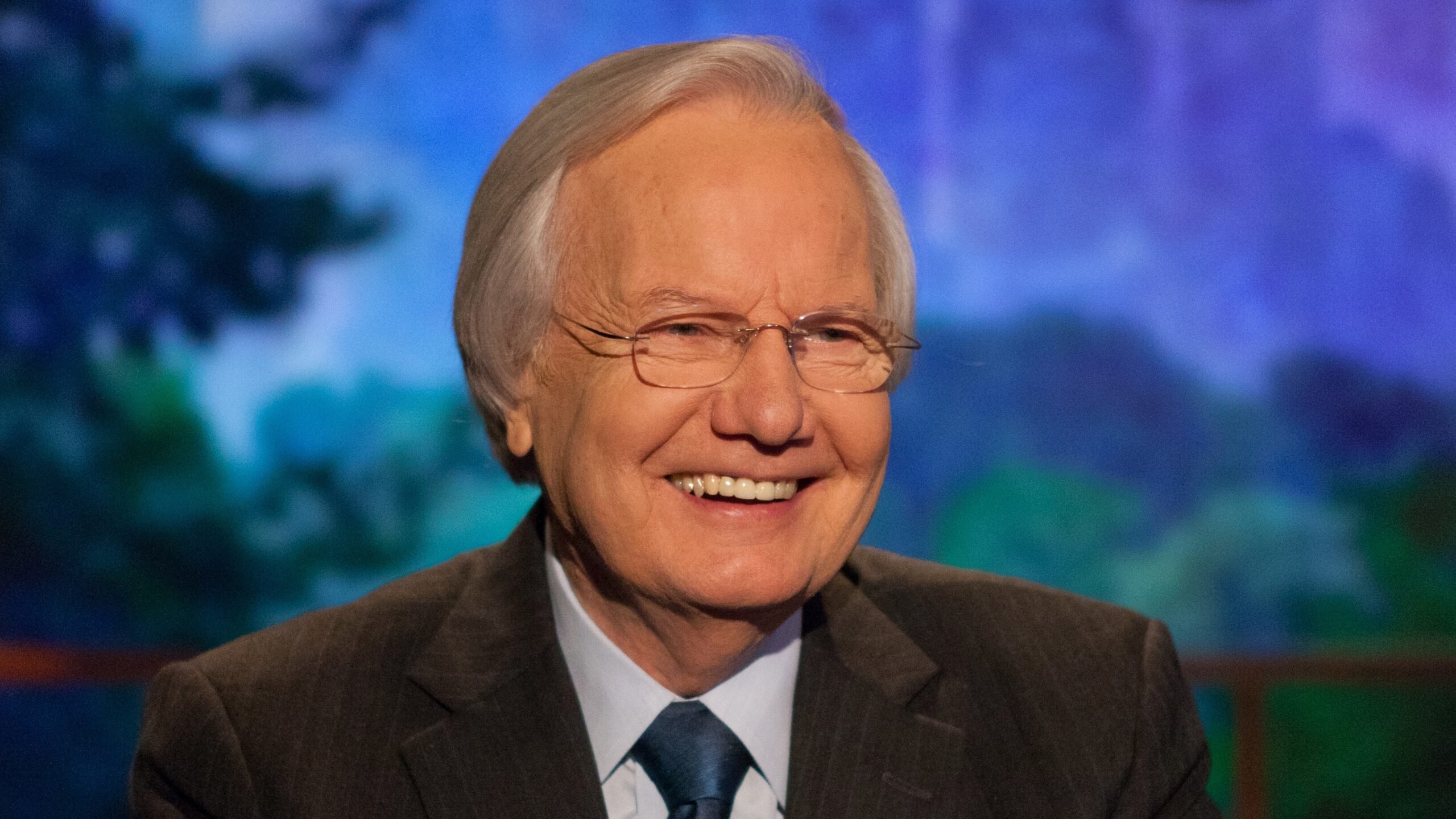
Moyers in 2012.
Production is underway on a new feature documentary about the life, work and legacy of Bill Moyers.
Scheduled to be completed next fall, the independently produced film is being assembled by Emmy Award–winning filmmakers Kathleen Hughes and Tom Casciato, as well as EPs Sally Roy and Judy Doctoroff, all of whom worked with the late Moyers at some point in their careers. The latter two spent decades working alongside Moyers on his shows’ editorial direction and production, while Hughes and Casciato worked in tandem with the newsman on the 2025 Emmy Award–winning Frontline episode “Two American Families 1991-2024.” Hughes also directed Moyers’ award-winning documentary Buying The War.
While Moyers didn’t sit for an interview specifically for the new film, he was aware of it, having developed the project alongside the team in the six months prior to his death in June. Doctoroff says Moyers had “talked about [making a film] on and off over the years” and knew that the archive of his more than 50 years on the air could serve as a lens through which to look at our times.
The film will touch on topics Moyers covered for decades, Doctoroff says, including the importance of a free and independent press, inequality, access to health care, systemic racism, the importance of public education, immigration reform and economic injustice.
“If you look back at Bill’s work, it’s almost like he knew the future because of what he was reporting on,” Doctoroff says. “I was just re-listening to the Fresh Air tribute to Bill after he died, and there was an interview from 25 years ago about Medicare, just as our Senate now is taking actions that will affect health care.”
While Moyers is well-known for his reporting, Roy says he could also spin a great yarn about his personal life and career, including the years he spent raising funds for John F. Kennedy Jr. to start the Peace Corps and his time as White House press secretary during Lyndon B. Johnson’s administration.
“Bill was frequently present at the creation of things,” Roy says. “He was there at the Carnegie Commission on Educational Television that led to PBS, for instance. You’d be in the editing room working with him, and he’d drop little gems, like, ‘You know, when we signed the Medicare Act, we flew to Harry Truman’s house, and we gave Harry and Bess Truman the very first Medicare cards, numbers one and two.’”
Doctoroff says the filmmakers hope to use footage and audio of interviews Moyers gave over the years talking about his work, as well as the 1,300 or so hours of his output that went into the American Archive of Public Broadcasting and the Library of Congress in 2003. Interviews from Moyers’ friends and colleagues will be included as well, though Doctoroff says the team hasn’t yet finalized a plan to interview Moyers’ widow and long-time creative collaborator, Judith Davidson Moyers.
So far, Doctoroff says, the project has been funded by “philanthropists who funded Bill’s work over the years.” The team is planning a comprehensive release strategy, including broadcast, streaming, festivals, educational programs,and impact outreach, and says that it has been in talks with PBS about distributing the film but hasn’t nailed anything down yet.
The team hopes to create a film that will resonate not just with those who watched Moyers’ work over the years but also with those new to his reporting — or even new to the issues and times covered in the film. Roy says that, working both with Moyers and on the film, she’s always been struck by how frequently clips from the journalist’s past shows would resurface on social media, recirculated by young and old alike.
Roy says when she saw old stories recirculating, she’d “always think, ‘Wow, people want to know.’ In the ocean of social media, for something like that to rise to the top is remarkable, and that means there’s definitely interest.”
And for those who are familiar, Doctoroff says, there’s still lots to be discovered. She started working with Moyers in 1986, when he’d already been on the air for 15 years, and says that “even given my familiarity with the work, looking at the earlier material helps me understand what we’re living through right now.”
“That well just keeps going, and my understanding of the well keeps getting deeper and deeper,” Doctoroff says. “It’s like I knew [the well] was there, but the depth of it has turned out to be incredible.”