

New documentary examines life of ‘Sesame Street’ trailblazer Sonia Manzano

"Street Smart: Lessons From a TV Icon"
Sonia Manzano in "Street Smart: Lessons From a TV Icon."
It’s ridiculous that there’s never been a documentary about Sonia Manzano. Born and raised in the South Bronx, the Nuyorican actress has inspired and entertained generations of TV viewers as Sesame Street’s Maria. She’s also penned children’s books and a memoir, created a beloved animated series — Alma’s Way, for which she’s an EP, writer and voice actor — and been a vocal advocate for the value of art, reading and representation in children’s everyday lives. Her story is fascinating and valuable, and the boundaries she’s pushed and even broken down are innumerable.
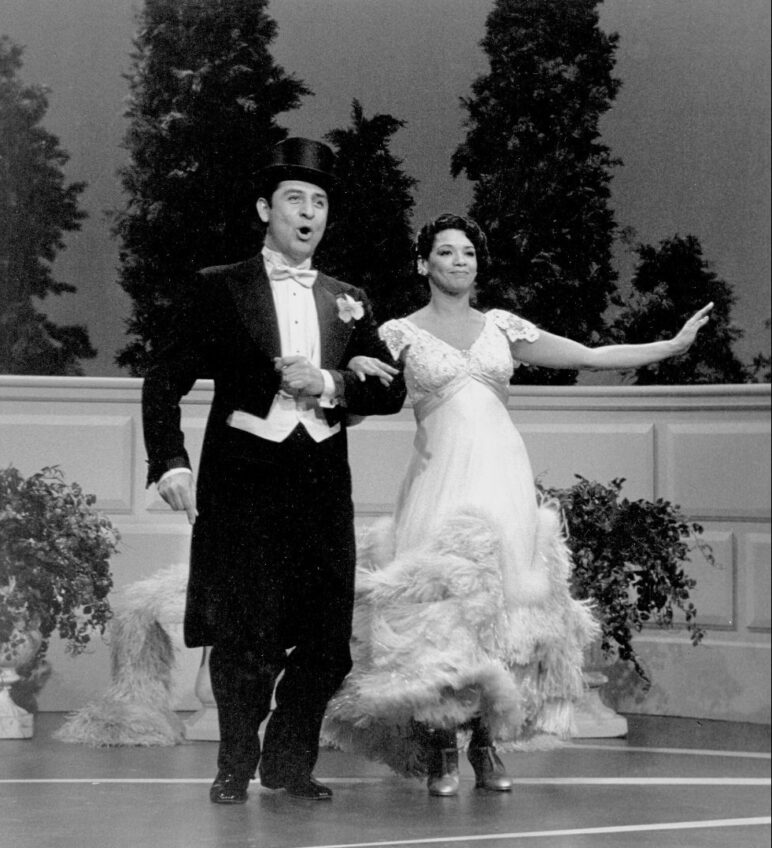
Luckily for everyone, filmmaker Ernie Bustamante is about to right that cinematic wrong. Street Smart: Lessons From a TV Icon, which had its official premiere Sunday at the DOC NYC film festival, aims to capture Manzano’s essence and legacy on screen. The film features intimate interviews with Manzano herself, as well as friends like Supreme Court Justice Sonia Sotomayor and Wicked and Godspell composer Stephen Schwartz. It also contains ample archive footage of Manzano’s work on stage and screen.
Bustamante said the doc was born after he read Manzano’s memoir, Becoming Maria: Love and Chaos in the South Bronx. A TV writer by trade, Bustamante felt that the book would be a great live-action coming-of-age TV show, like something akin to Everybody Hates Chris. He connected with Manzano on the idea, and they started developing a series.
They worked on it for three to four years, pitching producers and studios throughout the industry but never getting a green light. When the pandemic hit, Bustamante says, he saw the writing on the wall. He pivoted, beginning work on a documentary about Manzano instead. And now, a little over three years after he first sat down with Manzano for an on-camera interview, Street Smart has made its debut.
“Working with Sonia on the TV project, we would be on calls with network executives, studio executives and producers, and they always loved to meet Sonia,” Bustamante says. “I remember one time a studio executive cried during our Zoom. She broke out into tears. She didn’t buy [our show], but when I went to make the documentary, I remembered those moments and I remembered the stories that Sonia had told at Q&As.”
Children’s show with ‘adult lessons’
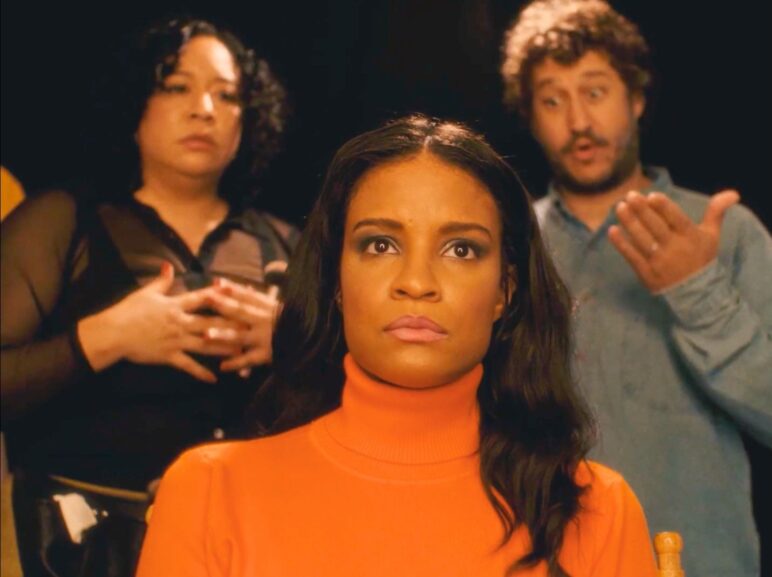
The documentary interweaves interviews with Manzano with praise and insight from friends and associates, as well as archival footage. It also includes original animations and theatrically staged dramatizations of Manzano’s life, which Manzano and Bustamante say were created out of both necessity and desire.
“I wasn’t raised at a time when people took photos,” Manzano says. “We had one little Brownie [camera] that we’d use to take photos, and then we’d forget to get them developed. It was a whole thing to have a photo, and that’s always something I have a hard time getting across to younger people.”
“I wanted the viewer to feel as if they were watching a children’s show but with adult lessons, and that’s where the animation comes in,” Bustamante adds. “And I’ve always maintained that Sonia’s moments in the memoir deserve dramatization, so I thought that was the best way to tell those stories.”
To date, the film has screened at a number of festivals, including the Bentonville Film Festival in Arkansas, the Oak Cliff Film Festival in Dallas and CineFest Latino in Boston. The pair did a sneak peek screening and panel at this year’s San Diego Comic-Con and plan to take the film to Canada for a Doc Soup screening in Toronto next month. And while there’s no wide-release distribution plan for Street Smart just yet, Bustamante says he’d love to be able to broadcast the doc on PBS, which he says would be an excellent platform.
“I think that would speak to not just the mission of the film but to Sonia’s lifelong mission, which has been the education of young people,” Bustamante says.
The power of television
If anyone understands the value and reach of public television, it’s Manzano, who has been a fixture in the system for decades. She says that when she first read for and was cast as Sesame Street’s Maria, she was just 22 and felt a bit like a deer in headlights. The description of her character was, as she puts it, “terrible,” but producers told her all she had to do was be herself.
“It’s very hard to be yourself,” Manzano says. “It’s easier to be a character, and so I struggled. I thought I was coming across sappy when I wanted to have street cred. I didn’t want my [actor] friends to say, ‘Oh, you’re on a kids show?’ And so I competed with the puppets, which is ridiculous. But when I realized that I was a straight man and they were the comics and all I had to do was set up the joke, that’s when I understood what my job was.”
Manzano says she also came to understand the importance of her role on the show for Latino kids watching at home. As a child, she’d watched TV shows made up of almost exclusively white people. She recounts in the documentary how her neighbors would cheer when a person who looked like them appeared on screen, even if in a token role like a gardener on Father Knows Best.
“I couldn’t articulate it, but I did feel invisible,” she says. “People would say, ‘What are you going to be when you grow up?’ And I didn’t know what to say, because I never saw anyone who looked like me doing anything, and I think that took a toll. So when I had the opportunity to be on TV, I remembered that feeling and thought about how I wanted to remedy it.”
In the documentary, she recounts a conversation she had with Matt Robinson, who not only wrote and produced Sesame Street but also acted as the original Gordon and created Roosevelt Franklin. Pulling her aside on set one day, Manzano says, Robinson told her that she wasn’t there to represent Latin culture by appearance only. She also had the power to influence the content on the show, making sure viewers at home would see themselves not just in Maria but in every aspect of what went on all over the street.
“I remember thinking, ‘Who elected me the president of Puerto Rico? I’m just 22 years old.’ But it stayed with me,” Manzano says. A few days later, she noticed that a fruit cart on the street displayed only food like apples and oranges. She mentioned to props people and writers that it would be good to also show what was on carts in her neighborhood. The next day, the cart had papayas and coconuts, too. Realizing the reach of her creative power, Manzano says, she kept pushing throughout her tenure on the show, eventually becoming a writer as well as a cast member.
That’s not to say that Manzano inherently sees herself as a public television trailblazer, even if Bustamante and others would disagree. “I know that I’ve affected people, because people share how they feel when they approach me, but a little part of me wants to know why,” she says. “There were other people on Sesame Street, and so I wonder about it. But then I think about how powerful television is, that a device like that can touch people on so many levels.”
These days, Manzano says, she’s focused on finishing season three of her PBS Kids show, Alma’s Way, which should come out in 2026. While she’s reluctant to say much about the new episodes, she says the new season will feature episodes about Black cowboys and celebrating different hair textures, as well as an episode about grieving.
As to the show’s future, Manzano won’t speculate, nodding to the current state of public media funding. For now, she says, “we’re just happy to have a third season, and we’re wondering what’s going to happen next.”