
Commission votes to keep PBS programming on Alabama Public Television
Michael Krall
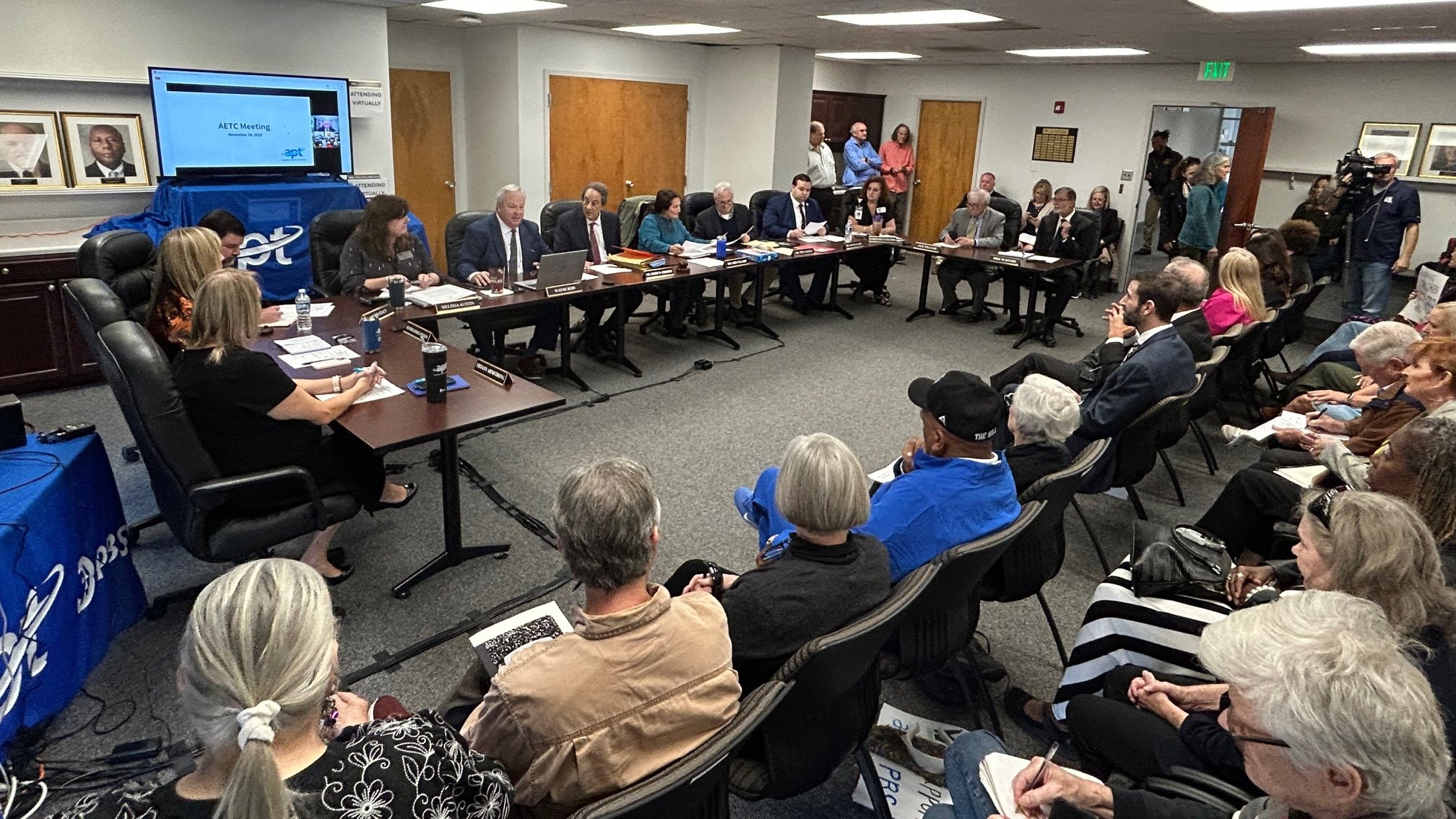
A meeting of the Alabama Educational Television Commission Tuesday drew APT viewers who urged the network to keep PBS programming.
Members of the Alabama Educational Television Commission voted Tuesday to continue paying dues for PBS programming through fiscal year 2026.
Members of the commission, which oversees Alabama Public Television, had discussed at a meeting last month whether to cut ties with PBS and to stop airing its programming. Commissioners Les Barnett and Ferris Stephens raised the idea after Congress’ rescission of funding for public media in July. At the October meeting, Barnett said PBS was “the enemy of what I stand with, and so I do not like them, and I don’t follow the philosophy of feeding the beast.”
In FY24, APT received more than $2.5 million in CPB funding, about 10% of its budget of more than $24 million. The state network was also set to receive $529,558 from the CPB-managed Next Generation Warning System program, but the Federal Emergency Management Agency revoked the funding. The network has cut 11 jobs, ended some local productions and dropped NPR programming on its radio station, WLRH in Huntsville.
On Monday, Alabama Gov. Kay Ivey sent a letter to the commission urging it not to rush a decision about PBS and to seek public feedback.
At Tuesday’s meeting, APT Executive Director Wayne Reid said he projected that leaving PBS would increase the state network’s funding gap from the current $1.4 million to more than $6 million. Dropping PBS programming would incur a loss of about $2.4 million in membership revenue, Reid estimated. He added that the network would also have to find new programming, make infrastructure purchases and negotiate its own music licensing and streaming contracts.
Reid said PBS station leaders are meeting with PBS leadership Tuesday to discuss a la carte programming options that would allow stations to pick and choose programs to acquire. PBS is expected to continue discussing dues with station leaders after its December board meeting, he said.
Commissioner Bebe Williams then moved to continue paying APT’s PBS dues of about $2.2 million through June 2026, the end of the fiscal year. Williams said the Alabama public is eager to help the state network raise enough funds to cover a $1.4 million revenue gap for FY26.
Stephens, Williams and three other commissioners voted in favor of Williams’ motion. One commissioner who attended remotely was unable to vote due to technical difficulties. Barnett passed on the vote. All seven commissioners also voted to establish a committee to consider options for APT’s future and to gather feedback from broadcasters, legislators and viewers.
Later in the meeting, Barnett moved to give PBS a 180-day notice that APT would stop paying dues. “If we give them the 180-day notice, then if between now and then we decide to move forward with something else … we’re in a good place,” Barnett said. The motion failed.
Members of the public who attended the meeting urged APT to remain as a PBS affiliate. “If you look at any of the other news programming, it’s all become entertainment, shock value and partisan one way or the other,” said an attendee, who added that he enjoys PBS News Hour. “They report the news. They don’t do the shock value stuff. They just tell you what’s happened, and I think that’s vitally important.”
“My son goes to an autism clinic, and all those kids watch PBS,” said another attendee. “A lot of kids benefit from it so much, especially autistic kids. I have a hard time trusting any other place except PBS. … I can’t afford cable. … It would destroy my son if he cannot watch Daniel Tiger every day. He has a routine, and you guys understand with autistic kids, if they don’t have their routine, it goes down the window, and all of it goes back to regression. So we need PBS.”