

Opinion: Why public funding still matters for journalism in a democracy
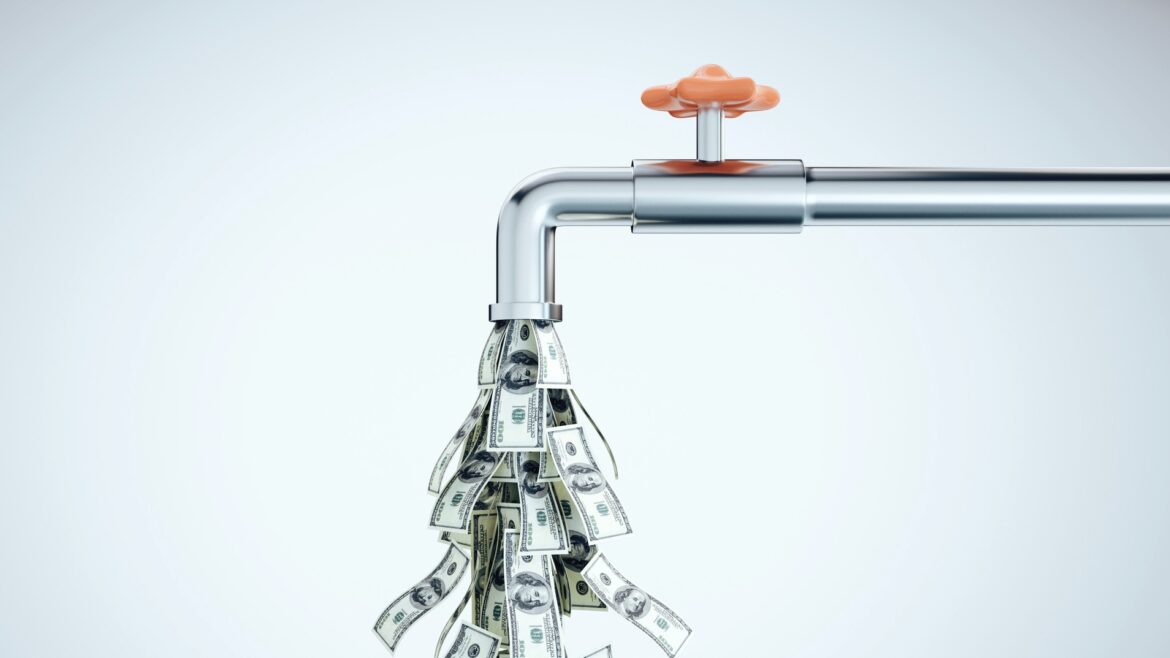
peshkov / iStock
In the aftermath of President Trump’s unprecedented rescission of public funding previously approved by Congress for public broadcasting, former NPR chief Vivian Schiller was surprisingly not all that upset. “My perspective now,” she told Fox News, “is let’s move on.” She added, “I have long believed that mixing journalism and federal funding is just a recipe for disaster.”
Referring to the local public media outlets most strongly affected by the cuts, Schiller suggested this approach: “Let’s get support for those rural stations from the communities, from philanthropies, and find other ways to support them.” In the wake of the rescission, both small donors and major foundations have in fact increased their contributions. But the amounts — a reported increase from previous years of $70 million in donations through June and a foundation initiative announced in August to contribute $37 million — fall far short of the $1.1 billion that would have come from CPB over the next two years. In the meantime, many stations are already being forced to make deep cuts in local news programming.
Is Schiller’s strategy — and one assumes that she is not entirely alone in thinking this way — financially viable and civically optimal? Over the long term, will charitable donations, large and small, ever rise to the level that is needed to serve communities abandoned by commercial media? Even if they do, is mixing journalism and philanthropic funding an unmitigated good? And is it wise to give up altogether on public funding for public media?
Conducted with a team of international scholars, my comparative research on news media in the U.S., Sweden and France (How Media Ownership Matters, Oxford, 2025) reveals both the promise and the limitations of the nonprofit path. It also confirms the irreplaceable value of public funding for the future of our democracies. My colleagues and I find that philanthropic support for news media is a unique and valuable asset of American journalism. While some philanthropic funding has been distributed in Sweden and France, the amount is insignificant compared to the U.S. total.
Philanthropic funding has made possible the launching of world-leading investigative news outlets like ProPublica; regional/local political news and analysis websites like the Texas Tribune, MinnPost and The City; and innovative outlets focused on important but undercovered issues like the criminal justice–focused website The Marshall Project.
Contributions from national and local foundations and individual large and small donors have fueled membership in the Institute for Nonprofit News, founded in 2009 with now more than 500 news outlet members.
Anyone who takes time to click the links on the INN website and read a small sample of the news articles and videos produced by INN members will quickly see that nonprofit ownership and philanthropic funding are supporting outstanding journalism. How Media Ownership Matters, one of the first large-scale studies of news outlets with different ownership forms and funding models, confirms the valuable journalistic contributions of 501(c)(3) association–owned nonprofits as well as other forms of “civil society” ownership (such as mission-driven foundations or religious organizations) present in all three countries.
We interviewed more than 100 top news executives and editors and gathered comprehensive data on audiences and funding for a wide range of media in each country. We also closely analyzed the online content of 51 news outlets during a “constructed week” of days selected between December 2015 and June 2016, thus generating a sample of 3,450 articles and 29,050 mentions of social actors (individuals or organizations). Our systematic review of other ownership studies finds that the patterns we identify have continued into the 2020s.
In our analysis of this coverage, we found that civil society–owned media tended to give greater priority to public affairs news and investigative reporting than commercial ownership forms (e.g., stock market–traded, privately held). Civil society media also tended to provide the widest range of voices and viewpoints. In our research, those outlets primarily relying on philanthropic funding were especially strongly associated with more public service–oriented news.
Although NPR and PBS are called “public” media in the U.S., since their beginning they have been much closer to the civil society ownership form than their public-service broadcasting counterparts in Sweden, France, the U.K., Germany and other leading democracies. Instead of being the heart of a radio-TV system later supplemented with commercial media, as in Europe, they were a very last-minute addition in the late 1960s to our commercial troika of CBS, NBC and ABC. They were never fully publicly funded, so almost from the very beginning they have been heavily reliant on other sources, from the small donations of “viewers like you” to the sponsorships of major corporations and grants from large foundations. American public media veterans learned to make of this necessity a virtue, as Bill Moyers understood when he sent me a note explaining his formula for success at PBS: “I’ve had to raise every penny for every production but with that challenge I’ve had far more freedom than I ever did at CBS.”
And yet, we know that the relationship between philanthropy and public media hasn’t always been smooth. More than a decade ago, Schiller stepped down from her leadership of NPR in the wake of a scandal surrounding an NPR fundraiser’s ideologically pandering remarks to a Republican operative posing as a potential donor. With adequate public funding, the need to take such meetings would never have arisen in the first place.
More than the potential for the appearance of undue influence, however, the greater threat from reliance on philanthropic as well as viewer/listener donations is that its “impact”-driven focus skews coverage toward an imagined and ultimately quite real audience of economic, cultural and public policy elites. PBS and NPR make little effort to hide this fact: Look at some of the marketing materials posted online to encourage sponsorships by corporations hoping to reach affluent and influential audiences. Audiences for “pure” nonprofits like ProPublica and Texas Tribune are also very elite in their levels of income and education: Even though they do not charge for their content, their audiences closely resemble subscribers to the New York Times or the Washington Post.
U.S. public/nonprofit media also struggle to achieve sustainable scale. While a handful of nonprofits have begun to attract substantial audiences and revenues are reportedly up for the sector as a whole, most of them have very small budgets, staffs and traffic.
Even before public funding was cut, NPR’s and PBS’ levels of audience reach and trust were starkly lower than those of their Swedish public media counterparts, SR (radio) and SVT (TV). According to the 2024 Reuters Institute Digital News Report, U.S. local news radio (only some portion of which is linked to NPR) was listened to on a weekly basis by 12% of the U.S. population. Sandwiched in the rankings between the avowedly right-wing New York Post and Newsmax, NPR’s website was accessed by 8% of the U.S. population. PBS did not show up in the list of top offline or online audiences. NPR’s level of trust, 47%, placed it between the New York Times and the Washington Post, and lower than all major TV/cable channels except for Fox. In contrast, Sweden’s SVT and SR had, respectively, weekly offline use of 55% (#1) and 38% (#3) of the population; their online versions attracted weekly use of 36% (#2) and 14% (#7). They were both trusted by 77% of the Swedish population, higher than for any other outlet.
In short, as a former director of SVT told me, Sweden’s public media have “a very broad audience if you compare it to NPR, which is brilliant journalism, but it’s clearly an elite project, and that’s not the case in Swedish public-service media.”
What this means in practice is that robust, well-funded public media — as in France and especially Sweden — do not necessarily provide more high-quality public affairs news than civil-society nonprofits or even elite audience commercial newspapers like the New York Times, Le Monde or Svenska Dagbladet. What sets them apart is their ability to combine strong public-service orientation with broad accessibility. Thus, the relevant comparison is to other “omnibus” or mass audience media. In our news content analysis, Sweden’s and France’s omnibus-audience public media prioritized quality public-service information more than commercial omnibus media, especially commercial legacy audiovisual media.
Key to the ability of the best public media to combine accessibility with outstanding journalism are two factors: a reliable and adequate funding flow and “arms-length” legal and regulatory buffers protecting public media from political and economic pressures. Because Sweden’s public media are exemplary in many ways, I focus on them here.
Sweden’s SVT and SR, consistent with other Nordic public media, have among the highest public funding in the world, around $83 per capita versus just $3 per capita (including state and local funding) in the U.S. prior to the elimination of federal funding. Although budgets have been tightened in recent years, historically, public funding of Swedish public media has kept pace with increasing costs. As a result, even as the total number of journalists in Sweden declined by nearly one-quarter from 2013 to 2019, newsroom staffing at SVT and SR remained steady.
Public funding in Sweden has also provided a crucial supplement to advertising or reader funding for legacy newspapers, especially those operating in remote areas or which enrich the public debate with voices and viewpoints largely ignored by market-driven media. For many years, these subsidies were targeted to help keep alive “second” newspapers in markets with more than one newspaper as a way to preserve press pluralism. In recent years, Sweden has abandoned this ambitious goal for the more modest but civically crucial task of ensuring the survival of at least one newspaper in each market, heading off any U.S.-style spread of “news deserts.” This is a nation-level program to address market failure in local news markets, a more comprehensive effort to achieve what Rebuild Local News is trying to cobble together state by state, community by community, in the U.S.
The second part of the Swedish/Nordic model is building an “arms-length” buffer between public media and the political party or parties that control the government at any given moment. In Sweden, this includes a funding mechanism insulated from the annual budgeting process: Since 2019, funds have been raised from an individual public-service fee collected via the tax system but in a “closed system” handled separately. As of 2024, this fee was calculated as 1% of taxable earned income up to a maximum of around $120 per person per year. Similar to the U.K.’s BBC, SVT and SR are governed by a multiyear charter that sets funding levels, codifies their public-service mission and sets the terms of their relationship with the government.
PBS and NPR’s federal funding, in contrast, has only been weakly protected from politically driven funding pressure. Funding might be authorized for two years in advance, but actual appropriations were decided annually. The rescission of previously appropriated funding by the Republican-controlled Congress broke even this precedent, but it was consistent with a process that has always been precarious.
No public media system or, for that matter, government program can be entirely protected from a determined executive willing to test or breach the limits of the law. One policy position that seems to unite populist right parties across North America and Europe is their deep animosity toward public media. In both Sweden and Norway, I’ve heard public media officials and scholars confide that despite widespread public support for public media, if and when the populist right ever fully comes to power, all bets are off. There are no laws or regulations that can, in and of themselves, protect against extremists determined to replace democratic policies and procedures with authoritarian control.
Instead of using such threats as an excuse to say that public funding is inherently a bad idea, I would simply ask: What are the alternatives? High-quality, but small-scale, elite audience civil-society media chasing after the crumbs of a finite philanthropic pie? Compromised commercial owners capitulating to political power lest they lose their lucrative government contracts or fail to win approval for mergers that require regulatory approval? Subscription-funded critical media with limited reach outside their paywalled enclaves?
Every type of ownership and funding has its civic advantages and disadvantages, its strengths and blind spots. A healthy media ecosystem needs to find a balance among all types of commercial and noncommercial ownership forms and funding streams. In every leading democracy over the past century, with the U.S. being a notable and increasingly disastrous exception, public media with public funding has been an essential part of the mix.
In the short term, of course, we have no choice but to rely on philanthropy, and projects to support the least-served communities, grow audiences and build public trust will no doubt make a positive difference where they are implemented. Even dramatically scaled up, however, the philanthropic nonprofit model is simply not up to the job of playing the unifying civic role that is the ultimate purpose of any public media worthy of the name.
State and local public funding initiatives are a great start, but the ultimate goal should be nationwide with lost funds not only restored but substantially increased. Admittedly, this is a different vision for public media than one that doubles down on elite donors and audiences. It wouldn’t guarantee the end of political meddling, but if it succeeded in building a broader and more sustainable base of public support for public media, it certainly would not be a disaster. In fact, it could help prevent the civic cataclysm we’re going through right now from happening in the future.
Rodney Benson is Professor of Media, Culture, Communication, and Sociology at New York University. He is the lead author of How Media Ownership Matters (Oxford, 2025, with Mattias Hessérus, Timothy Neff and Julie Sedel). His international research on media ownership and journalism has received awards from the American Political Science Association and the International Communication Association and has been featured in The Atlantic, Nieman Lab, Columbia Journalism Review, The Conversation, Le Monde Diplomatique and elsewhere.







Professor Benson is certainly right that a public media service largely or fully publicly funded, with appropriate buffers to keep political actors “at arms length” from editorial decisions, is the ideal we aspire to in modern democratic societies. The question for American public media – which, as he also rightly points out, has never had the same level of governmental support as its European and Asian counterparts – is how best to secure those conditions.
The federal government has so far been unwilling to “trust” the independence of public media to that extent, despite the irony that these ideals were actually embedded in the Marshall Plan, which directly led to the healthier public media conditions enjoyed elsewhere. What could make the government change its perspective? To me the only answer is to engage and mobilize the American public in common cause.
Membership dues may not make up for the loss of federal funding, but a healthy membership serves as a barometer of active public support, and suggests a level of engagement that can carry into other, arguably more important areas of democratic decision-making. Ultimately, the goal of public media should be, as it has always been, to help make better, more conscientious citizens out of us – citizens capable of taking charge of their own lives and their own elective government.
While at a conference in the Oz-like environs of Crystal City, where PBS is headquartered, I went down to the hotel bar alone for a late-night drink. There I met a bunch of other lonely souls, most of them from the area’s other major industry, the military contractors adjacent to the Pentagon. When they found out I worked in public television, they said, “We love PBS! You should be tougher on us.” They well understood the role of public media; so should we.