

OETA looks to next governor, legislative session in bid to avoid shutdown
OETA
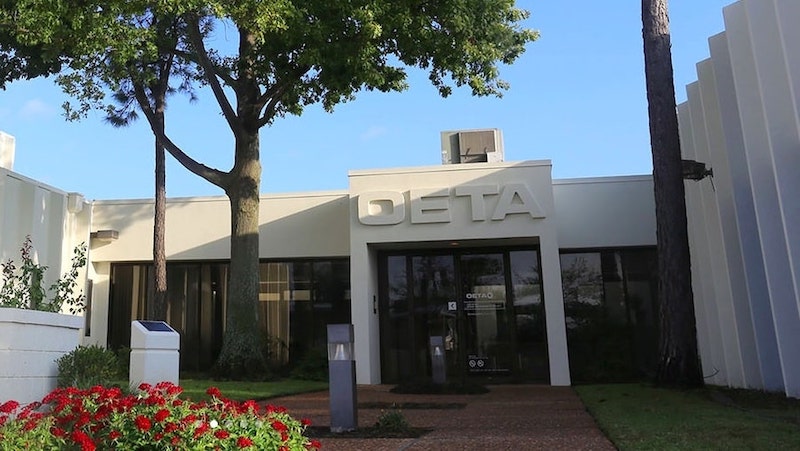
OETA's headquarters in Oklahoma City.
Oklahoma’s OETA is looking to changes coming to the state’s political leadership to extend its existence as it faces a yearlong wind-down period starting July 1.
Earlier this month, Republican Gov. Kevin Stitt vetoed legislation that would have extended the authorization of OETA, a state agency, through 2031. An effort to override the veto in the Oklahoma Senate failed May 14, with 18 Republicans voting against it.
“President Trump has shown that ending guaranteed taxpayer subsidies for public broadcasting is not the crisis its defenders claim it to be,” Stitt wrote in his veto message, referring to last year’s rescission of federal funding for public media. “Oklahoma should follow his lead by letting viewers and advertisers fund OETA, not Oklahoma taxpayers.”

When Stitt attempted to phase out OETA in 2023, citing programming about LGBTQ+ issues, the legislature overrode his veto. This time around, “other politics kind of got in the way,” said Shawn Black, OETA’s executive director. The Senate had adjourned, then returned for only one day when lawmakers attempted the veto override.
“That made things a lot more dicey for us,” Black said. “We only got one chance at it.”
Five Republican senators who voted against the override had previously supported extending OETA’s authority. None of the senators responded to Current’s request for comment about why their positions changed.
Black is now looking to build political support for saving OETA after the November elections. With Stitt’s term as governor ending, his successor may have a more charitable view of OETA. Oklahoma Attorney General Gentner Drummond, the leading candidate in a January poll, is also a Republican. Drummond did not respond to a request for comment on his position regarding OETA.
A new legislature will also convene in February, potentially boosting support for the network. Black pointed to the state House, where lawmakers unanimously overrode Stitt’s veto of a bill that would have made OETA a permanent part of state law. “That just speaks to the bipartisan support that we did have in the House,” he said.
The legislature did provide $2.8 million in state support to OETA for fiscal year 2027, a decline of 3.8% from this year. The network’s total revenue in fiscal year 2025 was $11.8 million, according to its most recent audit. OETA has a staff of 54 employees.
Future of friends group
Black said he’s confident lawmakers will extend OETA’s authority. Yet questions remain about what would happen if they didn’t. It’s possible that the network could move under a university’s control or spin off into a separate nonprofit organization.
“We’ll be looking at all options, especially as we work through this process and figure out what’s the best avenue,” Black said.
FCC licenses for OETA’s 18 stations are held by the state, however.
The network’s friends group may also play a role in any developments. Friends of OETA is a separate nonprofit organization that could continue to operate even if OETA wound down. It reported $62.5 million in net assets in FY25.
If the network were to become independent from the state government, the Friends of OETA board could support a new parent organization, according to an OETA spokesperson.
In the meantime, Black said, OETA will continue its regular operations and enlist its 650,000 weekly viewers to “let people know that OETA is important to them and it’s important to the state of Oklahoma.”







The gymnastics and contortions that some of these states are making in order to show fealty to POTUS, would make me laugh, if it weren’t all such a shame. The race back to the Newton Minnow’s “vast wasteland” of television is speeding up.