
Native Public Media partners with Arizona Community Foundation to support tribal stations

Native Public Media
A DJ on air at KOJB in northern Minnesota, the Leech Lake Nation’s premier radio station.
Native Public Media and the Arizona Community Foundation have formed a partnership to help sustain dozens of tribal radio stations nationwide as they reel from the loss of federal funds.
The partnership, which ACF announced in December, aims to fill funding gaps for NPM’s network of over 60 tribal stations. Federal funds accounted for 30% to 100% of revenue for the 36 stations in the network that formerly received CPB support, according to NPM CEO Loris Taylor.
The partnership will help tribal stations become more financially resilient and strengthen their voices, she said. Stations in NPM’s network that did not receive CPB support will also be eligible for assistance.

“When the ownership is someplace else other than with local communities, you’re just not going to hear your own narrative,” Taylor said. “If you’re able to have your own broadcast facilities, you have the power to speak, and your power to be heard increases exponentially.”
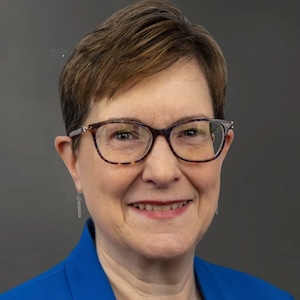
The partnership seeks to provide stations with both immediate relief and long-term sustainability through two separate funds under ACF’s stewardship, said ACF VP of Strategic Partnerships Kim Covington. NPM has raised over $3 million in total funds thus far.
“While each station’s needs are unique, they all share reliance on stable funding to maintain essential services,” Covington said. “We not only want them to survive — we want them to thrive.”
KBRW-AM/FM in Barrow, Alaska, is a former CSG recipient within NPM’s network. The station serves an area encompassing over 95,000 square miles and features Inupiaq-language programming. GM Jeff Seifert, who also serves on NPM’s Station Advisory Committee, said the partnership has given undersized tribal stations like KBRW the ability to continue serving their local Indigenous communities.
“It’s absolutely vital,” Seifert said. “They’re able to do the work to find the money. They have the staff that can be dedicated to that kind of work, and I think without NPM, a lot of these stations would probably be in very dire straits.”
Funding gaps
Tribal stations within NPM’s network lost approximately $10.4 million in annual federal funds after Congress voted to rescind $1.1 billion from CPB in July. These funds included music licensing costs and CPB Community Service Grants, which stations often used to pay for Public Radio Satellite System services, Taylor said.
Taylor said nearly every station in NPM’s network is located on a tribal homeland. She said that because tribal homelands often lack strong internet bandwidth, residents consistently rely on tribal stations for emergency alerts, language preservation programs and coverage of hyperlocal news.
NPM surveyed its network of 61 stations to assess the impact of the rescission. It found that most stations expected to scale down, with the majority estimating they could survive six to 12 additional months without federal funding, Taylor said.
“That’s really an eye-opener, because that tells us that these stations are really vulnerable fiscally,” Taylor said. “This compounds the issue of the loss of funding that they’ve depended on for decades.”
Based on those findings, Taylor and NPM’s board established two funds: a Tribal Station Fund for providing emergency grants to stations in need of technical upgrades or at risk of significant layoffs or ceasing operations, and a Tribal Media Endowment Fund intended for all stations in NPM’s network to build financial resilience and reduce dependence on federal grants in the long term.
Through extensive fundraising, which has included contributions from the Ford Foundation, the MacArthur Foundation and the Boston Foundation, NPM has raised $3.3 million for the Tribal Station Fund and $1 million for the Tribal Media Endowment Fund thus far.
Taylor said she knew that stewardship and distribution of the funds would benefit from a well-established philanthropic organization with years of expertise at the helm. That’s when ACF, a fellow Arizona-based organization, came to mind.
“It’s the largest community foundation in the state of Arizona,” Taylor said. “They have quite a reach. That’s really our home state.”
Covington said that when she began working at ACF 10 years ago, Taylor helped ACF establish Arizona Indigenous Philanthropy, an initiative to support tribal nonprofits in Arizona. She said she didn’t hesitate when Taylor reached out regarding a new project with NPM.
“She came to me and asked me if ACF could help manage some funds that she was about to bring in,” Covington said. “It was a no-brainer.”
A sustainable future
Taylor said NPM expects to begin disbursing funds to stations early in fiscal year 2027. She said NPM secured FY26 funding from other outlets for the former CPB grantees.
The Bureau of Indian Affairs directly provided around $10 million in one-time grants to 35 of the 36 former CSG recipients, as well as to three Alaska-based community radio stations, Taylor said. She said Public Media Co., the nonprofit dedicated to strengthening nonprofit media, provided one-time funding for one tribal station. With this support, NPM hasn’t had to dip into the Tribal Station Fund this year, Taylor said.
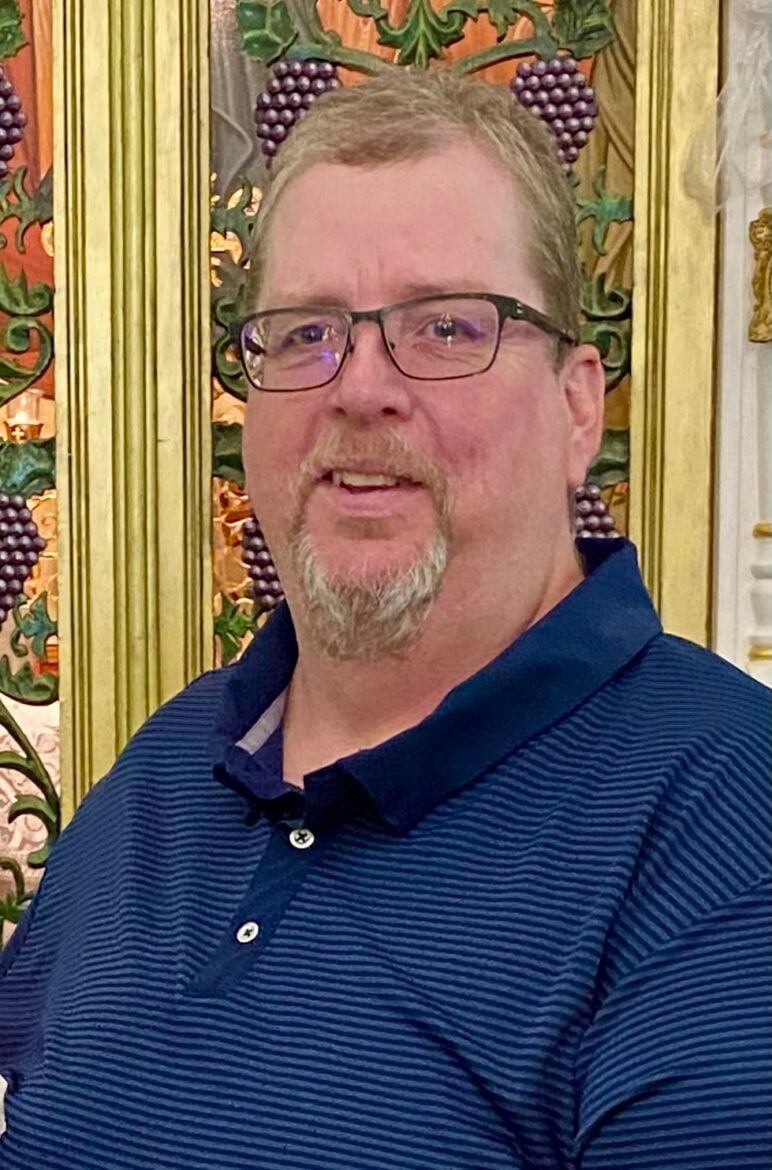
Siefert said CPB funds accounted for around 40% of KBRW’s budget of approximately $700,000. He added that NPM’s support in securing BIA funds gave KBRW a lifeline.
“I can guarantee you that 90% of the stations [NPM] have affiliated with them don’t have the wherewithal or the ability to go out and talk to people in the federal government. … NPM has the connections,” he said. “It totally bailed us out.”
Additionally, Taylor said NPM, which holds a seat on NPR’s Distribution and Interconnection Committee, worked to ensure that stations will continue to have access to PRSS services. In November, NPR announced that it would waive all PRSS interconnection fees for stations for two years.
Through their partnership, NPM and ACF aim to raise $5 million by the end of the year for FY27, Taylor said. She said NPM and ACF are laboriously fundraising to close the gap, but she remains optimistic about their prospects as the BIA and PMC funds gave them space to focus on fundraising throughout FY26.
Taylor said a long-term goal for the Tribal Station Endowment Fund is to reach around $200 million. Covington said that though the partnership’s objectives are extensive, they are imperative as public systems face disruption, leaving many tribal stations and their communities vulnerable.
“For our nation to thrive and for Arizona to thrive, we’ve got to take care of everyone,” Covington said. “A short-term and long-term goal is that we don’t miss anyone because of their ZIP code, because of where they live. … We want everyone to thrive.”