

Rural News Fund seeks to reinforce Appalachia’s public broadcasters, local news outlets
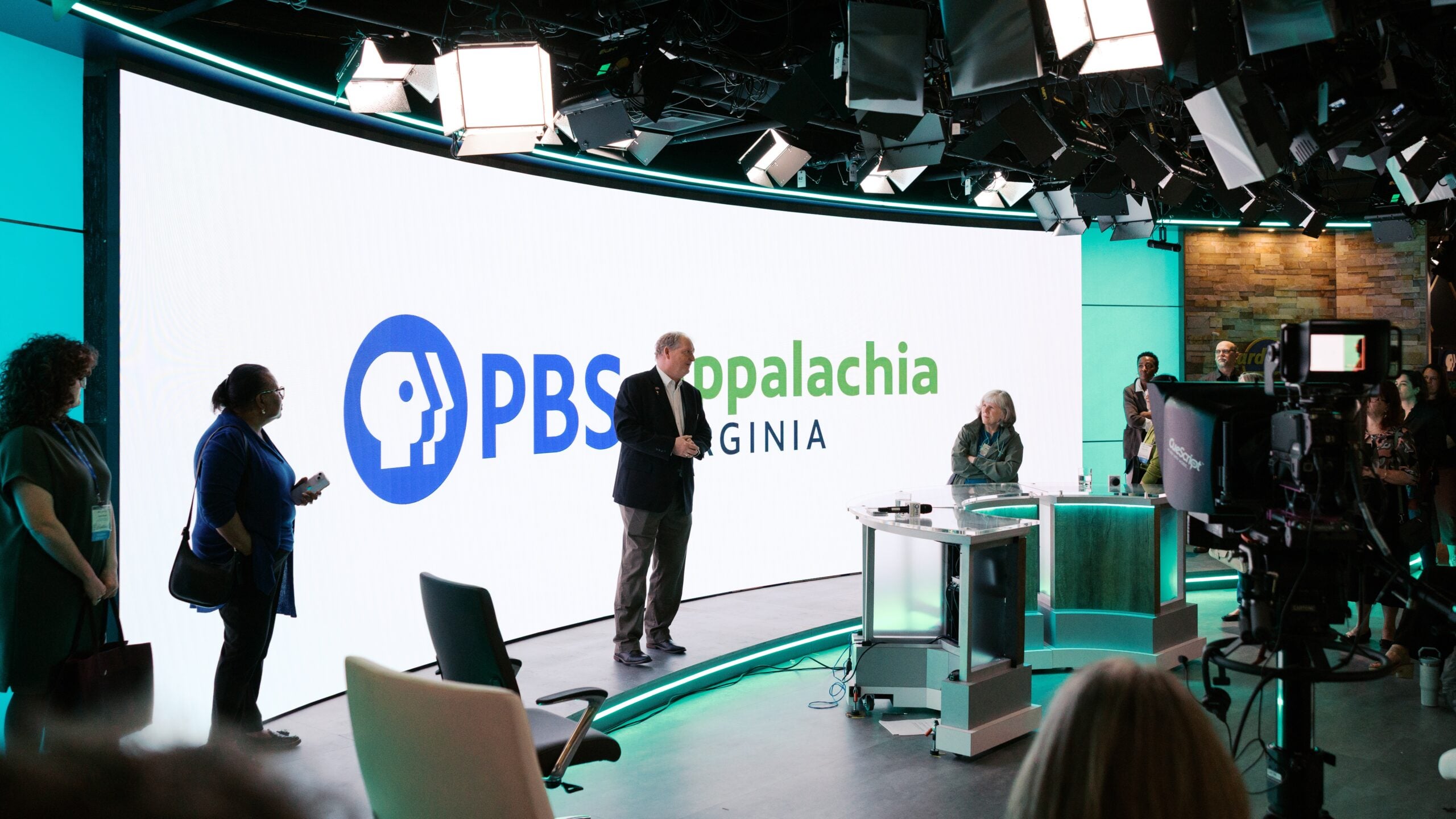
Attendees of Appalachia Funders Network's 2025 annual meeting visit PBS Appalachia Virginia's headquarters in Bristol, Va.
Four Appalachia-based noncommercial and public broadcasting organizations are bolstering their operations and building future sustainability as part of the Appalachia Funders Network’s first Rural News Fund cohort.
Over two years, the eight cohort members will undergo a versatile program that includes a $50,000 grant, a repayable $50,000 grant, one-on-one mentorship from a designated investment navigator and recurring meetings with the rest of the cohort.
The noncommercial stations and public broadcasting organizations in the cohort are West Virginia Public Broadcasting; Allegheny Mountain Radio in Dunmore, W.V.; WMMT Mountain Community Radio in Whitesburg, Ky.; and the Appalachia + MidSouth Newsroom, a seven-station journalism collaboration led by Louisville Public Media in Kentucky. Many of them are utilizing the funds to support staff and upgrade equipment.
The public broadcasters were hit particularly hard following last year’s rescission of federal funding and in some cases are among the only news providers in their areas, AFN Executive Director Ryan Eller said.
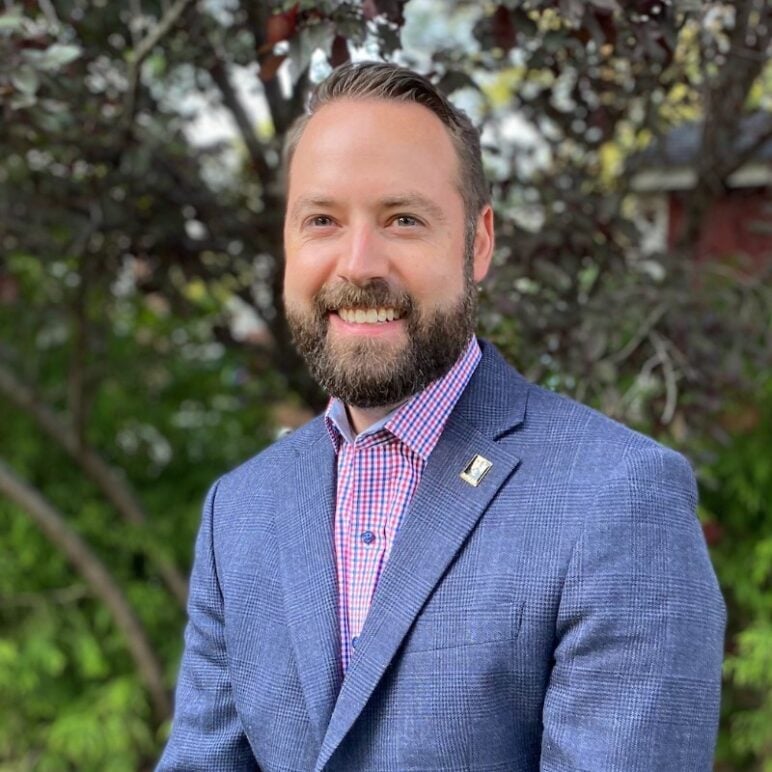
By strengthening local news through funding and supporting a mix of public broadcasters and noncommercial and for-profit outlets, the fund aims both to boost civic engagement and to allow locals to reclaim the narrative in a region that has largely “been extracted from in every respect” and had its story told by “those outside of our region,” he said.
“We have an emergency-level situation when it comes to the decline in local news in our region,” Eller said. “If we have strong local news that people can trust and people can feel like they can leverage to tell their story, it may be the first time in our region’s history where our narrative about Appalachia and our people is defined by us, where we’re writing the elegy ourselves.”
Jess Mullins Fullen, programs and learning administrator at AFN, said the Rural News Fund’s program for business development, mentorship and preparation for future sustainability offers an example that could be replicated in other rural news markets nationwide.
“Appalachia is very innovative, and when we can make things work here, then it provides a really rich model for the rest of the nation, particularly for rural areas, because that is our focus,” she said.
A ‘healthy mix’
When the AFN held its initial open call for Rural News Fund applications last year, it had the capacity to accommodate four local news outlets to join its cohort. But following last year’s rescission of federal public broadcasting funds, Press Forward, the nationwide philanthropic initiative to bolster local news outlets, began working with the Public Media Bridge Fund. Together, they opened opportunities for Press Forward’s regional chapters to apply for grants, Mullins Fullen said.

In December, Press Forward awarded seven of its regional chapters with Public Media Resilience grants intended to bolster local coverage and infrastructure, including the Central Appalachia chapter, which AFN and investment platform Invest Appalachia established in 2024. The chapter serves areas of Kentucky, North Carolina, Ohio, Tennessee, Virginia and West Virginia.
Because the Central Appalachia chapter was still accepting applications for the Rural News Fund at the time, Mullins Fullen said the team decided it would be most beneficial to incorporate the grant into the Rural News Fund and expand its cohort. With the fund at just over $2 million, the team expanded the cohort from four to eight spots.
“It meant there would be a really healthy mix of public media news orgs as well as other types of news organizations, for-profit and nonprofit,” Mullins Fullen said. “It grew the size of our cohort, yes, but it also ensured that we were able to deliver a real impact to public media organizations in Central Appalachia, which had been hit really hard by the rescission of dollars.”
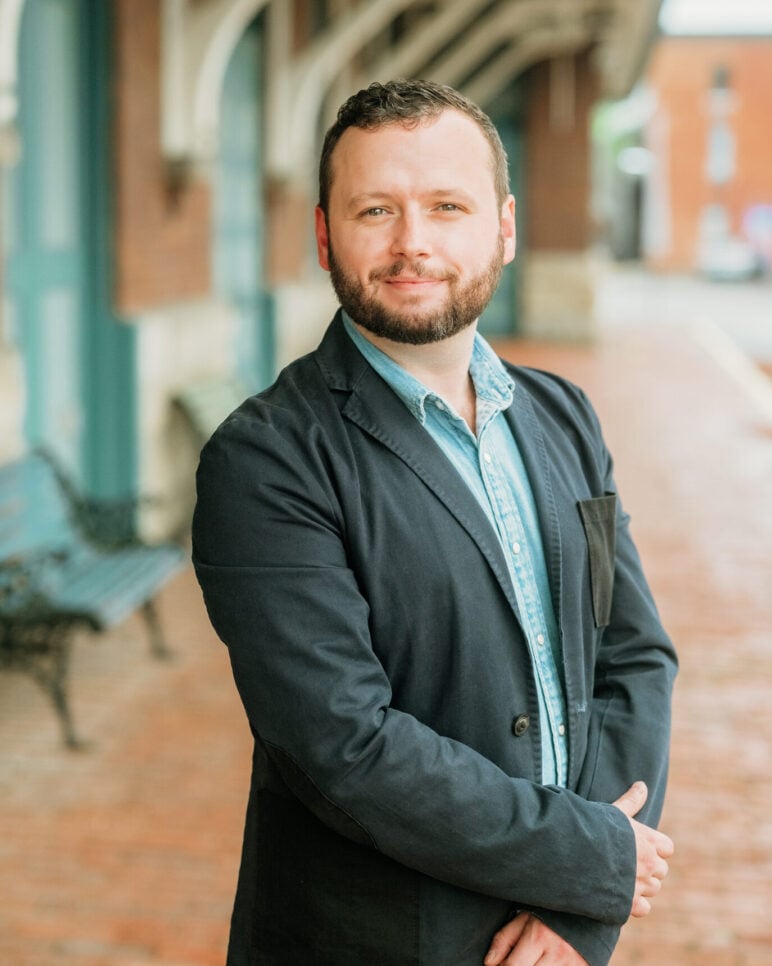
The first year of the multifaceted two-year cohort model “pairs technical assistance and support with business development support” for the eight members, said Baylen Campbell, Invest Appalachia’s director of strategic partnerships.
To kick off the first cohort, AFN disbursed a $50,000 grant to each member in February. Supporting business development with this initial grant may look different for each outlet, but whether it’s used for bolstering staff or upgrading technology, “it’s all toward building the sustainability of that organization,” Mullins Fullen said.
Each outlet has been paired with an investment navigator to help manage the grant, explore ways to adapt their business models to “be more financially sustainable” and examine potential revenue streams, Campbell said.
This support is “really about exploration and learning, general support, helping folks to navigate the tumultuous funding landscape within the local news and public broadcasting ecosystem,” he said.
Eller said the hope is that the fund and navigator will enable the cohort’s members to “retain and benefit from those tools moving forward,” especially as they move into the second year of the program.

Year two includes a recoverable $50,000 grant that functions like a loan with 0% interest. These grants can be repaid over time and in a variety of ways. The flexible repayment method could be as simple as incremental payments or a revenue-sharing system in which an outlet pays the grant as it achieves certain revenue benchmarks, said Eli Flournoy, who leads the investment navigator team and is managing director of news business consultancy Media Growth Partners.
Across both years of the cohort, AFN will facilitate regular meetings among members so they can communicate, express concerns and provide feedback to help AFN determine what would be most helpful to the cohort as a whole.
“That’s primarily about facilitating them sharing best practices with each other as they each, in their own markets, work on a similar type of expansion,” Flournoy said.
In practice
Public broadcasters in the cohort are already using the funds to bolster operations.
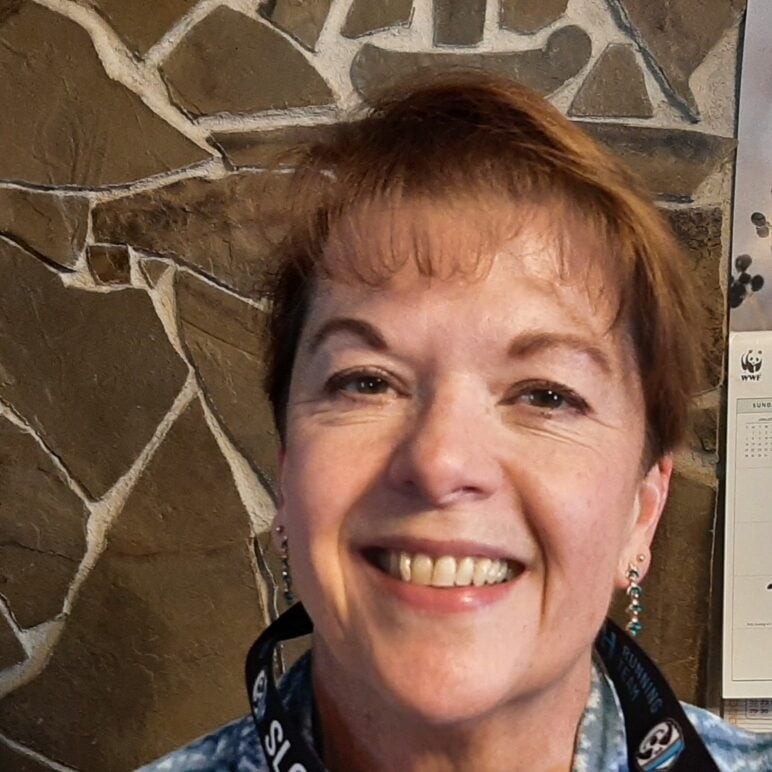
Allegheny Mountain Radio, a group of three community radio stations that broadcast across Virginia and West Virginia, prioritized using the Rural News Fund grant to hire a part-time news director, said Assistant GM Heather Niday.
Niday said the organization consists of six full-time and five part-time staffers. Niday, who also serves as the organization’s PD, traffic manager and news director, said the fund is helping alleviate the workload that comes with having a small staff.
“I desperately need somebody to help kind of take that burden off of me right now,” Niday said. “It was getting to the point that I’m having to split my time so many different ways and have so many different balls up in the air that it was really hard to keep them up there.”
The organization needed only around $27,500 for the position. It is using the rest of the $50,000 grant to upgrade equipment such as microphones, headphones and recorders.
For community radio station WMMT, the grant enabled the hiring of a full-time reporter for the first time in roughly three years, said Public Affairs Director Parker Hobson. The station had two full-time and some part-time staff when it applied for the grant.
The Appalachia + MidSouth Newsroom spoke with WMMT and noted that a $50,000 grant alone would not sustain a full-time reporter over the long term, nor would it achieve the full potential for breadth and depth, said Kate Roselle, the collaborative’s director of development at Louisville Public Media.
So in its grant proposal, the collective offered to use the Rural News Fund grant to expand coverage by funding and sharing both WMMT’s full-time reporter and helping to edit their work, in addition to their benefits and travel costs, said Roselle. The reporter’s coverage will be available to everyone in the collaborative, she said.
“We’re using the resources of our collaborative to further expand the possibilities for an individual reporter,” Roselle said.
Creating the fund
In August 2023, AFN released a report that found communities across Central Appalachia with better economic well-being and health had higher civic engagement scores, and vice versa. Investigating the dynamics affecting communities with worse civic engagement, AFN found those areas were undergoing “a really rapid decline” in local news outlets and were seeing “all sorts of problems” as a result, Eller said.
To counteract the decline, AFN began exploring how its network of over 80 funders could “impact local narratives,” Eller said. Discussions with the network progressed into conversations about saving local news and preventing more loss of local coverage.
Later that year, the MacArthur Foundation announced the creation of Press Forward. AFN and IA then established Press Forward’s Central Appalachia chapter, the organization’s first multistate chapter.
The chapter was established to ensure the resources that AFN’s network was donating could “stay in the region and could really stay contributing to Central Appalachia,” Eller said. This meant strengthening the resources available to local outlets, which would boost civic infrastructure in the region.
With AFN’s network interested in supporting the region’s coverage, AFN launched the Rural News Fund to support and sustain local news outlets and information infrastructure, with Invest Appalachia overseeing the fund.
The MacArthur Foundation donated an initial $750,000 grant to lay the foundation for the fund.
AFN first used the fund to award disaster-related grants to local outlets. It then worked alongside IA and MGP to develop a program to address concerns expressed by local information disseminators. They pulled from previously orchestrated listening sessions and a 2025 report on the region’s news ecosystem to inform the program’s execution.
The team determined that a multiyear grant model for a selection of local outlets would best serve the region’s news ecosystem, Eller said. By giving local newsrooms the space to “completely revamp” outdated areas of their business models through the multiyear fund, sustainability would follow, as “the way that revenue in newsrooms is coming in is just fundamentally different than it was decades ago,” he said.
An ‘experiment’
Eller said that a historic lack of philanthropic investment across Appalachia drove the creation of the fund. AFN’s 2025 report found that 30 counties in the region have no philanthropic assets, and 66 counties have less than $1 per capita in philanthropic funds.
This historic underinvestment, coupled with last year’s rescission of federal public broadcasting funds, had accentuated the region’s dramatic decline in access to local news. He said the fund will hopefully strengthen its cohort while giving the outlets a platform to help one another.
“The rescission compounded these challenges, but in the end, we’re hoping that the diversity of that cohort … is going to create a richness where peers can learn from and ideate with one another as they rebuild their business models and talk about how they really serve their communities in the long run,” he said.
AFN is committed to seeing what works and what doesn’t with this first cohort, Eller said.
“All of this is an experiment, but we’re just very confident in the model that got created because it is data-driven and based upon what we heard from the field,” Eller said. “What we’re hoping to do is craft a model that really works well for rural communities across the nation.”