The best PBS Programs don’t end when the credits roll
SPONSORED
In this era of public broadcasting, local trust matters more than ever.
As stations navigate a rapidly changing media landscape, member support has become an increasingly critical part of long-term sustainability. But audiences today expect more from public media than quality programming. They want engagement. They want opportunities to participate in conversations that matter to their communities. And increasingly, they are looking for trusted institutions that can help make sense of a complicated world.
That presents a tremendous opportunity for PBS stations.
The strongest public media programming creates opportunities for engagement. National productions can become catalysts for local engagement, creating opportunities for stations to connect with audiences through screenings, educational initiatives, donor events, university partnerships, and community conversations that extend far beyond a single airdate.
Programs like Energy Switch, now in its eighth season, and Switch On: The Series were created with exactly this kind of engagement in mind. While each series explores different subjects, from domestic energy challenges to energy access around the world, they share a common philosophy: Audiences are capable of engaging deeply with complex ideas when those ideas are approached with curiosity, nuance, and humanity. This balanced approach has resonated with PBS stations, with Energy Switch now airing in more than 85% of television households and regularly featured on WORLD Channel.
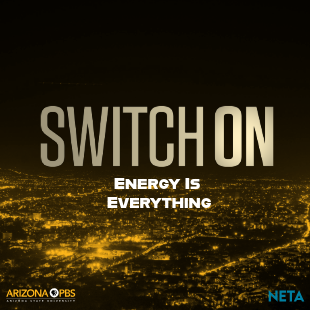
Part of the success of these shows comes from the depth of the conversation. Guide and host Dr. Scott Tinker is an internationally recognized energy expert, geologist, and educator dedicated to improving public understanding of energy systems. Scott co-produced and hosted the award-winning energy documentary Switch. Switch has been screened in over 50 countries to more than 12 million viewers and is used in courses on thousands of campuses.
And, of course, we all know no matter how thoughtful a program is, the filmmaking, production value, and storytelling are central. Harry Lynch is the director and producer of Switch On. He has been the writer, director, and producer of several PBS features and series, including Energy Switch, the Emmy-winning Stories of the Mind, and the Emmy-nominated Now Hear This, presented by Great Performances/WNET and now running in national prime time. Harry is the founder and Managing Director of Arcos Films, which creates documentary series to encourage nonpartisan understanding of important topics by making them accessible and engaging for general audiences.
For stations, that foundation creates possibilities that go well beyond programming.
Energy touches every community. Where it comes from, how it gets to you, who sets policy, who runs the system: All of this affects affordability, economic development, public health, infrastructure, and environmental stewardship. Yet conversations around energy are often reduced to political sound bites and simplistic narratives. Local stations have a unique opportunity to help audiences engage more thoughtfully with these issues.
From Energy Switch guest Alec Tyson, lead pollster with the renowned market research company Ipsos: “I had a terrific experience appearing on Energy Switch. The program makes complex issues, like climate and energy, accessible while creating the space to explore a range of viewpoints. It leaves viewers better informed and empowered to draw their own conclusions — a rare gift in today’s increasingly fractured information environment.”
Using screenings to build local engagement
The series also creates opportunities for stations to deepen relationships with existing supporters while reaching new audiences. Community screenings hosted at museums, libraries, universities, and independent theaters can serve as donor events, STEM education initiatives, or public forums that reinforce the station’s role as a trusted local convener. Stations can also incorporate episodes into classroom partnerships, science festivals, environmental programming, and workforce development discussions tied to local industries and economic priorities.
Over the past several years, the filmmakers and experts behind Energy Switch and Switch On have hosted hundreds of screenings and discussions around the world, engaging audiences on questions that directly affect their everyday lives. Community members understand the importance of clean air and water. They understand the need for reliable electricity to power homes, schools, hospitals, and businesses. What many are still trying to understand are the tradeoffs involved in balancing those priorities.
Programs that emphasize respectful dialogue and evidence-based storytelling give stations an opportunity to convene meaningful local conversations and to encourage curiosity and deeper understanding. In many communities, public television remains one of the few trusted spaces where those conversations can happen organically. That is where stations can play a role. Stations can cultivate trust by inviting students and educators to join them for a screening and post-event discussions.
Study Guides for Switch On: The Series are now in development. Check the NETA catalog in the near future for updates or reach out to Station Relations Manager, Gabriella Jones-Litchfield.
A student at a recent screening Mark T. at Missouri University of Science & Technology shared, “I left the screening genuinely hopeful. There are so many people, in so many different places, finding creative ways to bring energy to communities that have been left out. It’s easy to feel stuck on these issues. Switch On reminded me that progress is already happening.”
Partnerships beyond broadcast
Just as importantly, these programs create opportunities for stations to strengthen relationships with local institutions. Universities, museums, libraries, and community organizations are increasingly looking for collaborative programming that connects national issues to local audiences. Productions like Energy Makes Our World, a short film developed specifically for museum audiences, offer stations additional tools to engage partners around pressing issues in science, technology, and the environment.
One of the strengths of Switch On is its flexibility as a community engagement tool. Because the series explores how energy impacts everyday life around the world, from electricity access and transportation to manufacturing, food systems, and economic development, stations can tailor engagement efforts to issues that resonate locally.
A station serving a rural community, for example, might partner with agricultural organizations, electric cooperatives, or local utilities to host discussions around energy reliability and affordability. Urban stations may collaborate with universities, sustainability offices, transportation agencies, or business leaders on conversations about infrastructure, electrification, or technological innovation. Episodes can become the centerpiece for screenings followed by moderated panel discussions featuring local experts, educators, policymakers, and community advocates.
Donor events as community events
Anyone who has ever hosted a fundraising event knows that getting people in the door is a central part of success. Local stations have an advantage here. They have access to a wealth of world-class programming and know what their communities care about. Combining screenings with Q&As, inviting an onscreen expert with a local connection, and, of course, good food are all simple strategies to ensure current members stay engaged and new community members are welcomed.
Like PBS programming itself, it’s critical that these events do not ask stations to advocate for a particular viewpoint. Instead, create space for curiosity, dialogue, and informed discussion — something audiences increasingly value and increasingly struggle to find elsewhere.
After an international screening, Ethan, a chemical engineering student, said, “How many people die, especially the children, from smoke inhalation surprised me. The change toward sustainable energy concerns all of us.”
Straightforward, low-cost marketing
Educational resources further expand impact. Through the NETA catalog and PBS LearningMedia (K-12 curriculum launching any day!) stations can provide viewers, educators, and students with accessible, mission-driven content that extends the life of a program long after broadcast. Grab social media post suggestions, trailers and more and share them with followers.
This kind of engagement is especially important at a moment when audiences are fragmented across platforms and attention spans are constantly under pressure. Public media cannot compete with commercial media simply by trying to be louder or faster. Its greatest strength has always been trust, and trust is built through depth, context, and community connection.
That is why local engagement matters so much.
When stations host a screening with local educators, partner with a university for a panel discussion, or create donor events around meaningful programming, they are doing more than promoting a show. They are reinforcing the role of public media as a civic and cultural institution rooted in service to its community.
Audiences respond to that authenticity.
More than ever, viewers crave programming that resists easy answers and instead invites thoughtful exploration. Whether discussing the future of energy or exploring global communities through Switch On, the goal is ultimately the same: to create stories that spark curiosity and bring people together.
For PBS stations, those stories can become something even larger — not just national broadcasts, but local opportunities for dialogue, education, and connection. In today’s public media landscape, those connections are more valuable than ever.
For more information, please contact Gabriella Jones-Litchfield, station relations manager with GJLMedia, at gabriella@gjlmedia.com.