

WBUR Festival heads into second year, building buzz and a blueprint for other stations
Bolt/WBUR
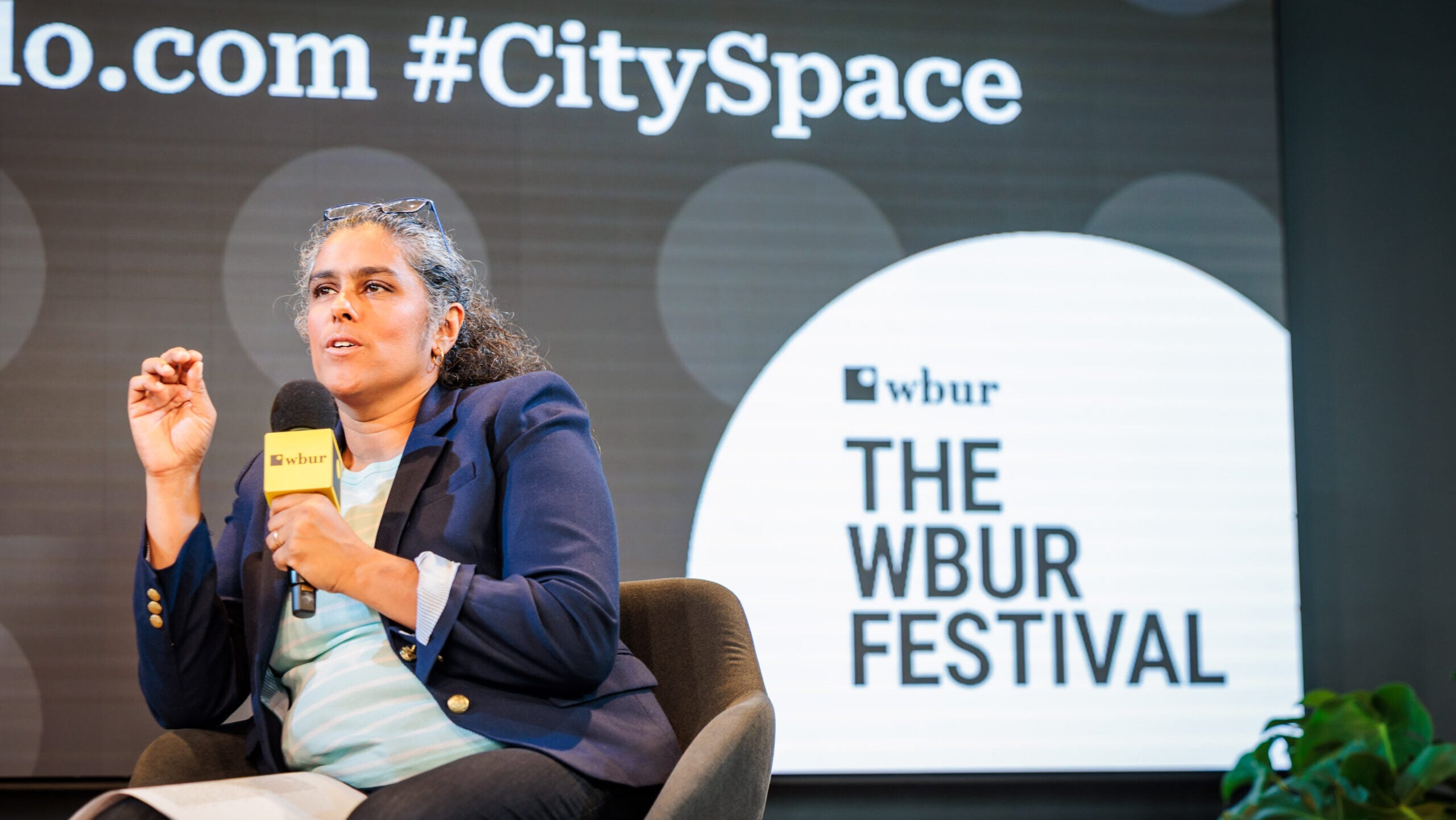
"On Point" host Meghna Chakrabarti at last year's debut WBUR Festival.
WBUR in Boston is readying for the second iteration of its WBUR Festival next month and is encouraging other stations nationwide to consider following suit with similar events.
WBUR CEO Margaret Low, who devised the festival, said the event draws inspiration from other popular media-based festivals while adding its own unequivocal Boston spin.
“We said, ‘Imagine if the New Yorker Festival and Aspen Ideas [Festival] had a baby — one with a Boston accent and Big Papi swagger’ — that’s the WBUR Festival,” Low said. “I think that still rings true as we head into year two.”
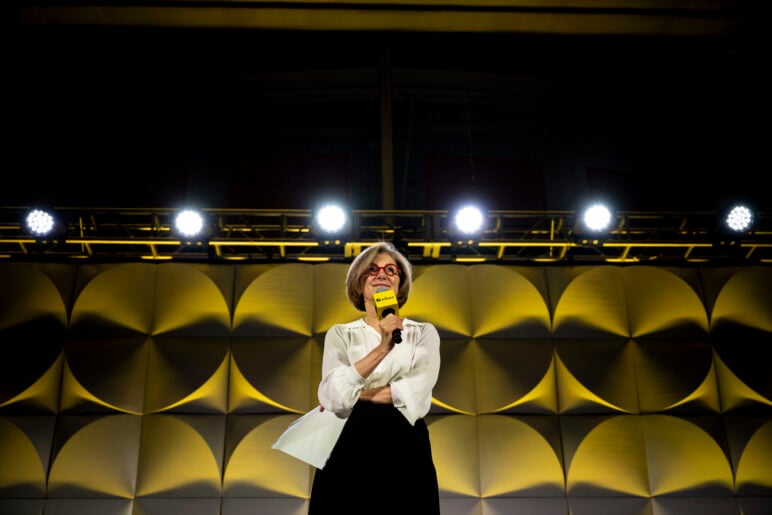
This year’s festival will take place over two days starting May 29 and will feature numerous guest speakers, including NPR CEO Katherine Maher, On Point host Meghna Chakrabarti and comedian David Cross. It will also include musical performances and interactive experiences.
The festival offers the station a fresh and sustainable way to generate engagement with the Boston community as the media landscape evolves, said Andrea O’Meara, the festival’s director.
“As we look to engage with folks who may not already know WBUR and public media in general, we need to find new avenues to get them to engage with us,” O’Meara said. “The media model that we’ve all experienced for decades may not work in another decade, so we need to make sure that we are creating experiences that people can see themselves in.”
Evan Smith, the co-founder and former CEO of the Texas Tribune, helped with last year’s WBUR Festival on a consulting basis and said he’s “on standby” to offer guidance when needed for this year. He currently serves as managing director of events for The Atlantic and will speak at this year’s WBUR Festival.
The execution of last year’s festival was remarkable, considering that it was the first, Smith said.
“It was unbelievably successful financially, but … it was [also] unbelievably successful as an event. Leaving aside the finances of it, if you went to the event, it was a great event,” he said. “Certainly, it felt like something that was not the first year that they had done it.”
He said the WBUR Festival’s success should encourage stations facing financial difficulties to give a local event of the sort a shot.
“Margaret has not only succeeded on her own, but she has forged a path for other public broadcasting stations,” Smith said. “This is a component of what they do, how they deliver their journalism, how they reach audiences and how they fund their operations.”
‘I’ll have what they’re having’
Last year’s debut festival, which Low said “exceeded expectations,” had been an ambition of hers for years.
WBUR recruited Low, a Boston native, as CEO in 2020. Having served as NPR’s senior VP for news and as president of The Atlantic’s events division before joining WBUR, Low was eager to devise a public event for her hometown public radio station, utilizing its then-recently opened events space, CitySpace.
“I knew from the beginning that WBUR had the potential to build something like this festival,” she said.
The pandemic delayed plans, but the ambition remained. In June 2023, while speaking over breakfast with a “longtime friend of WBUR” who has chosen to remain anonymous, Low said the friend asked how much was needed to make the festival plan a reality.
“I was totally unprepared, and I just said ‘$1 million,’” Low said. “He said, ‘Okay, I’ll do it.’ And so we had liftoff with that, which made us feel like, ‘OK. We can do this.’”
Low said it became clear that the perfect moment to launch the event would be for the station’s 75th birthday in 2025. To help arrange the event, Low contacted Smith, who had developed and worked on 15 editions of the Texas Tribune Festival. In 2019, Time wrote that the event “brings Texas’ biggest names and the nation’s most influential public figures together to address politics and policy.”
Smith said Low wanted his advice on planning WBUR’s festival on a consulting basis.
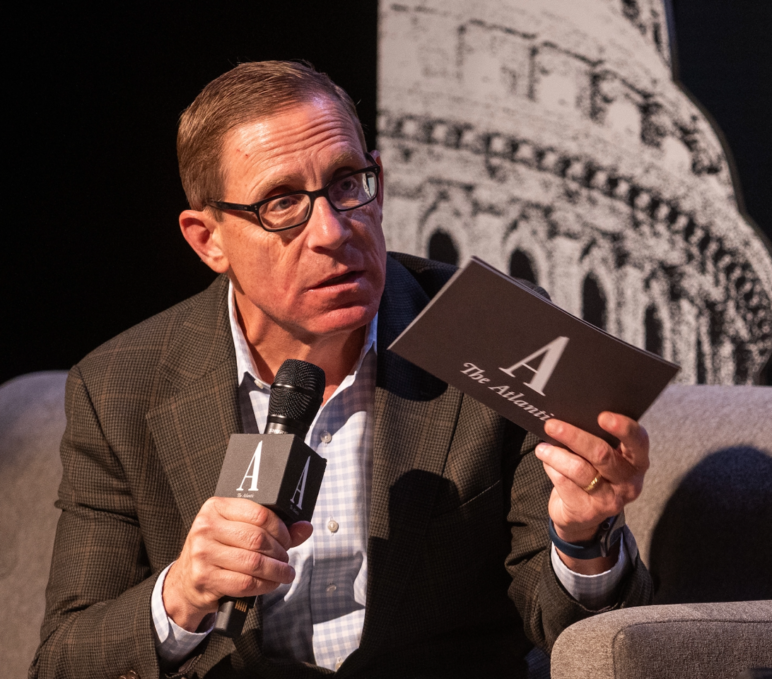
“In the When Harry Met Sally sense, … what Margaret said was, ‘I’ll have what they’re having,’ as it relates to the Tribune Festival,” Smith said.
One objective was to secure more funds for the event in addition to the donor’s $1 million. Low said planning a festival gave WBUR’s sponsorship department the opportunity to seek funding from local and national companies that they previously “hadn’t been able to crack open” in a time when it’s become “harder to find underwriting or sponsorship dollars.”
“We were doing what we think of as a bundled sale of the many things that WBUR has to offer,” Low said. “It was galvanizing for my sellers and also for companies that realized, ‘Oh, this is a really different way to tell our story and burnish our brand.’”
Inaugural sponsors for the debut WBUR Festival included the Boston Symphony Orchestra, Takeda Pharmaceuticals and the Ravi K. Mehrotra Institute at Boston University’s Questrom School of Business (WBUR is owned by and is editorially independent of BU.) They all have returned for year two of the festival.
Low said the objective was to secure a lineup of speakers and musical guests that was both “substance-rich” while feeling like “something you might not be able to experience anywhere else.”
The booking process is “a constant team sport” of identifying “some of the most interesting people in the world” and convincing them to come to Boston for the festival, she said. The debut festival featured over 200 speakers, including Atlantic Editor in Chief Jeffrey Goldberg, celebrity chef Ina Garten and Anthony Fauci, the former chief medical advisor to the president.
The next step is to assemble the elements of the festival in a way that makes the most sense, Low said.
“First, you get all the Lego pieces, which are all the people that are going to be on the stage, all the events you’re producing, all the experiences. … Then you have to put them together into a beautiful design,” Low said. “The design is the creation of what the festival experience will be. … So it’s art and craft and science and creativity.”
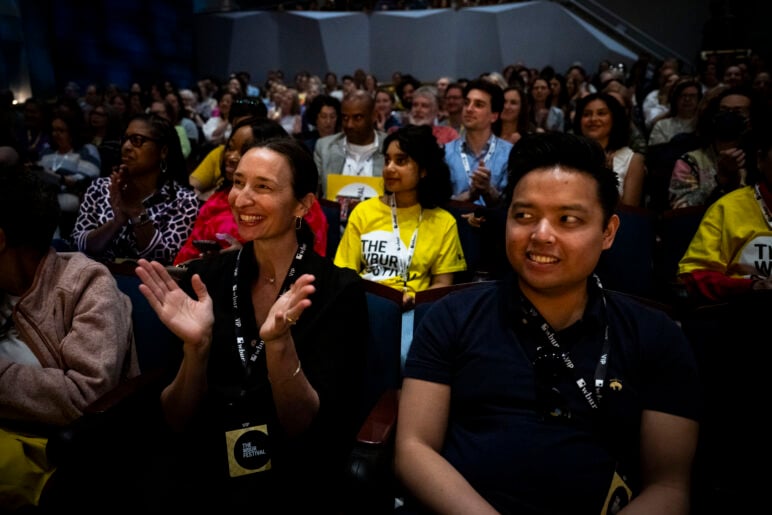
Some of the events at last year’s festival, such as the speakers, were ticketed. But it included a street fair that was free and accessible to the public with live performances, food trucks and other activities.
Over 5,000 people attended the three-day debut festival, including the street fair. Low said the event brought in roughly $3.7 million in gross revenue from sponsorships, ticket sales, the anonymous donor’s support and the station’s 75th anniversary bash, a version of its annual premier fundraising event that was held midway through the festival.
‘More opportunities to engage’
For this year’s iteration of the festival, Low anticipates expanding on last year’s success.
WBUR announced the event and began selling tickets in December. O’Meara said the station has kept the festival’s budget the same, standing at around $1.2 million.
The station plans to lean more this year into what makes the festival unique, O’Meara said. That includes upping the ante on the audience experience.
The majority of feedback about last year’s debut was “that people had a good time, but they wanted more — more opportunities to talk to each other, more opportunities to engage with WBUR journalists and staff, to create and foster a sense of connection that we all knew we lost with the pandemic and now are just getting back to,” she said.
This year’s festival will feature more interactive experiences, including an expanded street fair, a cheese class with a wine tasting, and an appearance by comedy band Wolves of Glendale, who will write a song from scratch.
Low said the station learned a lot about what did and didn’t work on a structural level in year one. The team behind the event now has a better idea of how to optimize the diverse array of speakers, events and experiences through better scheduling.
“We realized, ‘Oh, if you’ve got Anthony Fauci on the stage, you probably shouldn’t do anything at the same time, because nobody’s going to go to anything else,” she said.
‘A replicable event’
Smith said the WBUR Festival and similar events open up new and unique fundraising avenues for public broadcasters. He said that the opportunity for stations to exhibit diverse content across various categories and mediums through in-person events while strengthening ties and bringing in financial support from the community “sets up naturally.”
“The thing about public radio is it’s not one thing, it’s many things. A successful event has many things. It has things for everybody in the audience,” Smith said. “In this moment, especially where the finances of public broadcasting stations are challenged, there’s a case to be made for support. At an event like this, if you buy a ticket, you know that you’re supporting … public broadcasting.”
KUT Public Media in Austin, Texas, is already following suit. The organization will debut the first edition of The KUT Festival in early May, which GM Debbie Hiott said was inspired in part by WBUR’s success.
“We were watching to see, ‘OK, how is this going to work? How is it going to go?’” Hiott said. “It looked like things went very well with their first year. … I thought that if there was a festival that is all about celebrating Austin, but also looking at the tough issues in Austin, that is just very much a KUT and KUTX thing.”
Utilizing the blueprint WBUR set, and with the help of Smith on a consulting basis, KUT Public Media began putting its festival together at the end of last summer, Hiott said. She said Low and her team at WBUR have been extremely supportive, offering guidance on planning, logistics and fundraising efforts.
“[It] gave me a lot more confidence going in because … you’re rolling the dice when you’re spending this kind of money on something for the very first time,” Hiott said. “Having people that I could bounce things off of has been good, people who’ve already been through this process and can say, ‘Here’s what worked and what didn’t, and definitely don’t do this.’”
Hiott said the KUT Festival will feature primarily local speakers, and discussions will center mainly on Austin and Central Texas. The event will also feature live musical performances from five local acts.
For Smith, a valuable facet of these festivals is their distinctiveness in what they offer stations and their communities. He said that despite the WBUR Festival’s direct influence, the KUT Festival will offer an experience that is curated for the people of Central Texas.
“There are things in Boston that would work in Boston that would not work in Austin. … If you’ve seen one of these, you’ve seen one of them,” Smith said. “The needs of every community are different. … Definitely, there will be elements in Austin that will look familiar to people who attended Margaret’s event in Boston. … But there are a number of things that are very particular to this one.”
Moving forward, Low said the festival will play a big role in both the station’s sustainability and its relationship with the Boston community. She said she hopes other stations nationwide see the opportunities these events could bring to both their stations and their communities.
“We do believe that this is a meaningful stake in the future for WBUR,” Low said. “I invited many of my station colleagues to come just to see it in action because I do think it’s a replicable event, and that as people are trying to build deep connections in their communities, it’s a wonderful thing to do.”



This is an idea that is timely. We tried to put something together like this in Minnesota in the 2010s. While we were wildly successful with the ongoing music fest “Rock the Garden” by our indie rock station The Current, the news/ideas event didn’t get the momentum we needed. I’m really happy to see WBUR, and others give this a shot. It’s obviously led to great community engagement for them, not to mention the engagement with underwriters/funders.