

Opinion: Three things public media should steal from John Oliver’s ‘Last Week Tonight’ episode
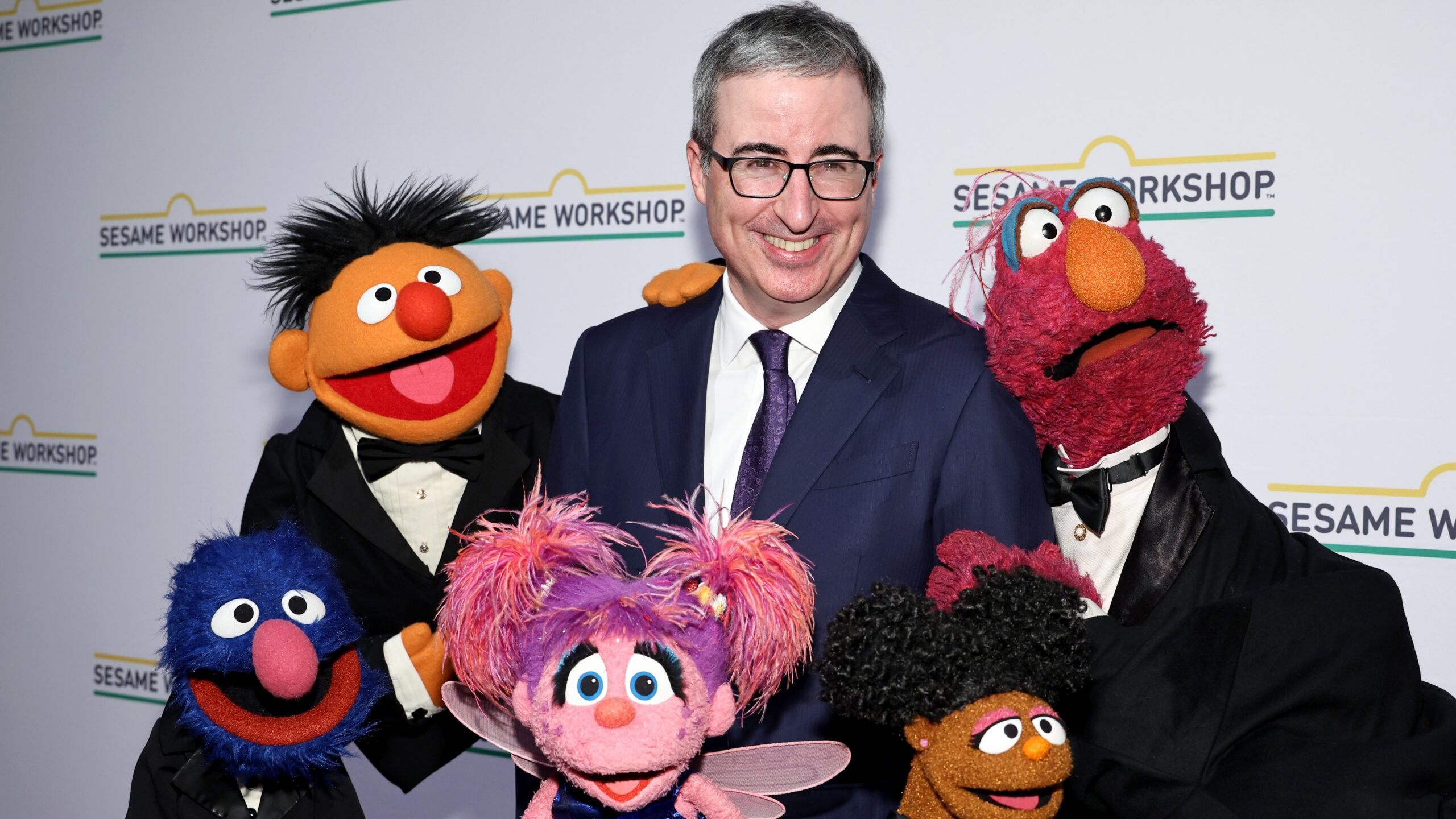
Jamie McCarthy / Getty Images
John Oliver attends the Sesame Workshop 2024 Benefit Gala at Cipriani 42nd Street May 29, 2024 in New York City.
In 2009, after the death of Walter Cronkite, Time magazine conducted a poll asking Americans who they trusted most for news. The winner wasn’t a traditional journalist. It was Jon Stewart from The Daily Show.
At the time, that revelation felt wild. But over the years, we’ve realized something important: Stewart and the comedians who came after him often deliver some of the most thoughtful, honest and clarifying commentary about our lives. And as it turns out, his television offspring are carrying that torch even further.
So, when John Oliver dedicated his Last Week Tonight season finale to public media, I sat in my bed in sweatpants, eating cookie-butter ice cream, and cheered loudly (albeit alone in my home).
Then I pointed at the screen like Leonardo DiCaprio in that Once Upon a Time in Hollywood meme, because, for once, someone with this audience was talking about the industry I care about.
The segment was brilliant. Filled with an inside baseball knowledge of public media, with the British charm we love from Oliver. Afterwards, I couldn’t stop thinking:
Public media needs to seize this moment.
After it aired, I sent the clip to my former colleagues at my local stations in Columbia, South Carolina, SCETV and South Carolina Public Radio. Most responses were either a heart emoji or total silence (the public media version of getting a “K” response). It felt like a missed opportunity.
So here are three things public media should steal from John Oliver’s segment — not just for visibility, but for survival.
1. Steal His Clarity.
Working in public media, one of the biggest challenges isn’t convincing the people who already give — it’s explaining why public media matters to the people who don’t.
I used to write pledge-drive scripts for South Carolina Public Radio. Ten-second spots. Thirty-second spots. A full minute. After writing more than 50 of them (I still say the pledge line number in my sleep), all voiced in that familiar public-radio cadence, I wondered if anyone outside our bubble truly understood what we were asking for.
So I broke the rules. I went into the community and asked friends and family to send voice notes explaining why they give, even if they hadn’t given to public media (yet).
Hearing the public explain giving was more potent than any message we crafted in-house. It taught me this:
People don’t respond to abstractions. They respond to stories.
John Oliver did in eight minutes what many pledge drives struggle to do in eight days. He explained precisely what public media is, why it’s underfunded and why it matters in clear, plain, human language.
Public media can do this too. But first, it has to stop assuming the audience already gets it.
2. Steal His Tone
Oliver did something else remarkable: He didn’t sound like public media.
I say that lovingly.
Remember that old SNL skit “Delicious Dish,” where the NPR hosts whispered calmly about Alec Baldwin’s “Schweddy Balls”? The joke worked because we all knew the reputation of the NPR host: soothing, polite, emotionally distant, and like a Portlandia character. Sure, the sketch tickled the 12-year-old–boy humor inside of me, but the stereotype remains.
But it’s not just about being an emotionless vessel with facts; rather, tone matters.
When Ryan Coogler released his movie Sinners earlier this year, Kodak created a viral clip of him explaining the film’s aspect ratios. He did it in his natural Oakland accent — no pretension, no Hollywood jargon, just a man explaining something complicated with warmth and respect and not the pretension of a hipster judging you when you’ve never heard of his favorite Scandinavian-hip-hop-pop-blues-punk-rock band.
It worked because it felt human.
Public media should embrace this tone more often. Let staff talk like real people. Use humor. Show personality. Break the “public media voice.”
People didn’t connect with Oliver because he sounded authoritative. They connected because he sounded like them (even with his cheeky British accent).
3. Steal His Creativity & Courage
At the end of his segment, Oliver announced a surprise auction of real Bob Ross paintings and other Last Week Tonight relics — with proceeds going to public media.
Local stations: Please steal this idea.
Got an anchor with a signature tie? Auction it. You got an old mascot costume collecting mold in the company storage closet? Sell it. Is there a weird artifact from a decades-old pledge drive? Put it online.
Nontraditional fundraising isn’t disrespectful. It’s memorable.
And then there’s his fearlessness.
Oliver said out loud what public media often cannot — calling out political attacks, chronic underfunding and the absurdity of expecting high-quality journalism without resources.
He even showed the 1969 clip of Fred Rogers testifying before Congress to stop funding cuts — and compared it to Marjorie Taylor Greene’s recent claim that public media is “brainwashing the American people … especially children.”
As someone who lives in a red state, I know this pattern well. Every budget season, public media is the first thing threatened.
I understand the fear: If public media pushes back too hard, it risks looking partisan. If it names the attacks, it risks alienating donors. So instead, many stations stay quiet and hope to outlast the storm.
But today’s storms are different. We aren’t in 1969. The threats are much louder, more divisive, more scary.
This isn’t like administrations before; there can’t be this idea of imminent survival. Public media isn’t Snoop Dogg. Snoop Dogg will never leave our screens, from being a gangsta rapper, to co-host on The Voice, to selling Skechers slide-ins.
Unfortunately, public media may not have Snoop’s luck, because even when Snoop felt attacked, he was willing to drop some F-bombs every once in a while.
No one is saying that Sesame Street needs to start dropping F-bombs (it would be hilarious if the Count talks about the number zero as in, how many bleeps to give). But public media can amplify Oliver’s words — let him say the thing you can’t. Treat him like your ventriloquist. Use his segment as cover to tell your own truth.
Conclusion: The Loud Work and the Quiet Work
Public media’s mission has always included both the quiet work of education, connection and community and the loud work of defending its value when under attack.
Oliver did the loud work for you.
Now, public media needs to do the rest.
If the comedian can explain your importance in a way that millions understand, the opportunity isn’t to be embarrassed by that — the opportunity is to build on it.
Because at its best, public media isn’t polite. It’s essential, just like Snoop Dogg.
Preach Jacobs is a two-time South Carolina Press Association Award Winner for column writing for his column “Fight the Power,” featured in the Free-Times and Post & Courier Columbia. He founded Cola-Con, the nation’s only hip-hop comic-book convention, as a hip-hop artist and DJ contributing to the South Carolina art scene for over 20 years. He was named ambassador to Columbia, S.C., in 2022. Jacobs is a writer/producer for the PBS DS series “Citizen Better” and “The Preach Jacobs Show” and podcast and co-owner of SoulHAUS art gallery in Columbia.



That was a GREAT episode.. might I suggest adding a link to it- it’s available on YouTube. Of course, Oliver got away with saying quite a few things Public Media cannot, as pointed out- but at this point, if a few F bombs are gonna turn someone from the screen, they shouldn’t be consuming ANY media.
We’ve added the link, thanks for pointing that out.
Good article, but I wish it had addressed public Medía s Achilles heel–wokeness.
Sharing there here at our public radio station, WUFT in Gainesville FL. Thanks